
The $31 Million Weed Patch: How Land Speculation Stalls Toronto's Housing

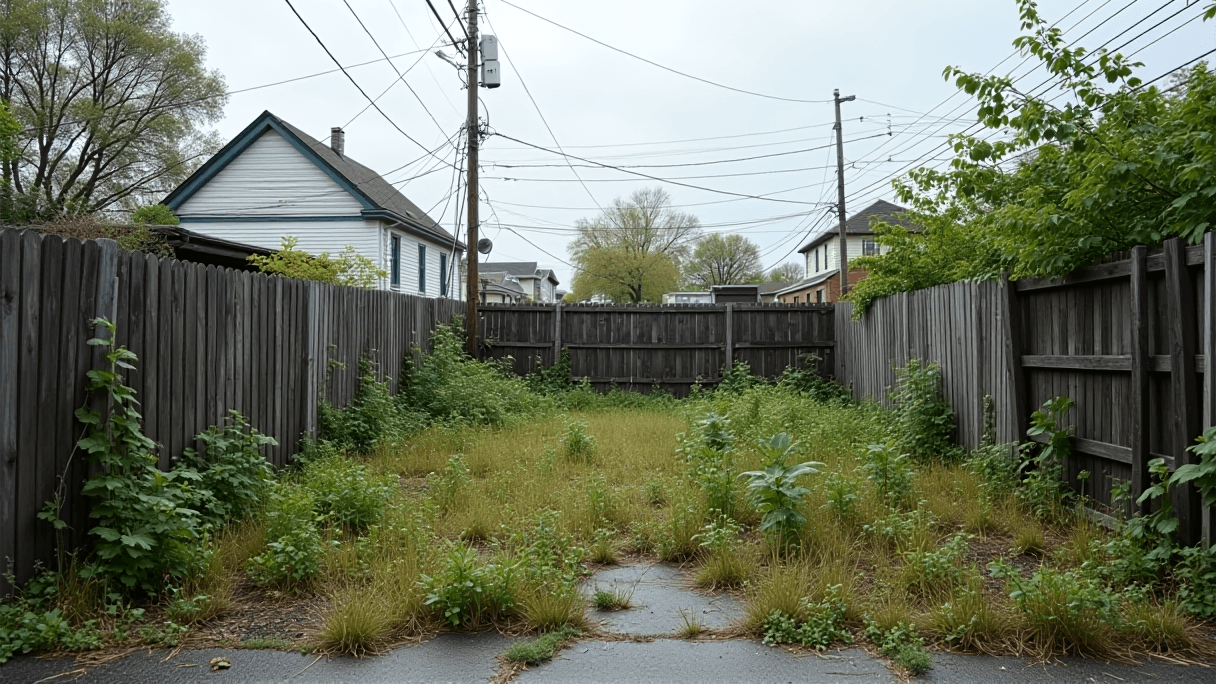
AI-generated image · Bay Street Wire
The power-of-sale listing of two derelict lots on Weston Road reveals the staggering cost of betting on density over delivering actual homes.
OPINION: When you look at 971 and 975 Weston Rd., you don't see a residential community. You see a "sad patch of weeds." As BlogTO first reported, these two abandoned plots in Weston-Mount Dennis are currently on the market for $31.5 million.
To the average resident struggling with an affordability crisis, paying over $31 million for roughly 1.453 acres of overgrown land feels like a fever dream. But in the world of speculative real estate, the buyer isn't paying for the current state of the soil; they are paying for the potential of future density. This is the mechanism of land banking, and it is cannibalizing the city's chance at genuine affordability.
As BlogTO reports, the history of this site is a case study in escalating ambition. Two decades ago, the vision for this stretch of Weston Road was modest: a proposal for 71 stacked townhouses in 2005. By 2021, Haven Developments stepped in with a plan for two 11-storey buildings totaling 617 units.
However, the arrival of major transit infrastructure—including the UP Express, GO Transit, and the Eglinton Crosstown LRT—transformed the land's perceived value. By January 2023, Haven Developments, working with Turner Fleischer Architects, scrapped the modest plan. They proposed a massive redesign featuring towers of 24 and 34 storeys rising from an eight-storey podium. The unit count skyrocketed from 617 to 1,003 condos.
By the time the project reached the Etobicoke-York Community Council in 2024, the proposal had shifted slightly to 984 homes, including a seven-storey mixed-use component and 465 square metres of community space.
While the blueprints grew more ambitious, the land remained a wasteland. BlogTO notes that City planning documents from 2022 indicated the site once held two single-storey warehouses, but the lots at 971 and 975 Weston Rd. now sit vacant.
The most telling detail of this saga is the nature of the current sale. The properties are being sold under power of sale—a process BlogTO explains typically occurs when a mortgage lender sells a property to recover debt after a borrower defaults.
This is the cycle of speculation in a nutshell: land is acquired and held, its value is pumped up through zoning requests and density increases, and it is traded as a financial asset long before a single brick is laid. When the bet fails or the debt becomes unsustainable, the land is flipped again, often at a premium that reflects the "possibility" of those 34-storey towers.
Every time a derelict lot fetches $31 million, the baseline cost for any future development is pushed higher. We aren't just paying for concrete and glass; we are paying for the speculative gambles of developers. Until the incentive shifts from banking land to building homes, Toronto's affordability crisis will continue to be fueled by the very people claiming to solve it.