
Stop Overthinking the Tech: Facial Recognition is the Smart Lock Breakthrough We've Been Waiting For

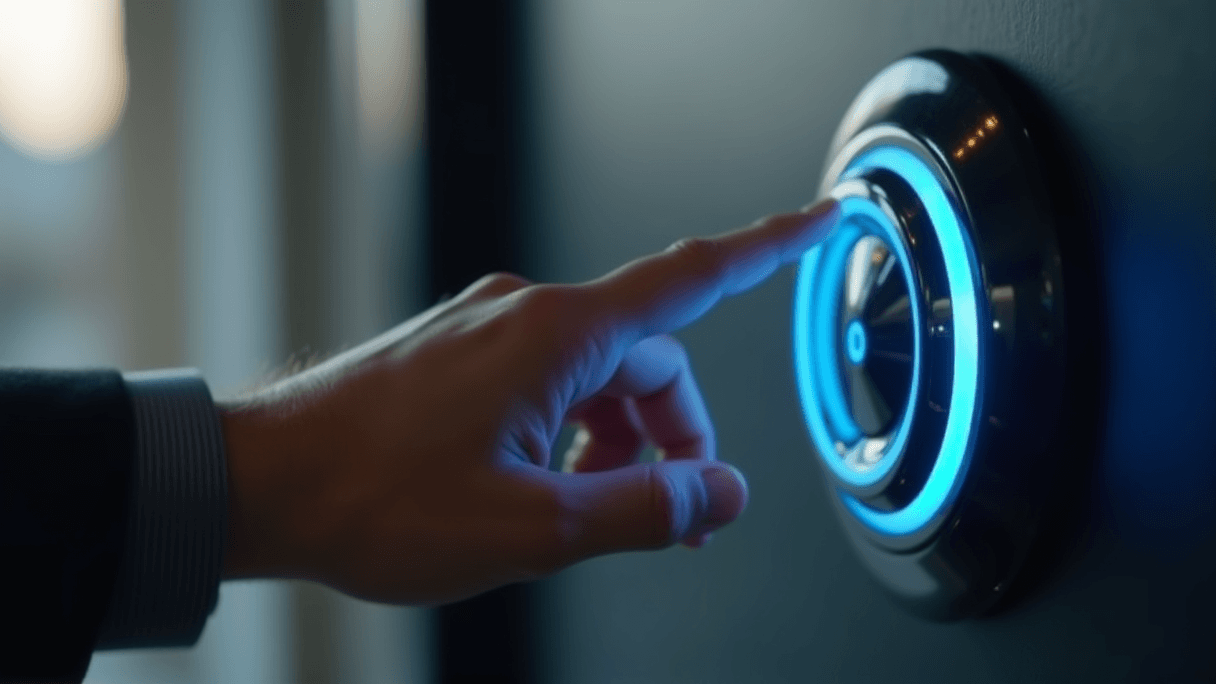
AI-generated image · Bay Street Wire
Opinion: While critics dismiss biometric entry as overengineered, the shift toward friction-free home access is finally delivering on its sci-fi promise.
For years, the smart home industry has been chasing a specific kind of nirvana: the total removal of friction. We want our homes to anticipate our arrival, eliminating the need to remember passcodes or fumble with physical keys. For a long time, we've settled for geofencing, but as The Verge first reported, that experience is often unreliable and slow, tethering the user to a background app on a smartphone.
It is time we stop treating facial recognition as a gimmick and start embracing it as a genuine utility.
Critics often argue that biometric entry is an overengineered solution to a problem that has already been solved. But that perspective ignores the reality of how we actually live. While ultrawideband (UWB) radio is frequently cited as the gold standard for hands-free entry, The Verge notes that UWB-equipped locks are currently expensive and rare. More importantly, UWB requires a device—a phone or a watch—to be on your person to function.
This is where facial recognition proves its worth. As Jennifer Pattison Tuohy of The Verge discovered during her testing of the Schlage Sense Pro, there is a massive gap in the UWB experience: the 'phone-less' user. Whether it is a spouse working in the garage or someone who simply prefers to leave their device inside, tying your home's accessibility to a piece of hardware is a limitation, not a feature. Facial recognition removes that tether. It allows for a truly hands-free experience that doesn't require a gadget in your pocket.
Technologically, a simple photograph will generally no longer trick these sensors. According to The Verge, modern facial recognition locks utilize infrared sensors to build a three-dimensional map of the user's face. Whether a manufacturer employs time-of-flight sensing, stereo infrared cameras, or structured light, the result is the same: a depth-aware system that provides genuine security.
We are seeing this tech mature in real-time across a variety of price points. The Verge tested four current market options: the Lockin Veno Solar Face at $199, the Switchbot Lock Vision Pro at $230, the Eufy FamiLock E40 at $300, and the Lockly Visage Zeno at $350. The fact that we now have options ranging from under $200 to $350—with another due to launch next month on Kickstarter—shows that the hardware is scaling.
If you are looking for the peak of this experience, the Eufy FamiLock E40 (produced by Anker) stands out as the benchmark. In testing conducted by The Verge, the E40 unlocked in under a second, providing a near-instant transition from the porch to the interior. Crucially, it solved one of the biggest 'edge case' complaints: it functioned consistently even when the user was wearing sunglasses, a feat the other tested locks struggled to match.
Of course, no tech is perfect. The Verge points out that the E40 is bulky and suffers from the fastest battery drain of the group. But these are incremental hardware hurdles, not fundamental flaws in the concept. When you consider that the E40 also integrates a fingerprint reader, a keypad, a physical key, and a subscription-free 2K video doorbell, the value proposition shifts. It isn't just a lock; it's a comprehensive security hub.
We already trust our faces to unlock our smartphones every few minutes of the day. Extending that trust to our front doors is not a leap of faith; it is a logical evolution. The friction-free entry provided by facial recognition is the closest we have come to a truly 'sci-fi' home experience. It is time to stop obsessing over the rare failure and start enjoying the convenience of a door that simply knows who you are.