
Stelco Doubles Down on Hamilton Layoffs, Calling Ottawa's Legal Bluff

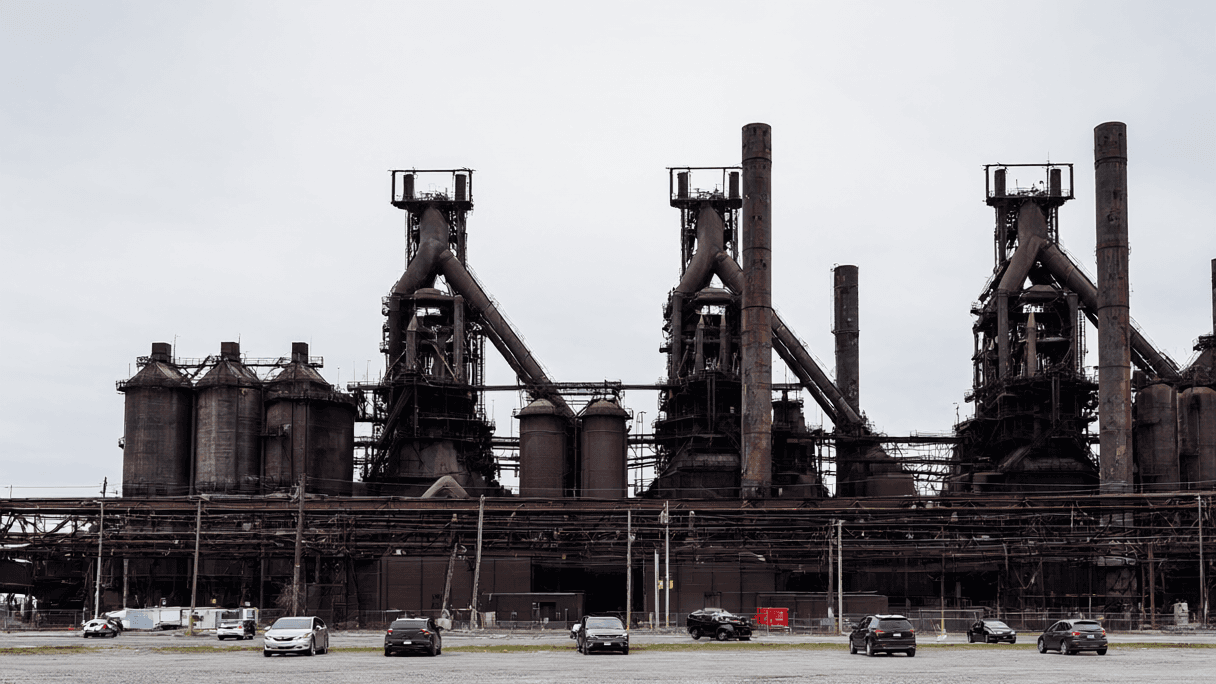
AI-generated image · Bay Street Wire
The steelmaker rejects federal claims of broken employment promises, signaling that corporate restructuring and trade pressures are outweighing the threat of government litigation.
### What Happened
As first reported by CBC Toronto, Hamilton-based steelmaker Stelco Inc. has informed the Canadian government that it will proceed with hundreds of layoffs at its Hamilton plant, directly defying threats of legal action from Ottawa.
The conflict centers on whether Stelco is violating binding employment commitments made under the Investment Canada Act (ICA). Industry Minister Mélanie Joly had previously issued an ultimatum to the company, demanding a plan to save up to 500 impacted jobs or face potential legal consequences.
In a letter obtained by CBC Toronto and addressed to Minister Joly, Paul Simon, president and general counsel at Stelco Inc., rejected the government's allegations. Simon argued that the ICA undertakings do not mandate a commitment to avoid layoffs entirely, nor do they require employment levels to remain above a specific threshold every single day during the five-year period of the undertakings.
### What It Means
Stelco, which is owned by Ohio-based Cleveland-Cliffs, appears to be betting that its internal restructuring priorities and the realities of the global trade market outweigh federal regulatory threats. The company is signaling that it views the government's legal posture as inapplicable to its current operational needs.
**The Corporate Defense** Stelco's position is that its financial distress is driven by external forces beyond its control. In the letter to Minister Joly, the company specifically cited the ongoing trade war and the 50 per cent tariffs imposed by U.S. President Donald Trump as primary drivers for the decision to indefinitely idle its Hamilton Works finishing lines.
Furthermore, Stelco is pushing back against the narrative that it acted in secrecy. The company alleges that Minister Joly was "inaccurate and misleading" when suggesting the government only recently learned of the layoffs, claiming instead that Stelco had been in constant communication with federal officials regarding its financial concerns.
**The Federal Stance** Ottawa, however, views these layoffs as a breach of the terms associated with Cleveland-Cliffs' $3.4-billion cash-and-stock acquisition of Stelco. Minister Joly has asserted that the company's employment commitments—which included employing at least the same number of unionized workers and the vast majority of non-unionized workers as were present at the time of the transaction—do not vanish simply because market conditions or business strategies change.
Prime Minister Mark Carney has reinforced this position, stating last week that the federal government will "use all powers" available to ensure Stelco meets its legal employment obligations, pursuing the Ohio-based parent company to the "fullest extent of the law."
**The Labor Perspective** For the workers on the ground, the dispute is a matter of transparency and betrayal. Ron Wells, president of United Steelworkers Local 1005, told CBC Toronto that he was not surprised by Stelco's response. Wells noted a critical flaw in the process: the union, representing the workers most at risk, was not privy to the original agreement and was not consulted or given the opportunity to review the undertakings.
### The Path Forward
While Stelco has provided a plan to comply with ICA commitments as requested by Joly, the plan does not stop the layoffs. Instead, the company noted that open roles at its Lake Erie plant could potentially be filled by displaced staff.
Stelco has also shifted the burden back to Ottawa, outlining the specific government actions it believes are necessary to stabilize the business. In its letter, Stelco urged the government to: * Impose stricter restrictions on the import of coated and cold-rolled steel products into Canada. * Limit import substitution. * Remove remissions for steel products that can be supplied by Canadian producers, including Stelco.
This standoff mirrors a previous legal battle in 2009, when Industry Canada sued Stelco's former owner, U.S. Steel, over job protections—a matter that was eventually settled out of court in 2011.