
Shipping Real Steel: Promise Robotics Takes on the US Housing Market

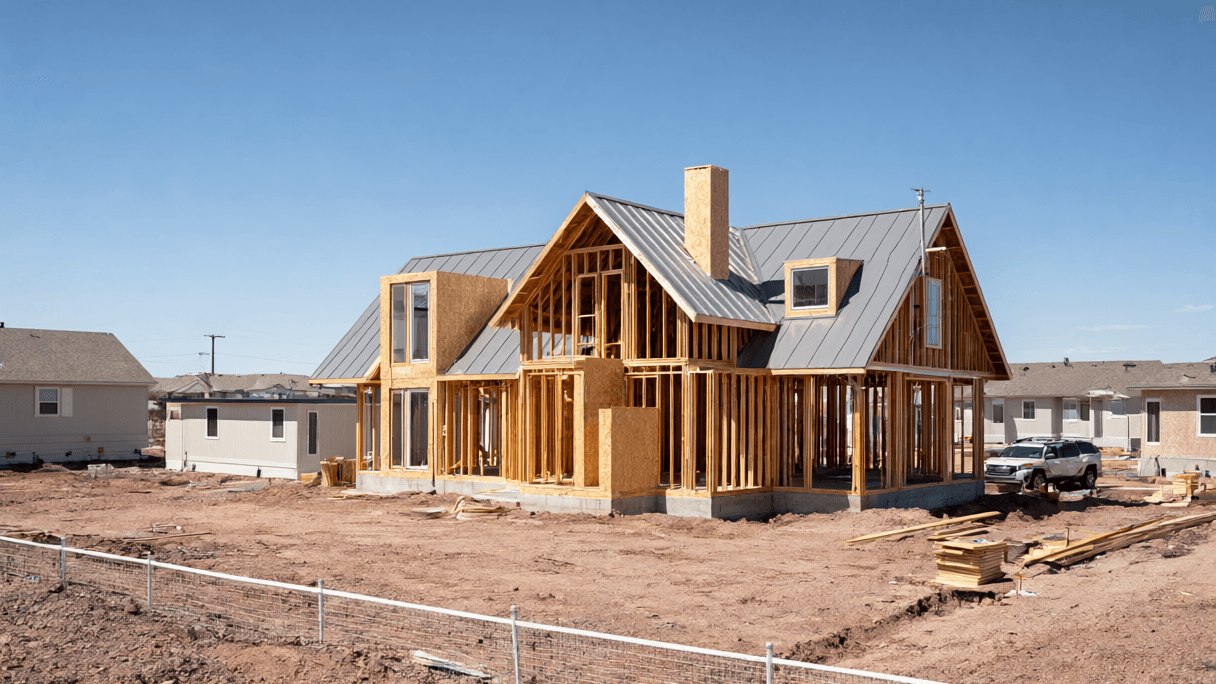
AI-generated image · Bay Street Wire
While the AI sector struggles with vaporware, Toronto's Promise Robotics is proving the value of applied industrial AI with a massive deal to supply the US's largest homebuilder.
*Opinion: I've spent enough time in the Toronto tech scene to know when we're being sold a dream and when we're actually building something. Right now, the AI hype cycle is overflowing with promises of 'disruption' that never leave the slide deck. But Promise Robotics is doing something different: they are shipping physical products into the real world. This is where Toronto's true edge lies—not in generative chatbots, but in applied industrial AI that solves tangible, messy problems like the housing crisis.*
As BetaKit first reported, Toronto-based Promise Robotics has secured its first United States customer in DR Horton, which BetaKit identifies as the largest homebuilder in the US by volume. The multi-year commercial agreement will see DR Horton utilize Promise's "factory-as-a-service" capabilities to produce over 1,250 single-family, largely single-story homes for the Phoenix, Arizona market.
To support this expansion, Promise announced it will open a 16,000-square-foot factory in Phoenix, marking the company's first facility outside of Canada. This hub follows previous factories established in Edmonton and Calgary. Promise CEO Ramtin Attar told BetaKit that the Phoenix facility is intended as the company's US go-to-market hub and is expected to begin manufacturing in early 2027. Attar noted that the ability to build in the Calgary frost makes the transition to Phoenix a simpler task.
As BetaKit reports, the startup's platform uses AI to interpret home designs, generate robotic instructions and production plans, and orchestrate the manufacturing process through to site installation. The company utilizes off-the-shelf robots enhanced with proprietary software and tooling to create custom builds and repeatable modular housing. Currently, the factories can produce core components including roof, stairs, flooring, and interior and exterior walls. The 80-person team is working to expand these capabilities to include insulation, drywall, and plumbing, heating, ventilation, and air conditioning (HVAC).
Brad Conlon, senior vice president of strategic innovation at DR Horton, stated that Promise's integrated platform provides a new capability to help the homebuilder increase production capacity, improve cycle times, and bring more predictability to operations.
While the US market differs from Canada, Attar told BetaKit that both regions face similar pressures regarding rising costs, labor shortages, and the urgent need to accelerate home construction. Attar emphasized the significance of a company of DR Horton's scale trusting their platform. He further claimed that Promise has already completed over 200 builds for clients including Mattamy, Hopewell, and Brookfield, and is currently contracted to build more than 2,500 homes in total. The company aims to grow its workforce to 100 employees by the end of 2026.