
Opinion: The Ghost in the Machine: Will Waymo's Arrival Enrich or Divide Toronto's Streets?

AI-generated image · Bay Street Wire
As autonomous ride-hailing prepares for a 2028 launch, the promise of 'accessible mobility' clashes with the reality of a city already grappling with infrastructure and equity.
Toronto is a city defined by its friction. From the rhythmic clatter of streetcars to the chaotic dance of cyclists and pedestrians, our street-level soul is found in the human negotiation of space. Now, that negotiation is about to be automated.
As BlogTO first reported, the California-based tech company Waymo has confirmed it will bring its fully autonomous ride-hailing service to the Canadian market, with an official launch slated for 2028. While the prospect of driverless cars feels like a futuristic novelty, the actual integration into our neighborhoods begins much sooner. Waymo announced that vehicle test runs will start in the coming days, focusing on high-definition mapping of local street networks.
Waymo co-CEO Tekedra Mawakana described Toronto as an innovative and diverse city, stating that the company aims to partner with cultural and business communities to foster "safer streets and more accessible mobility." However, the phrase "accessible mobility" often carries a heavy weight in a city where accessibility is frequently a luxury. As these driverless fleets begin to populate our corridors, there is a pressing question of whether this technology will bridge gaps in transit or simply create a new, high-tech barrier for those who cannot afford the premium of a robot-ride.
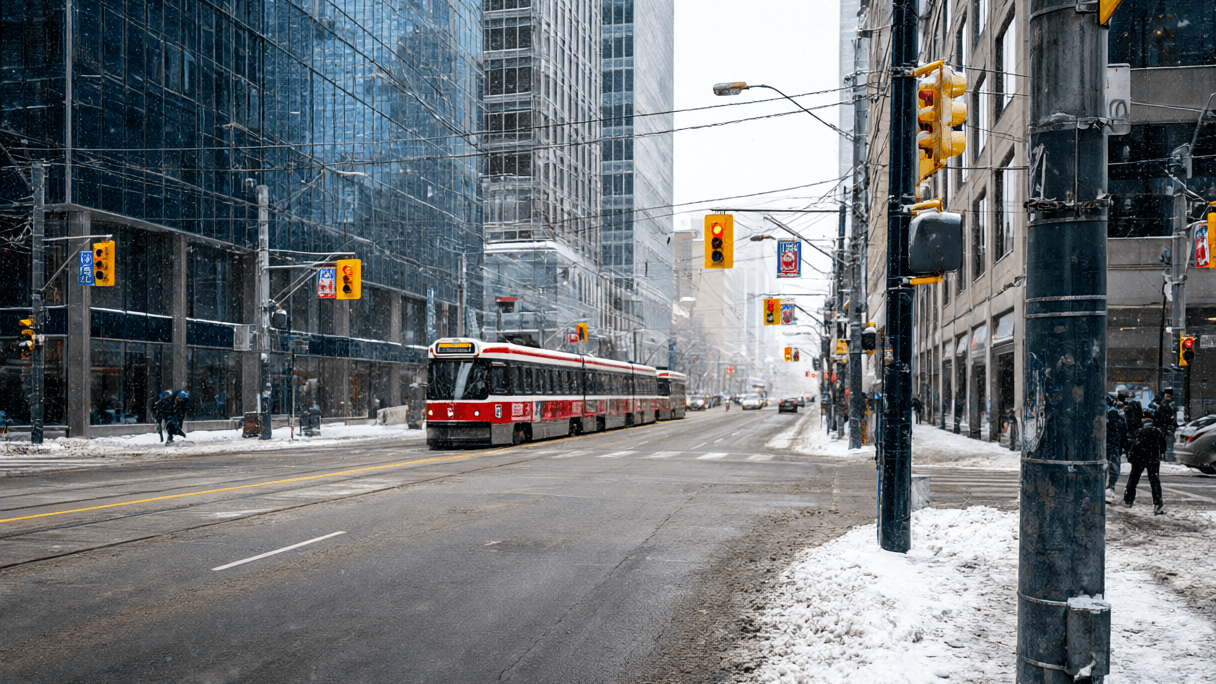
Adapting to Toronto is no small feat. BlogTO reports that Waymo is adopting a "safety-first approach," utilizing trained autonomous specialists behind the wheel during the testing phase. This is necessary because the "Waymo Driver" must learn to navigate uniquely Toronto conditions—specifically the presence of cyclists and the habit of streetcars stopping in mixed traffic, not to mention the inevitable onslaught of winter snow.
Beyond the passenger experience, the economic ripple effects are already surfacing. While the cars themselves lack drivers, the infrastructure supporting them will not. Laura Dottori-Attanasio, CEO of Toronto-based Element Fleet Management, stated that her company has partnered with Waymo to provide fleet management services. Dottori-Attanasio noted that Element plans to invest in hundreds of local jobs to provide the operational capabilities and intelligent mobility solutions required to scale autonomous fleets.
As we move toward 2028, the tension remains: will Waymo be a tool for genuine urban liberation, or just another layer of silicon and steel separating the haves from the have-nots on our city streets?