
NanoTess in Ukraine: Humanitarian Triumph or Clinical Question Mark?

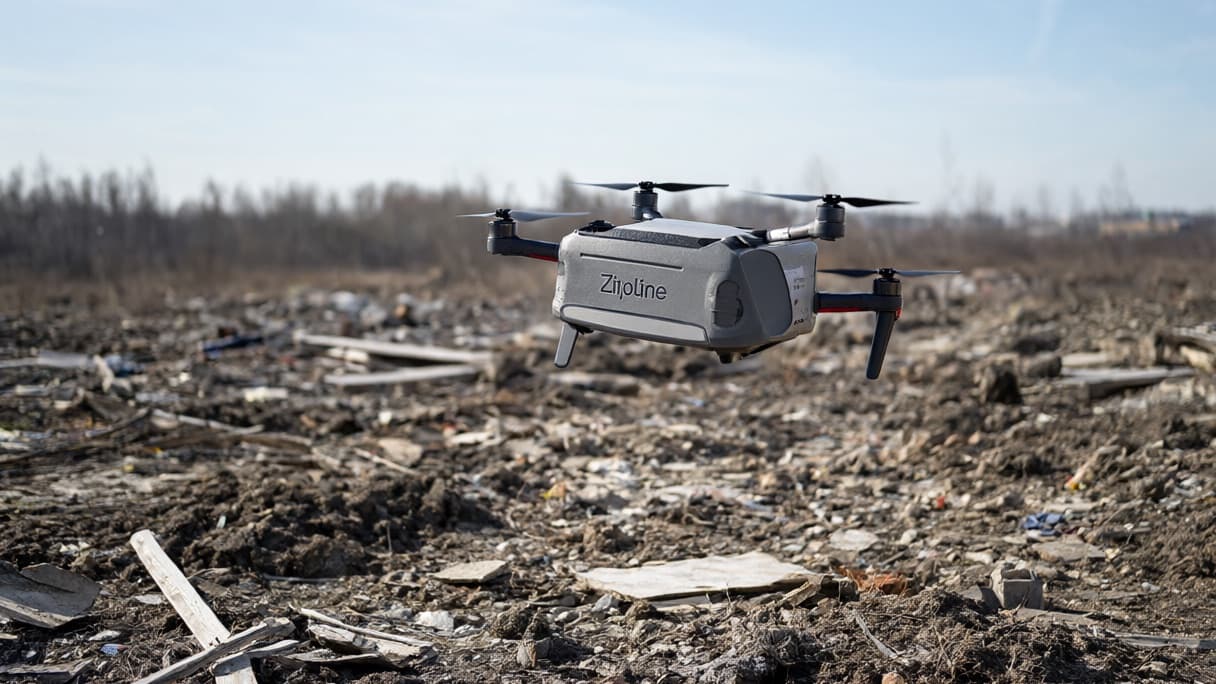
AI-generated image · Bay Street Wire
Opinion: While the delivery of NanoSALV to the front lines is a logistical feat for the Calgary biotech scene, the lack of transparent clinical data on field efficacy remains a concern.
The optics of the announcement are, by any measure, powerful. As BetaKit first reported, NanoTess, a Calgary-based biotech startup, has deployed its flagship wound and burn care treatment, NanoSALV Catalytic, to the front lines of the war in Ukraine. According to BetaKit, the company claims this topical gel—which utilizes catalytic particles to speed up the healing process—has already reached over 6,000 civilians and soldiers.
From a humanitarian perspective, the initiative is commendable. Dr. Vasyl Voronets, a military surgeon operating on Ukraine’s eastern front, emphasized in a press release the criticality of urgent care for burns and the high risk of infection in complex blast wounds caused by drone strikes. In a theater of war where medical access is precarious, any tool that can mitigate infection and accelerate recovery is a welcome addition.
However, as a tech columnist focused on the intersection of biotech and efficacy, I find myself wary of the gap between logistical success and clinical proof. The deployment of NanoSALV is a masterclass in partnership and delivery. BetaKit reports that NanoTess has coordinated with the Public Health Centre of Ukraine, the Ukrainian military’s Medical Forces Sustainment Group East, and the Calgary-based charity Medical Mercy Canada. The company has even utilized drone delivery to reach remote and dangerous regions.
But we must distinguish between the *delivery* of a product and the *proven efficacy* of that product in the specific, brutal conditions of a modern conflict zone. While NanoTess notes that NanoSALV was authorized by Health Canada in 2022 and is currently available in 14,000 pharmacies and more than 2,500 health facilities, the leap from a controlled pharmacy environment to a debris-filled blast wound on a battlefield is significant.
To date, the claims regarding the treatment of 6,000 individuals serve as a metric of reach, not a metric of clinical outcome. For those of us who track 'vaporware' and the tendency for biotech firms to lean on PR wins, the absence of peer-reviewed data or detailed field reports is a red flag. Are these 6,000 patients seeing a statistically significant reduction in infection rates? Is the healing time measurably faster than standard-of-care treatments in the field? Until these questions are answered with hard data, the narrative remains one of distribution, not necessarily medical breakthrough.
This skepticism is further compounded by the geopolitical and financial scaffolding supporting the venture. BetaKit reports that NanoTess has received support from the CAN Health Network, a federally funded organization designed to bridge the gap between health-tech firms and commercialization. Moreover, the firm is moving into the realm of 'dual-use' technology, leveraging support from the Department of National Defence (DND) to expand its manufacturing capabilities and joining the DND’s Innovation for Defence Excellence and Security program.
This shift toward defense innovation aligns with a broader diplomatic trend. BetaKit notes that in September, Ukrainian President Volodymyr Zelensky and Prime Minister Mark Carney signed a 100-year declaration to collaborate on defense innovation, with a specific priority placed on dual-use technology from the private sector.
While it is encouraging to see Canadian innovation support those in need, the integration of biotech into defense pipelines often prioritizes rapid deployment and strategic partnership over the slow, rigorous process of clinical validation. If NanoTess is to be viewed as a legitimate advancement in wound care—and not merely a successful case study in Canadian-Ukrainian defense cooperation—the company must move beyond press releases and provide the clinical evidence that justifies its use in the field.
Logistics are not medicine. Delivering a gel via drone to a soldier in a trench is a victory for the supply chain, but the true victory for the patient is a treatment that is proven to work under the most extreme conditions. I hope to see the data that proves NanoSALV is delivering the latter.