
Hadrian's $1.37B Bet on the Automated Factory Floor

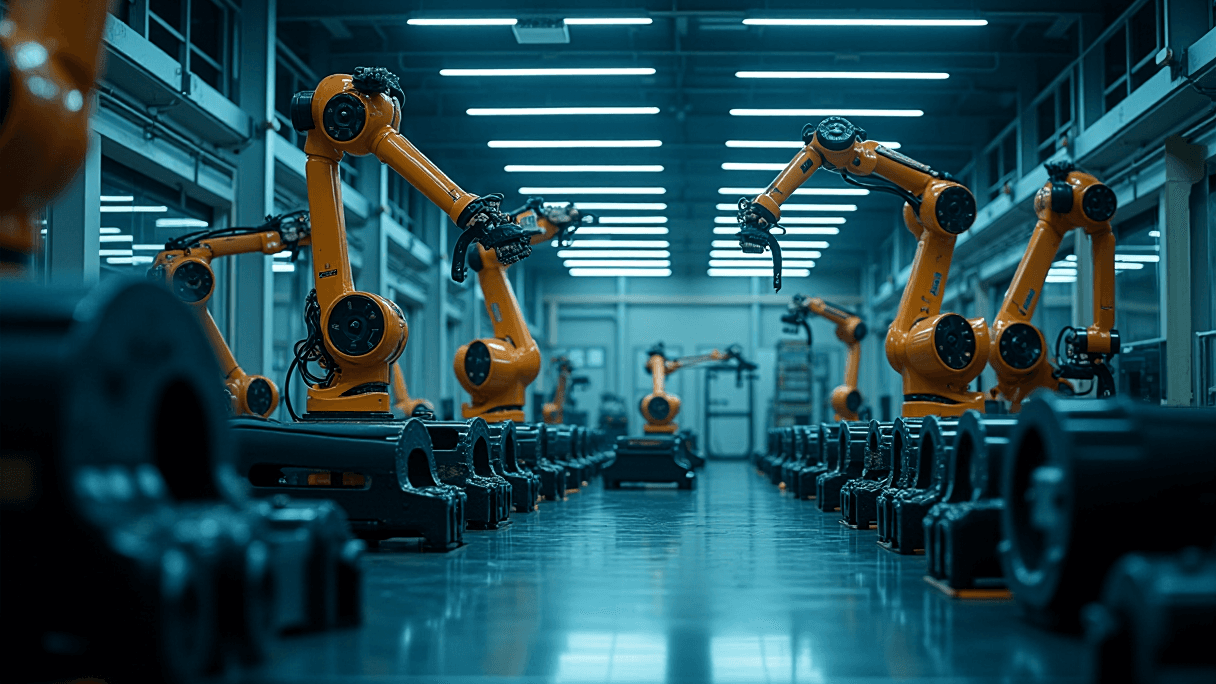
AI-generated image · Bay Street Wire
While other defense startups chase AI weaponry, Hadrian is scaling a full-stack manufacturing play to shore up the military-industrial complex's hardware supply chain.
In the current defense tech gold rush, the most critical bottleneck isn't necessarily the software—it's the hardware. While the venture world is saturated with AI-powered weapon systems, Hadrian is placing a massive bet on the unglamorous, essential work of automated manufacturing, as TechCrunch first reported.
According to reporting from TechCrunch, Hadrian has secured a fresh $1.37 billion funding round, propelling the company to a valuation of $7.87 billion. This latest capital injection brings the company's total funding to approximately $2 billion, based on estimates from PitchBook. The round saw participation from a wide array of institutional and venture players, including Morgan Stanley Wealth Management, 1789 Capital, CapitalG, Andreessen Horowitz, Altimeter, and funds managed by T. Rowe Price and Apollo.
Lead investors for the round included Valor Equity Partners, WCM Investment Management, Baillie Gifford, 137 Ventures, and Washington Harbour Partners. This follows a $260 million Series C round led roughly a year ago by Lux Capital and Founders Fund, who also participated in the most recent funding.
From a hardware perspective, Hadrian's strategy is distinct: it is not developing new weapons. Instead, it is building automated manufacturing facilities designed to mass-produce the components required for existing military vehicle fleets. This approach targets the chronic fragility of the defense supply chain by automating the production of legacy parts.
TechCrunch notes that Hadrian is already scaling its physical footprint. In March, the company opened its fourth facility in Alabama, specifically dedicated to the mass production of submarine parts. Hadrian stated that the Alabama facility was structured as a public/private partnership and was valued at $2.4 billion.