
Culture and Community: Why the Danforth's Newest Hub is a Blueprint for Toronto

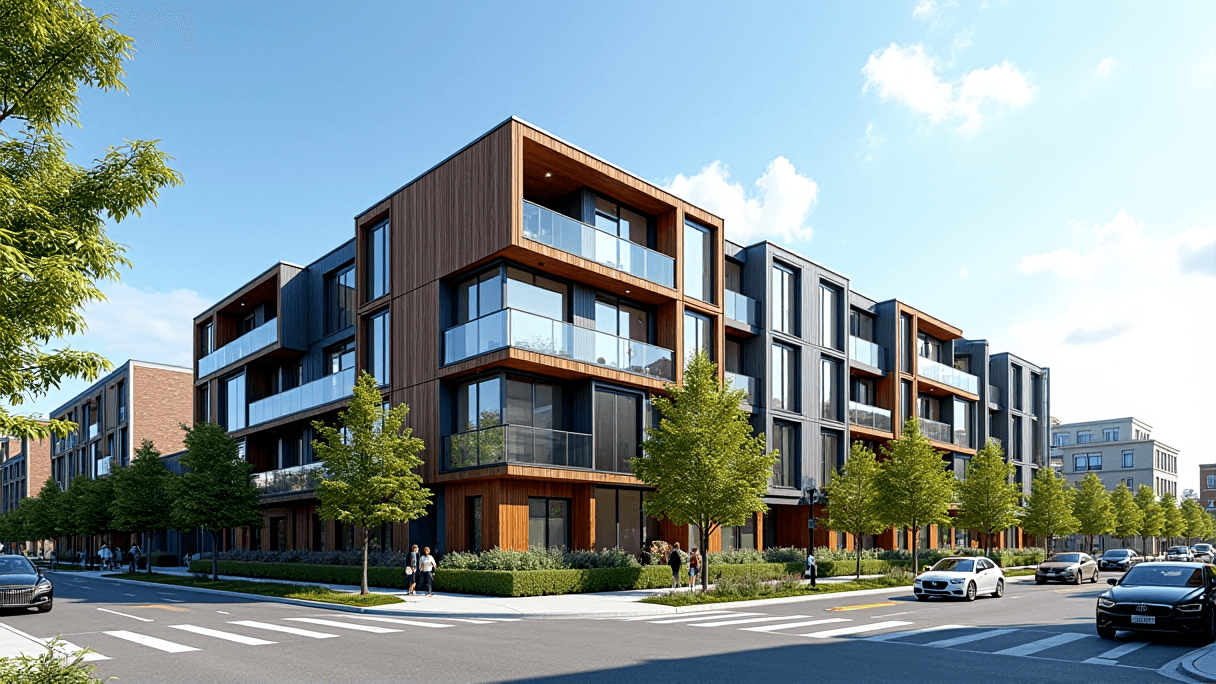
AI-generated image · Bay Street Wire
Opinion: The integration of Le Théâtre français de Toronto into a mixed-income housing project proves that urban density and cultural preservation can—and must—go hand in hand.
For too long, Toronto's urban development has often felt like a zero-sum game: we either prioritize the desperate need for housing or the preservation of the cultural spaces that make our neighborhoods livable. However, as first reported by the City of Toronto, the recent groundbreaking at 1111 and 1117 Danforth Ave. suggests a different, more integrated path forward. In my view, the decision to anchor a mixed-income community with a permanent home for Le Théâtre français de Toronto is not just a win for the East End, but a vital victory for the city's cultural accessibility.
According to a City of Toronto news release, this project is a creative collaboration involving Mayor Olivia Chow, Councillor Paula Fletcher, the developer Woodbourne, and the non-profit provider Neighbours Community Homes. The result is a strategic pairing of two developments. At 1117 Danforth Ave., Neighbours Community Homes—a provider with roughly 50 years of experience—will operate a purpose-built rental building featuring 27 rental replacement homes, 81 new homes, 40 affordable units, and 41 rent-controlled units.
But the true brilliance of this plan lies in the synergy between the residential and the artistic. By placing Le Théâtre français de Toronto at the base of Woodbourne's development at 1111 Danforth Ave., the city is ensuring that Francophone identity is not pushed to the margins, but is instead woven into the fabric of a revitalized main street. As the City of Toronto reports, this new space is intended to be a vibrant cultural hub that offers inclusive programming and theatrical vitality to the community.
Councillor Paula Fletcher noted that these developments reflect a vision of Toronto where residents can find housing and access essential community amenities close to home. This is exactly the kind of urban planning we need. When we integrate a French-language theatre into a development that serves a diverse range of incomes—including those who have experienced homelessness—we break down the invisible walls that often separate "high art" from the everyday lives of working-class residents.
Furthermore, the project demonstrates a pragmatic approach to construction that should be emulated. The City of Toronto news release explains that by aligning the designs of the two buildings, the projects can share infrastructure, which lowers construction costs. This coordination, supported by more than $13 million in capital funding and over $14 million in incentives via the Rental Housing Supply Program (RHSP), shows that the public and private sectors can collaborate to expedite approvals and deliver homes faster.
With more than 400 new mixed-income rental homes expected to begin occupancy in 2029, this project is a testament to the idea that density does not have to mean the erasure of identity. By securing a permanent home for Le Théâtre français de Toronto, the city is acknowledging that cultural vitality is as essential to a "complete community" as transit and shops. It is a bold statement that our city's linguistic diversity is a cornerstone of our urban identity, and it deserves a permanent, prominent place on the Danforth.