
Border Security's Hardware Heist: A Mirror of Corporate Incompetence

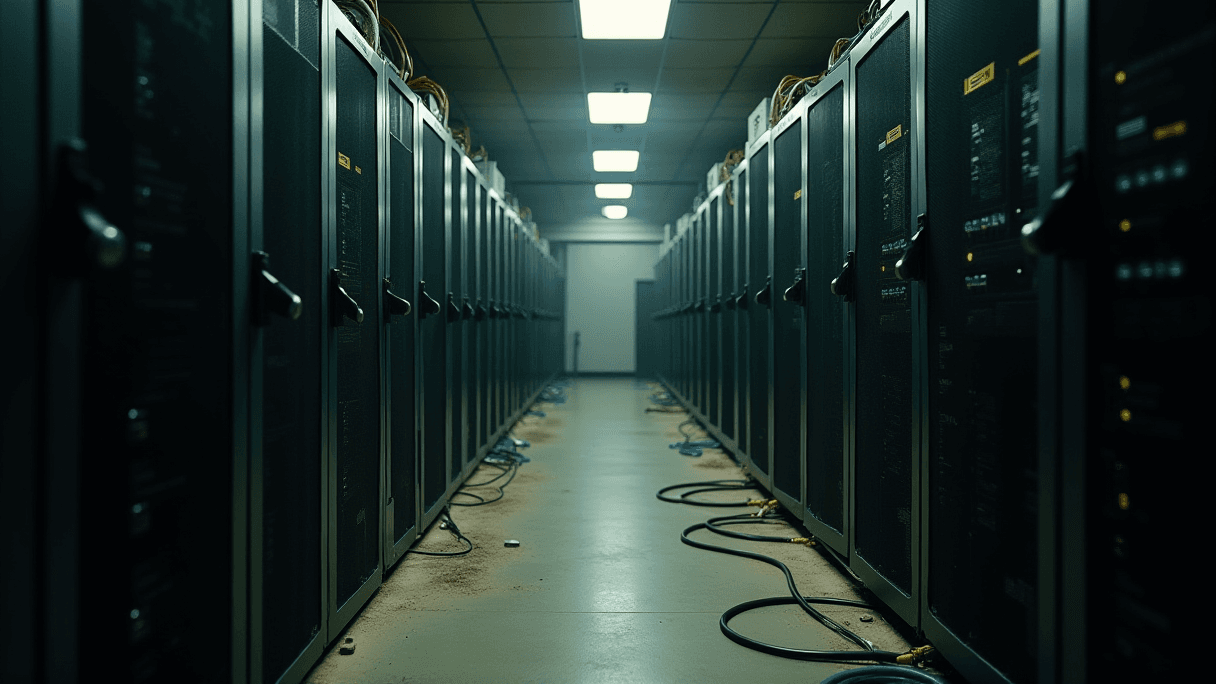
AI-generated image · Bay Street Wire
When a CBP supervisor loots government PCs for Newegg credit, it reveals a systemic failure of oversight that feels all too familiar to telecom customers.
OPINION: As a consumer advocate, I spend my days documenting the systemic failures of the Big 3 telecom giants—companies that routinely overpromise on infrastructure while delivering degraded service. It is a pattern of institutional incompetence that suggests a fundamental disregard for the integrity of the systems we rely on. Now, we see a mirrored version of this negligence playing out at our own borders.
As Tom's Hardware first reported, citing The Maine Wire, a staggering breach of trust has occurred within the Department of Homeland Security. Terry “Jiajia” Liu, a Customs and Border Protection (CBP) supervisor based in Calais, Maine, has been arrested and charged by the FBI for theft and damage to government property. The details are as absurd as they are damning: Liu allegedly systematically looted computer hardware from at least 46 DHS computers across three Maine border facilities.
The report indicates that Liu sought out high-performance parts, specifically hard drives, memory modules, and Intel 14th Generation Raptor Lake Refresh processors. In a move that echoes the 'bait-and-switch' tactics often employed by corporate giants, Liu didn't just steal the tech; they replaced it with inferior hardware. Investigators found that 39 computers had their processors swapped—some downgraded all the way to Pentium chips—while other machines saw reductions in memory and storage capacity.
What makes this particularly galling is that the incompetence was preventable. Port Director Theodore Cummings had explicitly issued a written order to Liu stating, “Please do not move any computers or computer parts.” Despite this clear directive, surveillance footage captured Liu using a screwdriver to scrape thermal paste off processors and swapping parts during midnight shifts in a training room.
Liu’s method of liquidation was equally brazen. Rather than using the second-hand market, Liu utilized Newegg’s Trade-In program. Between May 2025 and July 2026, Liu allegedly traded in Core i7 Raptor Lake Refresh chips 16 times, receiving credits ranging from $200 to $210 per processor. Investigators discovered 13 emails between Liu's personal and official CBP accounts containing shipping labels and trade-in receipts, while American Express records showed three $200 Newegg credits.
While Liu initially claimed the modifications were intended to improve performance and repair times, they eventually admitted to investigators that the changes actually degraded the systems. The financial toll is significant: restoring the stolen hardware is estimated at $20,460, but fully replacing the 46 compromised computers would cost approximately $105,800—a figure that does not include the additional labor required to reconfigure the systems for government use.
When the very people tasked with securing our borders cannot stop a supervisor from treating government hardware like a personal piggy bank, it is more than just a local crime. It is a symptom of a broader culture of failure. Whether it is the Big 3 neglecting our connectivity or the CBP neglecting its own equipment, the result is the same: the people at the top fail, and the infrastructure we depend on is left to rot.