
Beyond the Forecast: How Winter's 'Dramatic Contrasts' Threaten Toronto's Infrastructure

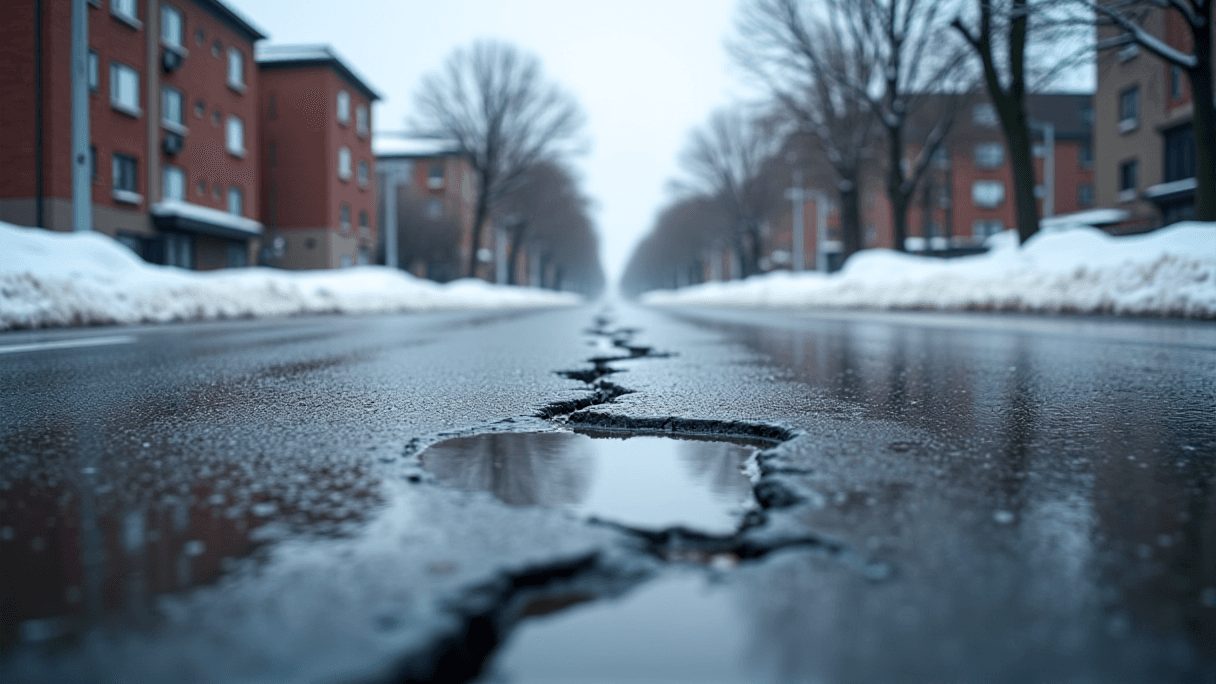
AI-generated image · Bay Street Wire
As the Old Farmer's Almanac predicts a volatile 2026-27 winter, the risk of freeze-thaw cycles and erratic precipitation poses a significant challenge to city resilience.
While the immediate reaction to a winter forecast is often focused on the amount of snowfall, the deeper concern for Toronto lies in the volatility of the patterns predicted for the 2026-27 season. As BlogTO first reported, the Old Farmer's Almanac has issued a warning that Canada's upcoming winter will be defined by "dramatic contrasts," characterized by a mixture of snow, sleet, and sudden surprises.
For Toronto and other major southern Ontario hubs—including Hamilton, Windsor, London, and Ottawa—the primary risk is not necessarily a consistent deep freeze, but rather temperatures that hover near the 0 C mark. BlogTO reports that the Almanac describes Ontario as one of the "most active battlegrounds" this winter. This positioning means the city could face a chaotic mix of precipitation, where small shifts in storm tracks determine whether the city receives rain, heavy wet snow, or dangerous ice coatings.
From an infrastructure perspective, the most concerning detail provided in the BlogTO report is the expectation of "turbulent freeze-thaw cycles" in southern Ontario. Unlike northern Ontario, which is expected to have a more consistent winter, Toronto's environment will be subject to milder stretches interrupted by sudden outbreaks of Arctic air, where snowstorms may transition to sleet or rain before temperatures plunge again.
Contributing to this instability is a strengthening El Niño in the tropical Pacific. BlogTO notes that the NOAA's Climate Prediction Center estimates a more than 90 per cent chance of a strong El Niño during the Northern Hemisphere's fall and winter. The Almanac suggests this pattern can rearrange storm tracks and the jet stream, fueling the regional contrasts and unpredictable weather patterns expected to hit the Great Lakes region.
As the city prepares, the focus remains on managing the impacts of these "active battlegrounds." With the potential for harsh lake-effect snow combined with freezing rain, Toronto faces a winter that refuses to remain uniform.