
Beyond the Bridge: How Ukraine's Mesh Network Bypasses Satellite Kill-Switches

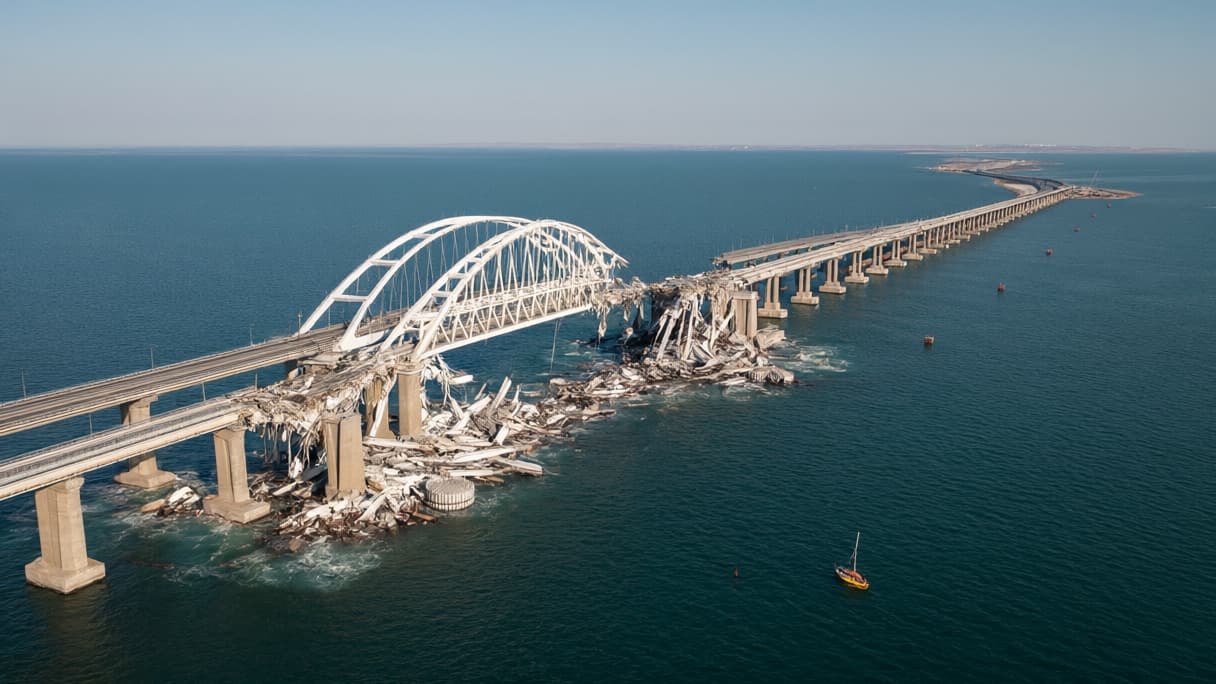
AI-generated image · Bay Street Wire
The collapse of the Kerch Strait Bridge is a tactical win, but the real story is the shift toward sovereign, low-latency hardware stacks that render commercial satellite limits irrelevant.
As Ars Technica first reported, a coordinated Ukrainian barrage of missiles and drones caused the structural collapse of a key steel arch on the Kerch Strait Bridge on November 15 and 16, 2026. According to an update from the Institute for the Study of War, the strike hit the roadway for automobile traffic; a subsequent strike on November 18 targeted the railway section, leading Russia-aligned officials in Crimea to temporarily suspend train traffic, as reported by ABC News.
The operation highlighted a strategic shift toward sovereign communications. The Financial Times reports that Ukrainian units deliberately avoided using Starshield—the military version of Elon Musk's Starlink—due to U.S. restrictions that prevent the network's use on assets traveling faster than 100 mph (161 km/h). Instead, Ukraine deployed a homegrown flying mesh network.
This system uses drones equipped with mesh radios as relay nodes to maintain communication links over vast distances. In the Kerch Strait operation, this allowed operators located more than 250 kilometers (155 miles) away to guide weapons around Russian air defenses. The Financial Times notes that Ukraine adapted this technique from Russia, which had previously used it for strikes on Ukrainian cities.
The attack prominently featured the homegrown Flamingo cruise missile, according to Russian sources. Additionally, the Ukrainian General Staff stated that Neptune cruise missiles operated by the Ukrainian Navy were used in the follow-up railway strikes.
President Volodymyr Zelenskyy noted that U.S.-imposed speed limits had previously interfered with drone interceptor technologies. By developing these low-latency relay systems, Ukraine is reducing its reliance on external providers and mitigating the risk of commercial satellite "kill-switches."