
A Failing Grade for Canada: Why Our Climate Inertia Threatens Ontario's Future

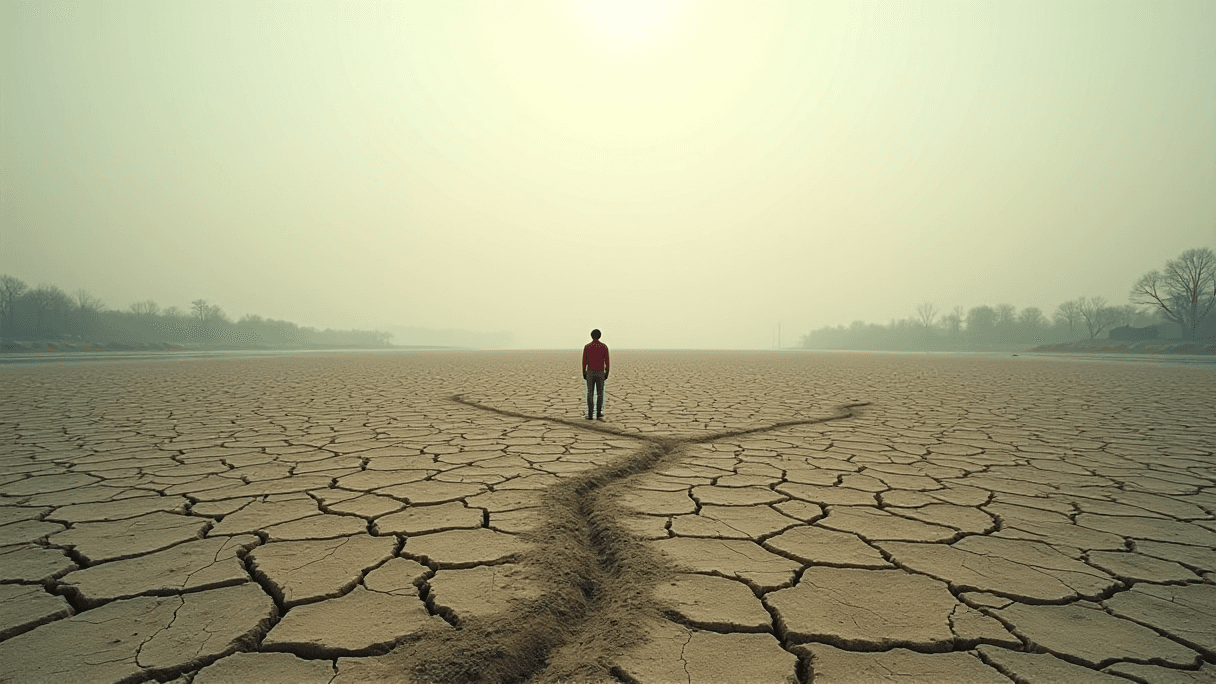
AI-generated image · Bay Street Wire
Opinion: The latest Environmental Performance Index reveals a systemic failure in federal strategy that leaves Canada—and Ontario—dangerously behind the Global West.
As a resident of Ontario, I have always believed in the Canadian ethos of resilience and leadership. But when looking at the latest environmental report cards, that sense of pride is replaced by a cold realization: we are flunking.
As first reported by CBC News, Canada ranks 29th globally according to the July release of the Environmental Performance Index (EPI), a collaborative effort by Columbia University and the Yale Centers for Geospatial Solutions and Environmental Law & Policy. While that might sound respectable in a vacuum, the reality is far more grim when compared to our peers. Canada ranked second to last among 22 "Global West" countries.
This is not a minor dip in performance; it is a systemic failure. This is my opinion: the federal government's current trajectory is not just insufficient—it is a gamble with our long-term ecological stability.
To understand the scale of the failure, one only needs to look at the numbers reported by CBC News. Canada scored 57.78 out of 100, trailing the Global West average of 64.74. The most damning metrics are found in the categories that define our environmental health. Canada ranked 45th in the overarching category for climate change policy. Even more alarming is our standing in greenhouse gas emissions trend per capita, where we rank 133rd. Our score of 24.26 in this category is a staggering distance behind the Global West average of 44.87.
While EPI lead researcher Zach Wendling noted to CBC News that Canada's score is 7.65 points better than it was a decade ago, these incremental gains are a distraction. We are celebrating small steps while our competitors are leaping. Take Estonia, for example. Estonia took the top spot on the EPI, largely by aggressively cutting shale oil power generation, which reduced greenhouse gas emissions by 40 per cent. Estonia has set a clear, ambitious target: carbon neutrality by 2050 and a transition to entirely renewable electricity by 2030.
Wendling describes the act of shutting down dirty, outdated generation technology as picking "low-hanging fruit"—an apple the size of a beach ball right at one's knees. Canada, by contrast, seems unable or unwilling to reach for the fruit.
Our failures extend beyond carbon. The EPI data, compiled between 2022 and early 2026, shows Canada is weakest in protected lands, fishing, and climate change. Most alarming is Canada's position—162nd—regarding the risk that agricultural pesticide pollution poses to biodiversity. For those of us in Ontario, where agriculture is a cornerstone of our regional economy and ecology, this ranking is a wake-up call. We are poisoning our own biodiversity, and the federal strategy is failing to stem the tide.
Why are others succeeding where we are failing? Debora Van Nijnatten, a professor in environmental and net zero policy at Wilfrid Laurier University in Waterloo, Ont., points to the statutory frameworks of the European Union. Under the European Green Deal, a Climate Law mandates that the region achieve carbon neutrality by 2050, with interim goals to cut emissions by 35 per cent by 2030 and 90 per cent by 2040. They have a Net-Zero Industry Act and a functioning emissions trading system. They have laws; we have suggestions.
If the current state of affairs was concerning, the direction under Prime Minister Mark Carney is terrifying. Since the EPI data was compiled, Carney has nixed the consumer carbon price and explicitly stated that emissions will rise. Furthermore, the Canadian Climate Policy Inventory reports that in 2025, more policies ended or had their funding allocated away than were actually introduced.
This is a government in retreat. We are seeing a "climate policy transition period," as Van Nijnatten describes it, but it feels less like a transition toward sustainability and more like a transition toward irrelevance. This pattern of failure is consistent across multiple metrics: Canada ranked 61st out of 76 countries on the 2026 Climate Change Performance Index and was rated as "highly insufficient" in the November 2025 report from Climate Action Tracker.
We cannot afford to be the second-to-last country in the Global West. When our biodiversity is threatened by pesticides and our per capita emissions trends are among the worst in the world, we aren't just failing a test—we are failing our future. If we continue to dismantle policies rather than introduce them, as the Canadian Climate Policy Inventory suggests, our next report card will not just be bad; it will be catastrophic.
It is time for the federal government to stop looking for excuses and start looking at the examples set by countries like Denmark and Norway. We need statutory frameworks, not temporary targets. We need to stop treating the environment as a secondary concern and start treating it as the foundation of our economic and social stability. If we don't, Ontario and the rest of Canada will find themselves in an ecological wasteland, wondering why we ignored the warnings when they were written in plain black and white.