
The TTC's Endless 'Adjustments' Are a Mask for Systemic Failure

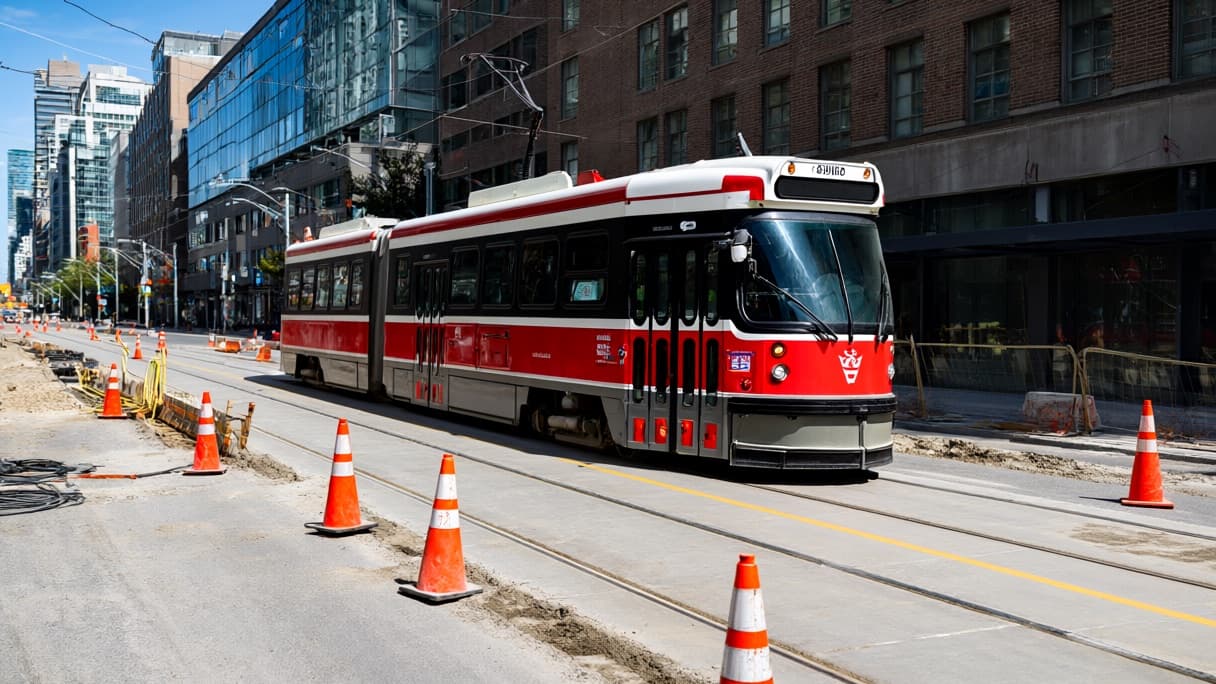
AI-generated image · Bay Street Wire
Opinion: By framing constant service disruptions as necessary infrastructure updates, the TTC is avoiding the harder truth about the city's crumbling reliability.
Let’s be clear: this is an opinion piece. As a resident of this city, I have watched the Toronto Transit Commission (TTC) master the art of the linguistic pivot. Whenever the system falters or a route vanishes, we are told it is an "adjustment" or a "restoration project." But when these adjustments become a permanent state of existence, they stop being improvements and start becoming a mask for systemic failure.
As CBC Toronto first reported, a fresh wave of service changes took effect this past Sunday. The TTC claims these shifts are necessary to accommodate infrastructure and restoration projects, ranging from seasonal demand to water main replacements. On the surface, it sounds like responsible stewardship. In reality, it is a chaotic shuffle that leaves commuters guessing where their ride actually is.
Take the situation on King Street W. CBC Toronto reports that water main replacement construction between Close Avenue and Dufferin Street, and between Portland Street and Spadina Avenue, has forced the 503 King streetcar into a single branch between Dundas West and Broadview stations. Meanwhile, the 504C King has been relegated to replacement buses seven days a week between the Sunnyside Loop and the Distillery Loop. To make matters worse, the 508 Lake Shore streetcar service has been suspended entirely.
This isn't a one-off inconvenience. CBC Toronto notes that this is the second time in two years that construction has hit this specific area, triggering diversions and bus replacements. When questioned in September, TTC spokesperson Stuart Green defended the work, stating the track had reached its 15-year lifespan. While the TTC points to the fact that they repaired tracks at King Street W. and Dufferin Street in 2025 ahead of the World Cup, the pattern is clear: we are perpetually reacting to decay rather than preventing it.
Then there are the "reliability" adjustments. Weekday schedules for Line 1 Yonge-University and Line 2 Bloor-Danforth are currently being modified by the agency. While the TTC claims these changes will improve reliability, the very need for constant rescheduling suggests a system that is fundamentally unstable. Even the touted "frequent service" on Line 5 Eglinton feels like a small consolation when the rest of the network is in a state of flux.
Across Scarborough, the TTC is playing a game of musical chairs with express routes. CBC Toronto reports that the 903 Kennedy Station-Scarborough Express has been renamed the 903 Kennedy-Progress Express, and the 904 Sheppard-Kennedy Express is now the 904 Don Mills-Scarborough Express. Though the agency argues this improves service, the 904 and the 939C Finch Express will no longer utilize the Scarborough Busway between Kennedy and Scarborough Centre stations.
When the TTC removes service from the 43C Kennedy during peak periods—a move they claim was approved in the 2024 Annual Network Plan—they tell customers to simply find "alternative service." This is the hallmark of the current TTC philosophy: the burden of reliability has shifted from the provider to the passenger.
We are told these disruptions are the price of progress. But when the 503 Kingston Road replacement buses are extended to the Dufferin Gate Loop and streetcar tracks are replaced year after year, it doesn't feel like progress. It feels like a system barely holding on by a thread, using the word "adjustment" to avoid admitting that the basic reliability this city pays for has vanished.