
The Titanium Pivot: Why Samsung's New Display Tech Solves the Foldable Equation

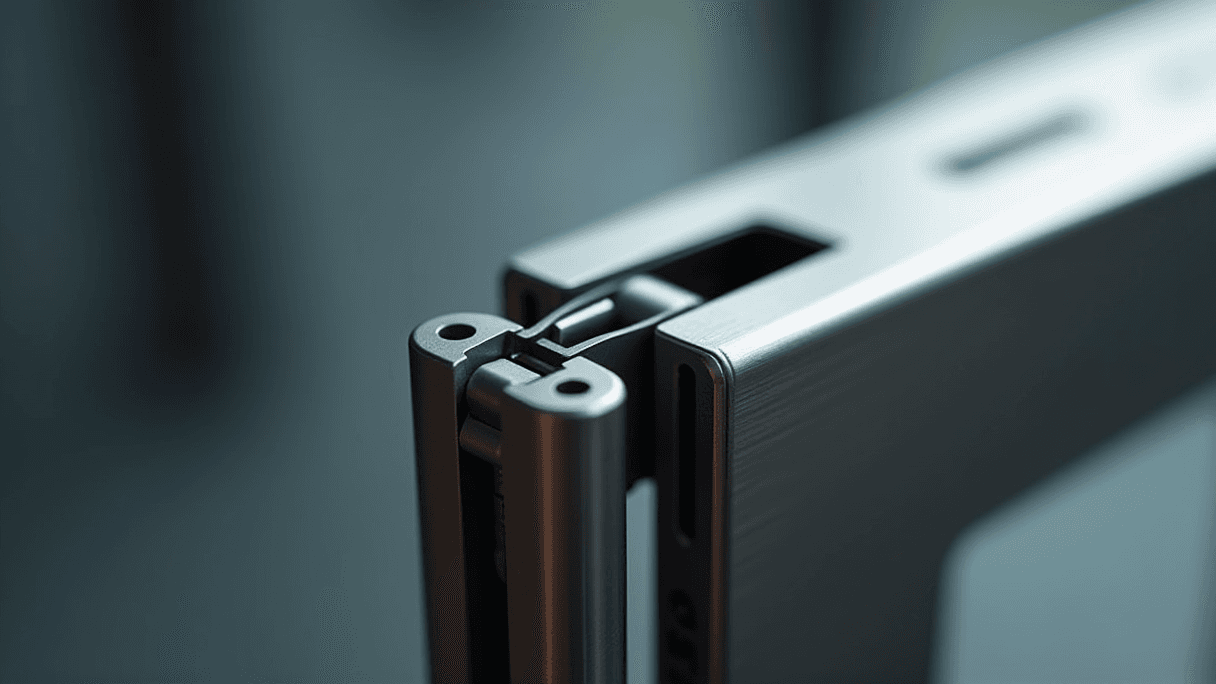
AI-generated image · Bay Street Wire
Opinion: Samsung's Flex Titanium isn't just a spec bump—it's the material science breakthrough that finally addresses the foldable longevity bottleneck.
For years, the foldable phone has been a study in compromise. We've accepted the 'crease' as a necessary tax for the utility of a folding screen. But based on the latest reveal from Samsung, first reported by The Verge, we are finally moving past the era of polymer-based compromises.
In my view, the introduction of Flex Titanium is the most critical signal yet that the industry is solving the material science bottleneck that has plagued foldable longevity. This isn't just about making a phone that feels 'premium'; it is about fundamentally re-engineering the structural integrity of the foldable interface.
According to reporting from The Verge, Samsung's Flex Titanium technology utilizes two specific titanium-based components to overhaul the display's architecture. First, there is a titanium-alloy film situated beneath the OLED panel. Samsung claims this film provides mechanical stiffness that is 20 times greater than traditional polymer films, all while maintaining a thickness roughly one-third that of a human hair. Second, a titanium plate sits under that film to ensure tighter bonding with the display module.
From a hardware perspective, this is a masterstroke. By balancing structural stability with the flexibility required for repeated folding, Samsung is attacking the crease problem from the bottom up. The goal, as Samsung stated in its announcement, is to maximize content immersion on a seamless screen while reducing the visibility of the crease—an issue The Verge notes still affects every foldable currently on the market.
But this shift has implications well beyond the upcoming Galaxy Z Fold 8 and Galaxy Z Fold 8 Ultra. The real story here is the supply chain. Samsung Display is a long-time supplier for Apple, and it has since been reported that Samsung Display signed a three-year exclusivity deal to provide screens for a rumored, crease-free Apple foldable.
After Samsung Display previously described a creaseless OLED as an "R&D concept," the commercialization of titanium-based structural support signals a tipping point. We are seeing a transition from flexible plastics to rigid-yet-pliant alloys. This shift doesn't just reduce the crease; it increases the overall durability and slimness of the device while, according to Samsung, reducing power consumption and providing 'ultra-vivid' resolution.
If the Flex Titanium tech can deliver on the promise of eradicating the visible crease, the primary psychological barrier to mass foldable adoption vanishes. We are no longer looking at a fragile novelty, but a durable piece of deep-tech hardware. Samsung is setting the bar, and if the rumored iPhone foldable follows suit, the foldable form factor will finally move from a niche enthusiast category to the industry standard.