
The Thermal Blind Spot: How Regulatory Loopholes Enable the Wonder Valley Data Centre

AI-generated image · Bay Street Wire
A physicist warns that O’Leary Digital’s $70-billion project could dump the energy equivalent of 23 atomic bombs into the Alberta boreal forest daily, while the province maintains standard permits are sufficient.
The proposed Wonder Valley data centre is being marketed as a leap in technological progress, but as CBC News first reported, an analysis of the project reveals a potential environmental catastrophe hidden behind regulatory technicalities. The $70-billion facility proposed by O’Leary Digital Limited would be located in the Municipal District of Greenview, south of Grande Prairie.
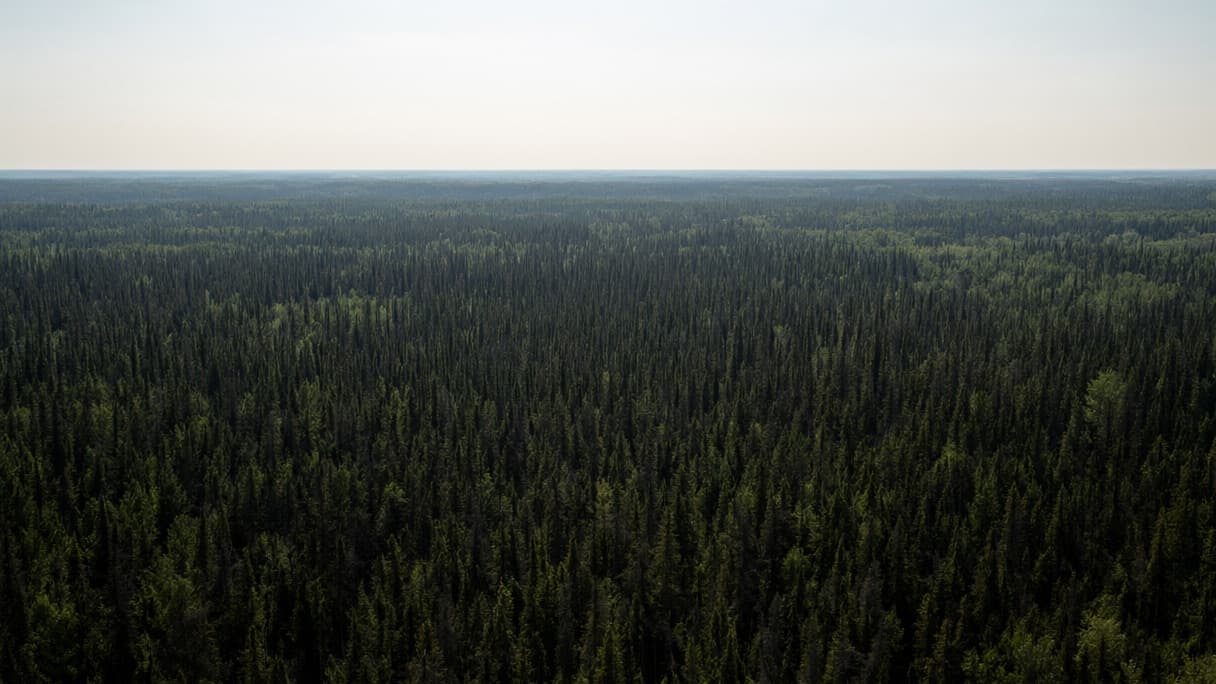
At the center of the controversy is the sheer scale of thermal waste. Robert Davies, a physicist at Utah State University who conducted a preliminary analysis for the Sturgeon Lake Cree Nation (SLCN), warns that the project could become the largest single-site heat source on Earth. Davies estimates that at full operation, the facility would release approximately 18 gigawatts of heat per day—an amount of energy CBC News reports is equivalent to 23 Hiroshima-sized atomic bombs being dumped into the northwestern Alberta boreal forest every single day.
Beyond the heat, Davies notes the project's carbon footprint would be massive, releasing roughly 30 million tonnes of carbon dioxide annually. According to Davies, this amount exceeds four per cent of all emissions produced across Canada. Despite these projections, the project has been exempted from a provincial environmental impact assessment (EIA).
Alberta’s Ministry of Environment and Protected Areas defended this exemption in an Oct. 30 statement, asserting that EIAs are reserved for projects involving "unknown environmental impacts." The Ministry argues that Wonder Valley uses "standard, proven power and water systems" that have operated safely in Alberta for decades. The province maintains that proponents must still secure permits and provide technical assessments on air, land, and water impacts.
However, Davies argues that this permitting process is fundamentally flawed when applied to a project of this magnitude. He contends that while permits evaluate individual components, only a full assessment evaluates the project as a whole. He further suggests that existing environmental regulations were never designed to handle a project of this scale.
This regulatory gap has led to a protracted legal battle. In September, the Sturgeon Lake Cree Nation filed for a judicial review of the project's EIA exemption. Orlagh O’Kelly, lawyer for SLCN, describes the current legal system as "deliberately bifurcated and piecemeal," forcing First Nations to rely on litigation to ensure their voices are heard. SLCN has also sought further court reviews to demand more consultation before the project proceeds.
O’Leary Digital CEO Paul Palandjian stated in an Oct. 27 email that the company respects the "stringent regulatory process" and is engaged in "productive dialogue" with Indigenous communities. Similarly, Greenview Reeve Ryan Ratzlaff stated the district pursues development in a "responsible, respectful and collaborative manner," though he noted that Indigenous consultation and environmental oversight are the responsibility of the Alberta government.
For Chief Sheldon Sunshine of the SLCN, the project represents a systemic failure, stating that Wonder Valley is a project that "went the absolute wrong way."