
The Tactical Pivot: Can Rozvelt's Scent-Masking Tech Survive the Battlefield?

AI-generated image · Bay Street Wire
Opinion: While the shift from hunting gear to defense contracts is a smart business move, the real test for Rozvelt is whether its sensor-driven filtration can scale for combat environments.
In the world of hardware, the 'dual-use' pivot is a well-worn playbook. You build a niche consumer product, realize the core technology solves a high-stakes problem for the state, and suddenly you're not just selling to hobbyists—you're pitching to generals. As first reported by BetaKit, this is exactly the trajectory Montréal startup Rozvelt is currently charting.
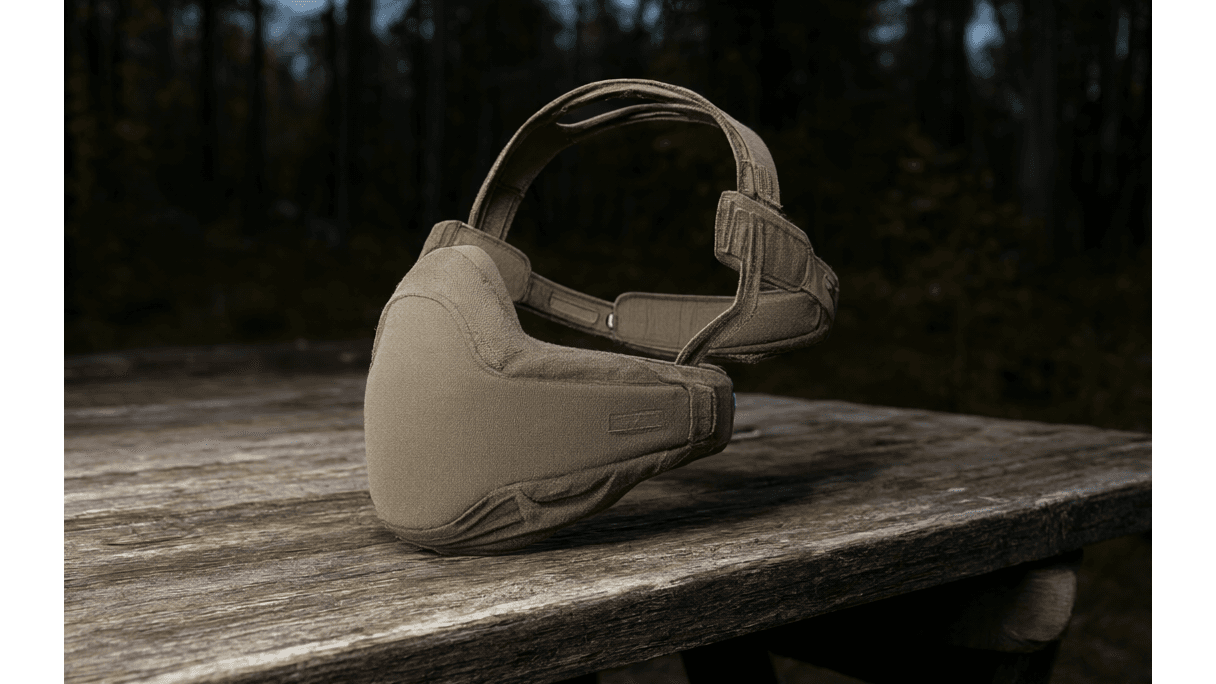
Rozvelt began with the Vektr, a breathable headgear system designed for recreational hunters, nature observers, and wildlife photographers. The original value proposition was simple: filter out the wearer's exhaled odor particles to avoid detection. It is a clever piece of kit, utilizing a magnetic connection to an adjustable head-wrap. But as CEO Nicholas Monette told BetaKit, the real epiphany happened at the SHOT Show in Las Vegas. There, the company realized that the ability to filter air isn't just about hiding from deer; it's about protecting soldiers from lead particles emitted during gunfire—particles linked to kidney failure, hypertension, and cardiovascular disease.
From my perspective as a hardware nerd, this is a classic strategic pivot. By expanding into the defense, law enforcement, and first responder sectors, Rozvelt is moving from a discretionary consumer spend to a mission-critical procurement cycle. The financial markets are already responding; the company recently secured $3.1 million CAD in seed funding, led by Benoit Robert, a partner at the wealth management firm Evovest.
However, the leap from a hunting blind to a tactical battlefield is massive. The company's plan is to make its headgear 'dynamic,' allowing it to switch between filtering exhales (for scent concealment) and filtering inhales (for PPE protection). While this sounds seamless in a pitch deck, the reality of tactical environments—dust, mud, high-intensity movement, and integration with other combat gear—is where most hardware fails. The question isn't whether the filtration works in a lab, but whether this specific form factor can scale to meet the rigors of active combat.
Rozvelt is betting heavily on international appetite to prove its concept. To showcase the tech, Monette presented the product at SEECAT in Japan, a NATO conference in Luxembourg, and Poland's International Defence Industry Exhibition. Most notably, BetaKit reports a partnership and planned distribution agreement with Seaprex, a Japanese industrial marine manufacturer with defense applications.
There is also a geopolitical tailwind here. Monette noted that being a Canadian startup with dual-use applications has made the company attractive to investors in Asia and Europe. This comes at a time when the Liberal government under Prime Minister Mark Carney has committed tens of billions of defense dollars and increased support for dual-use tech. While Monette says international interest preceded the domestic 'gold rush,' the alignment is clear.
Rozvelt is now eyeing the Canadian Armed Forces and remains open to deals with the US military. But as they move toward production of the consumer Vektr this fall and push deeper into defense, the company faces the ultimate hardware hurdle: proving that a mask designed for the quiet of the woods can survive the chaos of the front line. If they can bridge that gap, they aren't just selling a mask—they're selling a new standard for tactical respiratory protection.