
The Starlink Precedent: Why Geopolitical Infrastructure Cannot Belong to One Man

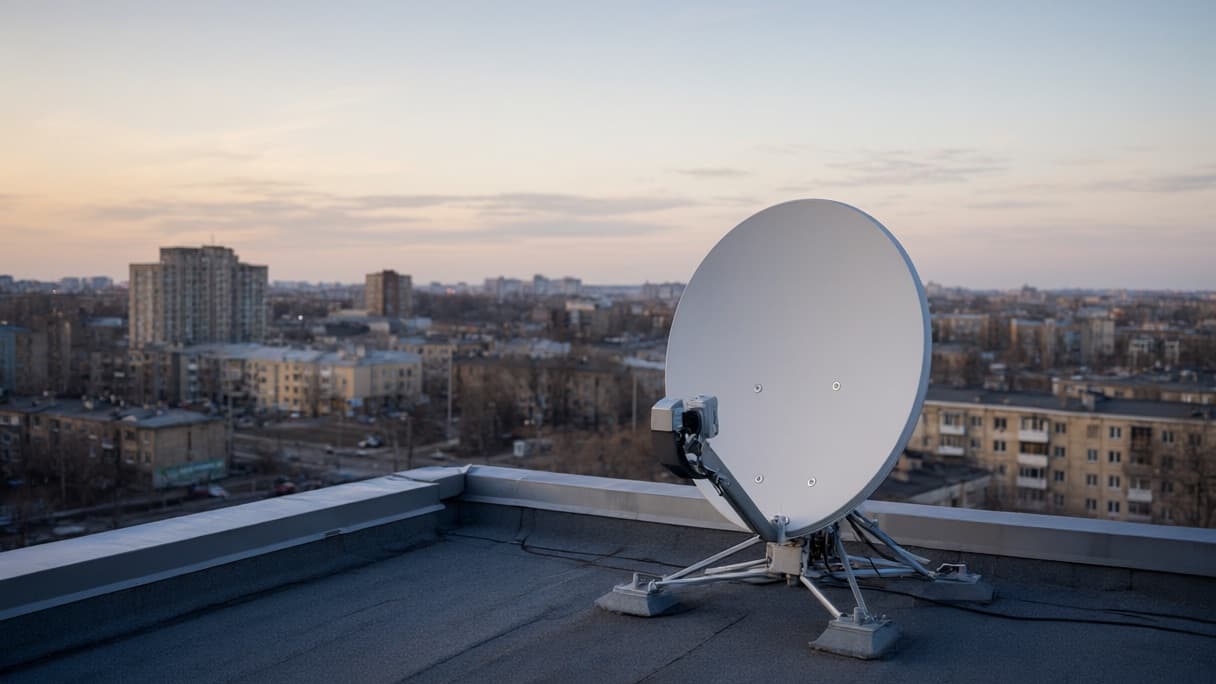
AI-generated image · Bay Street Wire
Opinion: Elon Musk's public spat with Ukraine over 'kill decisions' reveals the systemic danger of outsourcing national security to a billionaire's whim.
I have spent years watching the crypto and web3 space attempt to decentralize power, but the current drama surrounding SpaceX and Ukraine is a masterclass in the opposite: the catastrophic risk of extreme centralization. When critical geopolitical infrastructure is held by a single individual, the world doesn't get a service provider; it gets a sovereign entity with the temperament of a social media troll.
At a recent New York Times DealBook Summit, Elon Musk attempted to frame his interference in the Ukraine conflict as a matter of principle. According to reporting from The Verge, Musk claimed that Starlink is a "civilian system" and not intended for "offensive drone strikes that kill people." He went as far as to call Ukrainian President Volodymyr Zelenskyy a liar, claiming Zelenskyy was untruthful about disruptions to Starshield—a separate, US government-controlled system. Musk's logic is simple: if Ukraine wants offensive military capabilities, they should use Starshield, because he, as a private individual, refuses to make "kill decisions."
This is where the systemic failure becomes glaring. Musk is positioning himself as a neutral arbiter of war, yet he is the sole proprietor of the very technology the Ukrainian military has relied upon. By his own admission, he believes the decision to execute offensive military actions should reside with the War Department or the U.S. president, not himself. However, when a private company's consumer service becomes the backbone of a nation's defense, the line between "civilian service" and "military infrastructure" vanishes. The fact that Musk feels qualified to decide which uses of his technology are "offensive" is a terrifying prospect for any allied nation.
This isn't just about Starlink; it's about a pattern of behavior. As TechCrunch reports, Musk has spent staggering sums of money to influence American politics—reportedly $277 million to help Donald Trump win the 2024 presidency and some $445 million to support Republican candidates in the midterms. While he recently claimed at the DealBook Summit that he is "not MAGA" and expressed feeling "foolish" about the amount of money spent, his actions suggest a man who views the levers of global power as personal toys.
Now, the consequences are catching up. TechCrunch notes that Democratic lawmakers are signaling potential investigations into Musk's business activities, specifically his role in the "government efficiency" initiative known as DOGE and Starlink's activities in Ukraine, where the company is accused of throttling military internet access.
We are witnessing the ultimate failure of the "founder-king" model. When a single ego-driven billionaire controls the satellites that determine the success of a military operation, the rule of law is replaced by the whims of a man who, as Andrew Ross Sorkin noted during the summit, has a history of telling critics to "go f’— themselves."
National security cannot be a subscription service subject to the mood swings of a CEO. The Starlink saga is a warning: if we continue to outsource critical infrastructure to the highest bidder or the loudest voice, we aren't just buying technology—we are handing over our sovereignty.