
The Shadow AI Gap: Heavy Industry Workers are Innovating in a Vacuum

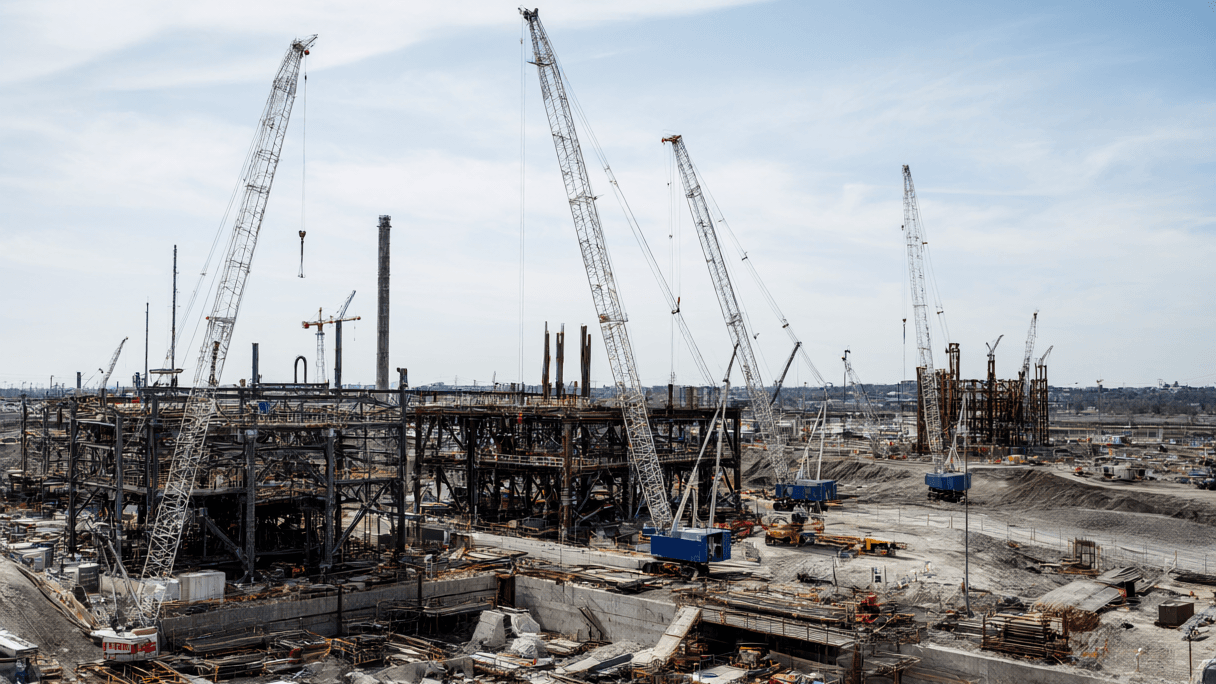
AI-generated image · Bay Street Wire
New data shows nearly half of Canadian heavy industry workers are deploying AI on their own, while the vast majority receive zero formal guidance from management.
In the world of machine learning, we often talk about 'deployment' as a top-down corporate initiative. But in the trenches of Canadian heavy industry, a different phenomenon is occurring: a grassroots surge of 'shadow AI' where the workforce is innovating far faster than the C-suite can regulate.
According to *The State of AI at Work in Canada Report* from Edmonton-based digital innovation consultancy Punchcard Systems, developed with Angus Reid, as the Financial Post first reported, 49% of Canadian heavy industry workers are already utilizing AI for their jobs. The disconnect lies in the support structure; the study reveals that 68% of these employees have been given no formal training or support regarding AI by their employers. This liability gap is most acute in the construction sector, where 87% of workers report a total lack of formal employer support.
From a practitioner's perspective, this isn't just a training failure; it is a systemic risk. When workers adopt tools without corporate guardrails, they are essentially beta-testing productivity gains in real-time. The data suggests this is already happening. While workers who save time with AI reclaim an average of 6.1 hours per week, the reliability of these tools remains a concern. Reporting from the Financial Post notes that 94% of Canadian workers must rework AI-generated output before it is usable. More concerningly, 18% of workers state that AI-generated output has already caused a problem at work, though 24% say they caught errors before they escalated.
This creates a precarious tension. Workers are identifying the efficiencies, but they are doing so without a safety net. Sam Jenkins, Managing Partner at Punchcard Systems, argues that the most significant gains occur when leaders stop trying to bolt AI onto outdated processes and instead rethink the work itself. Jenkins notes that those closest to the labor already understand where the technology provides value and where it introduces risk.
Across the broader Canadian economy, the adoption rates vary wildly. While public administration and government workers lead the way at 76% adoption, automotive workers are the least likely to use the tech at 36%. Overall, 52% of Canadian workers use AI for work, with the service sector slightly higher than heavy industry at 57% compared to 49%.
**Opinion:** The fact that 87% of construction workers are operating without a map while nearly half the industry is already using the tools is a management failure. By ignoring the 'shadow AI' already in play, employers aren't preventing risk—they are simply ensuring that when a hallucination or a data error leads to a physical or financial failure on a job site, there will be no formal protocol in place to mitigate it. The workers have already moved; the managers are simply pretending the move hasn't happened.