
The Secure Boot Delusion

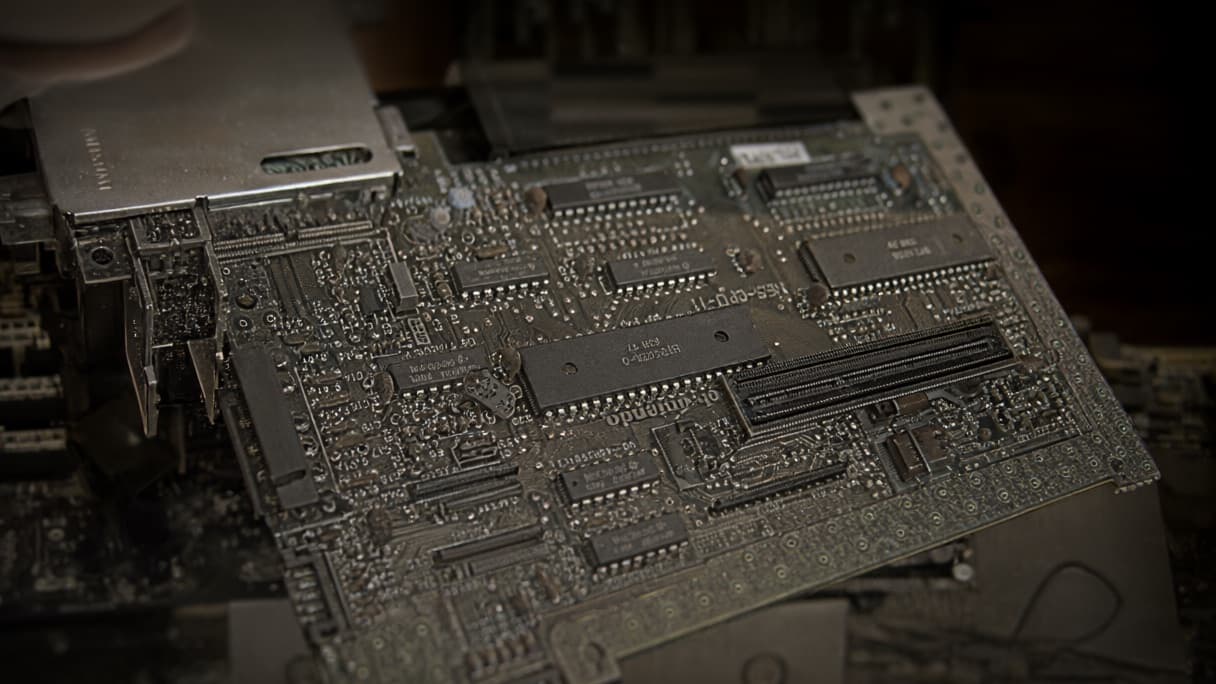
AI-generated image · Bay Street Wire · Based on a photo by Robin Fensom (CC BY 2.0, Wikimedia Commons)
Opinion: The industry's obsession with 'secure boot' is a farce when the foundational firmware remains a wide-open door for anyone with a basic exploit kit.
For years, the tech industry has sold us on the 'chain of trust.' We are told that Secure Boot and the Trusted Platform Module (TPM) create an impenetrable fortress, ensuring that every piece of code loaded during startup is verified and safe. It is a comforting narrative, but as the latest disaster in UEFI firmware proves, it is a complete farce.
As Ars Technica first reported, a critical code-execution flaw tracked as CVE-2026-97631 has effectively rendered this chain of trust a joke. The vulnerability exists in TianoCore EDK II, the open-source codebase that Ars Technica notes is used by virtually all UEFI suppliers—including Phoenix, Insyde, and AMI—as well as cloud providers and hardware makers. Even Project Mu, which is Microsoft’s hardened fork of EDK2, was not immune.
Here is the problem: the industry focuses on the lock (Secure Boot) while leaving the foundation of the house made of cardboard. CVE-2026-97631 is a memory-corruption flaw in an ICMP component that allows attackers to execute malicious code *before* the operating system or Secure Boot defenses ever kick in.
According to the details provided by Ars Technica, the flaw is a buffer overflow in the PXE-Base Code driver dating back 16 years. Because the driver fails to enforce a 504-byte memory copy limit, a hacker with local network access can send a malicious error message that overwrites data and corrupts the IUEFI module. The result? Code running in ring 0—the CPU's most privileged level—bypassing the very attestation processes meant to prove the hardware is secure.
HD Moore, the creator of Metasploit and chief research officer at Dragos, explained to Ars Technica that the bug allows an attacker to seize control of program flow while the boot process still has access to critical components like the TPM. In a theft scenario or a short-term network breach, this could be used to break disk encryption.
This isn't an isolated incident; it's a pattern of systemic negligence. Ars Technica points to 'LogoFail,' where rendering bugs in logo images allowed attackers to subvert the chain of trust, and 'PixieFail,' another vulnerability stemming from faulty PXE boot.
We are witnessing a 'forever day' scenario. While the parties who discovered this flaw—Dan Holmes of Google and Alex Matrosov of Anthropic—tried to coordinate a quiet disclosure for January, a pull request from AMI leaked the details early. Now, with patch code public, any advanced hacker can build an exploit.
But the real tragedy is the remediation. Patching UEFI code across millions of devices and thousands of cloud providers is, as Ars Technica puts it, 'cumbersome and time-consuming.'
Stop calling it a 'chain of trust' when the first link is rusted through. Until the industry stops relying on a bloated, legacy-ridden codebase like EDK2, 'Secure Boot' is nothing more than a marketing slogan designed to make us feel safe while the front door is standing wide open.