
The Seat of Power vs. The Policy Lever: Ontario Liberal Leadership Divide

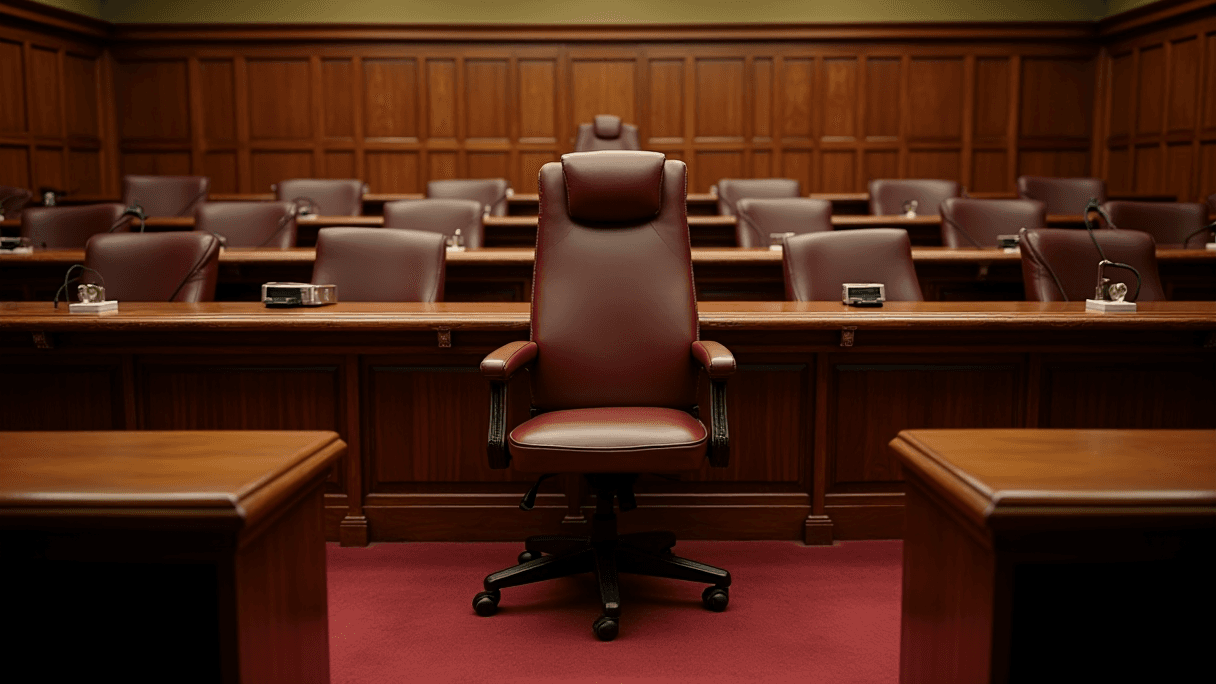
AI-generated image · Bay Street Wire
As candidates debate whether a leader needs a seat in the legislature, the disconnect between political optics and the tangible needs of Ontario's education system becomes clear.
OPINION: In the high-stakes theater of political leadership, there is often a profound gap between the strategic mechanics of winning an election and the actual policy levers required to fix a crumbling public system. This disconnect was on full display during the first Ontario Liberal leadership debate on August 10, 2026, where the primary fissure among candidates was not how to overhaul K-12 funding, but whether the party's next leader even needs a seat in the legislature.
As a columnist covering education, I find the rhetoric surrounding this debate telling. While the candidates pitched ideas on affordability, health care, and education, the conversation quickly devolved into a debate over the "haves and have nots"—specifically, those who hold a seat at Queen's Park and those who do not. This focus on legislative presence over policy substance reveals a critical disconnect: the party is debating the *vehicle* of leadership while the *destination*—specifically the improvement of student outcomes—remains secondary.
According to reporting from CityNews Toronto and CBC Toronto, the divide is stark. Lee Fairclough, the MPP for Etobicoke-Lakeshore, and Stephanie Bowman, the MPP for Don Valley West, argued that having a seat in the legislature is a decisive factor. Fairclough noted that the party has tried the alternative multiple times without success, stating that a candidate with leadership experience and a legislative seat would "make the difference."
This argument is rooted in the party's recent history. As noted by CBC Toronto and CityNews Toronto, the previous two leaders, Bonnie Crombie and Steven Del Duca, did not hold seats in the legislature. Under their leadership, the party remained in third place following the 2022 and 2025 elections. From a strategic standpoint, Fairclough and Bowman are arguing for a leader who can engage directly in the daily friction of the legislature.
However, other candidates view this as a distraction from the actual concerns of the electorate. Dylan Marando, a former political staffer, argued that voters—specifically "young mom[s] or dad[s]"—will not be concerned with whether a leader has a seat. Instead, Marando asserted that voters will ask if the leader has the capacity to make "my kids' education better," protect jobs, and improve health care.
Marando's point highlights the central tension in the race. For the parents and educators I speak with, the "seat" is irrelevant; the funding model is everything. The actual policy levers needed to stabilize K-12 education—increased per-pupil funding, reduced class sizes, and modernized infrastructure—do not require a leader to be a sitting MPP to be championed. They require a leader with a concrete, bold plan.
Eric Lombardi, a housing advocate, touched on this lack of vision. He suggested that the failure of previous leaders was not their lack of a legislative seat, but rather a failure to make "risks and make ideas a centre of our campaign." Lombardi maintained that the next leader's most essential quality is a willingness to introduce bold new ideas.
Meanwhile, Navdeep Bains, a former federal cabinet minister, largely sidestepped the seat debate. While he pointed to his federal government and cabinet experience, he focused instead on the general mood of the province, stating that "change is in the air" and that Ontarians are seeking a "viable alternative" to the current government. Bains also dismissed perceptions that he is the front-runner as a "misconception."
From an education policy perspective, the debate between "seat" and "substance" is a luxury the province cannot afford. Whether the leader is a sitting MPP like Bowman or Fairclough, or an outsider like Lombardi or Marando, the result is the same if the policy framework remains stagnant. The focus on whether a leader can physically stand in the house to challenge the government is a tactical question, not a strategic one. The strategic question is: what is the actual plan to reverse the funding decline in Ontario's schools?
Interim leader John Fraser, who advised candidates to be "authentic" during the debate, noted that the party's goal is to provide an alternative that gives Ontarians confidence in a new government. Yet, if the party's internal debate remains centered on the mechanics of legislative access rather than the specifics of educational reform, that confidence may remain elusive.
As the party moves toward the November 21 announcement of its new leader—with online voting running from Nov. 9 to 20—the divide persists. We are seeing a clash between the institutionalists, who believe the path to power is through the legislature, and the populists, who believe the path is through bold, disruptive ideas.
For the students and teachers caught in the middle of a failing funding model, the distinction is academic. Whether the leader has a seat or not is a detail of political geography. What matters is whether the person leading the party understands that the current educational trajectory is unsustainable and possesses the political will to move beyond the "haves and have nots" of Queen's Park to address the needs of the classroom.