
The Quiet Power of a Ball Kid's Note

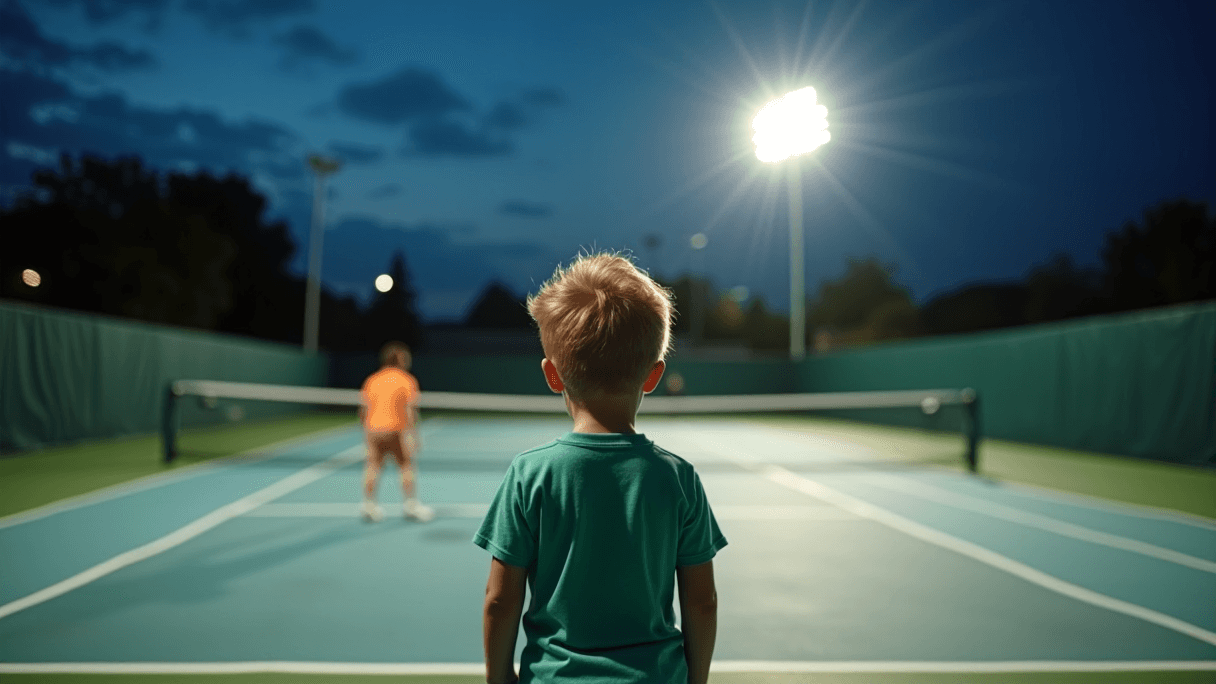
AI-generated image · Bay Street Wire
Opinion: In the high-stakes environment of the National Bank Open, a simple message from an eight-year-old reveals the profound resilience of Marta Kostyuk and the empathy of a welcoming city.
In the professional sports world, we are conditioned to focus on the metrics of success: the seeds, the titles, and the bracket progressions. At the National Bank Open in Toronto, as first reported by BlogTO, the narrative surrounding Marta Kostyuk has largely been one of athletic dominance. The 24-year-old Ukrainian entered the tournament as the No. 10 seed, arriving on the heels of her first WTA 1000 title win in Madrid two months ago.
But the most poignant moment of the tournament didn't happen during a rally or a match point. It happened in the quiet seconds before Kostyuk's first-round match against Canada's Katherine Sebov at Sobeys Stadium. As she was being walked onto the court, a Tennis Canada ball kid named Marcus, who is eight years old, reached into his pocket and handed her a handwritten note.
According to BlogTO, the letter read: "Good luck today. My name is Marcus. I'm eight. Never give up. I will be cheering you on."
On the surface, this is a heartwarming anecdote—the kind of "wholesome" content that thrives on social media. Kostyuk shared a photo of the note on her Instagram account (@martakostyuk). However, looking deeper, the phrase "Never give up" carries a weight that transcends a tennis match. For a Ukrainian athlete competing on the global stage, resilience is not just a sporting requirement; it is a lived reality.
When a child in Toronto offers those specific words of encouragement, it represents more than just sportsmanship. It is a gesture of innocent empathy from a city welcoming an athlete who carries the burden of her home country's struggles. Marcus may be only eight, but his intuition to tell Kostyuk to keep fighting speaks to a collective recognition of the strength required to perform under such immense pressure.
That resilience has translated into results on the court. BlogTO notes that Kostyuk has already won her first two matches of the tournament, advancing to the Round of 16 for the second consecutive year. While she now faces a daunting challenge on Saturday against six-time Grand Slam champion Iga Świątek of Poland for a spot in the quarterfinals, the momentum is about more than just her ranking.
We often forget that athletes are humans first. Behind the flashing cameras and the professional accolades is a person who can be moved by the simple kindness of a stranger. The fact that Marcus felt compelled to share his support suggests that the bond between the athlete and the community is often forged in these small, unscripted moments.
Whether Marcus is in the crowd for the match against Świątek remains unknown, but the impact of his note is already cemented. In a tournament defined by competition, this interaction reminded us that the most meaningful victories are often the ones that have nothing to do with the scoreboard.