
The Quiet Intuition: Why a Scent-Tracking Mule is the Last Hope for a Cold Case

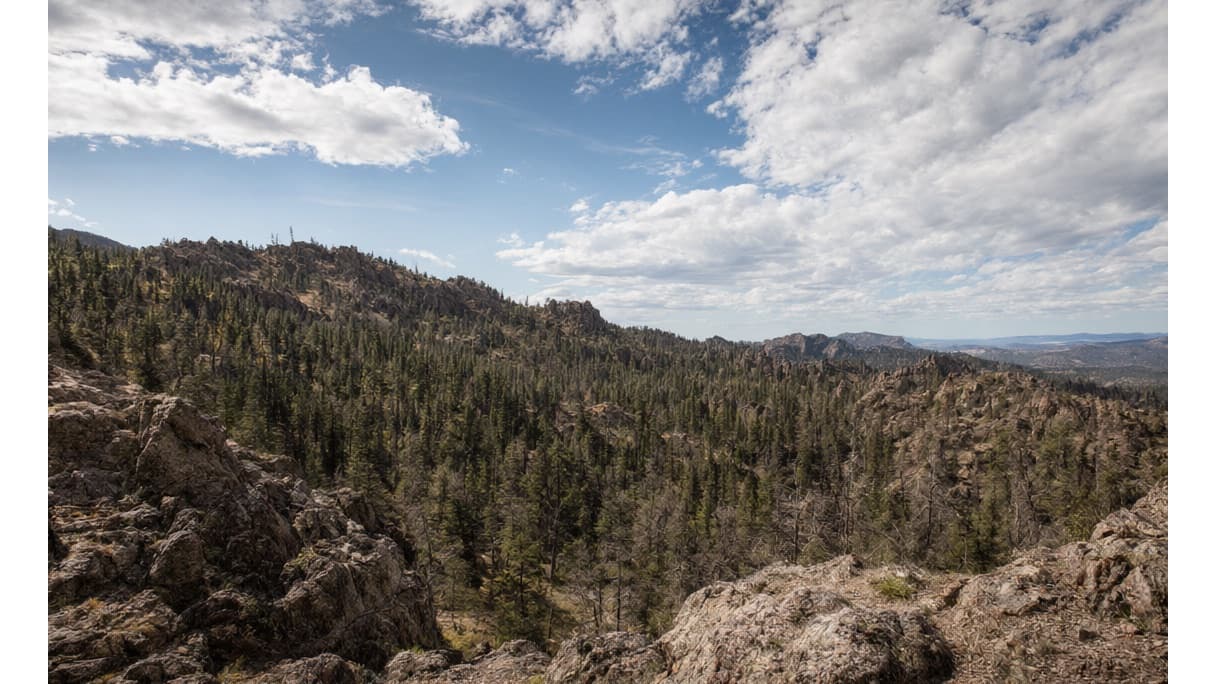
AI-generated image · Bay Street Wire
Opinion: Beyond the novelty of a scent-detecting animal, the search for Chelsea Grimm reveals the profound, intuitive bond between humans and animals in the pursuit of closure.
In the vast, unforgiving expanse of the Arizona backcountry, where the terrain is as rugged as the silence surrounding a cold case, technology often reaches its limit. Drones have hummed over the canopy; ATVs have churned through the dirt; cadaver dogs have paced the earth. Yet, as first reported by CBC News, these efforts have come up empty in the search for Chelsea Grimm, who vanished during a cross-country road trip in 2023.
When we hear about Sonny, a scent-detecting mule from British Columbia, it is easy to focus on the novelty. A mule with a "nose that knows" is a heartwarming image, a curiosity of nature. But to view Sonny merely as a tool or a curiosity is to miss the deeper, more human story unfolding in the Kaibab National Forest. This is not just about scent detection; it is about the quiet, intuitive bond between an animal and the humans desperate for closure.
As an opinion columnist, I believe the true value of Sonny and his handler, Marion Weiskopff, lies not in the animal's ability to outperform a horse in a field trial, but in the symbiotic trust required to navigate a landscape of loss. Weiskopff, a volunteer with Princeton Ground Search and Rescue (PGSAR), describes a moment of profound connection: when Sonny picks up a scent, he stops dead in his tracks, takes the air in, and turns toward the source. It is a moment of absolute clarity in a search defined by uncertainty.
This connection is what makes the equine approach so poignant. While private investigator Steve Fischer notes the practical advantage of equines in accessing difficult terrain, there is an emotional weight to this partnership. Sonny is not just a biological sensor; he is a partner. Weiskopff and Sonny have spent years honing their skills, winning equine scenting competitions in Oregon and Arizona. According to CBC News, Sonny once located a scent in a 10-acre plot in under a minute and a half, while other horses took ten minutes or longer. That efficiency is a result of a relationship built on trust and communication.
In the search for Chelsea Grimm, this bond produced a tangible, if heartbreaking, result. Weiskopff shared that Sonny led her to a torn-off shoe—a lady's shoe sole—found in the middle of nowhere, far from any established trail. While investigators cannot yet identify if the shoe belonged to Grimm, the act of finding it is a testament to the animal's intuition and the handler's willingness to follow. For a family trapped in the limbo of a missing persons case, a piece of a shoe is more than debris; it is a signal that someone, or something, is listening to the whispers of the wilderness.
Paul Fyfe, president of PGSAR, points out that equines are prey animals, making them naturally more aware of their surroundings. They signal interest through their ears and their noses, acting as a bridge between the human searcher and the hidden secrets of the earth. This awareness is a form of empathy in action. The animal does not know the tragedy of the 2023 disappearance, but it responds to the urgency of the human searchers.
It is telling that Steve Fischer, despite his experience, had never employed a scent-detecting equine until now, though he mentioned the existence of other specialized animals, such as a scent otter used by Peace River Search and Rescue in Florida. The decision to bring in Sonny and Weiskopff—who, along with husband Don and his SAR-certified horse Mariah, spend several months a year in Arizona—was a gamble on intuition over machinery.
Ultimately, the search for Chelsea Grimm is a reminder that when we are at our most desperate, we often return to the most primal connections. We turn to the animals who see what we miss and smell what we cannot. The fact that heavy rain and mud eventually forced the suspension of the search does not diminish the effort. It only underscores the fragility of the quest.
As Fischer hopes for drier weather to resume the search, we are left with the image of Sonny and Weiskopff: a team defined not by certifications or technology, but by a shared language of scent and silence. In the pursuit of closure, sometimes the most sophisticated tool we have is the simple, honest intuition of a mule and the human who loves him.