
The 'Proof' Problem: Why Blockchain Can't Fix Dirty Mineral Data

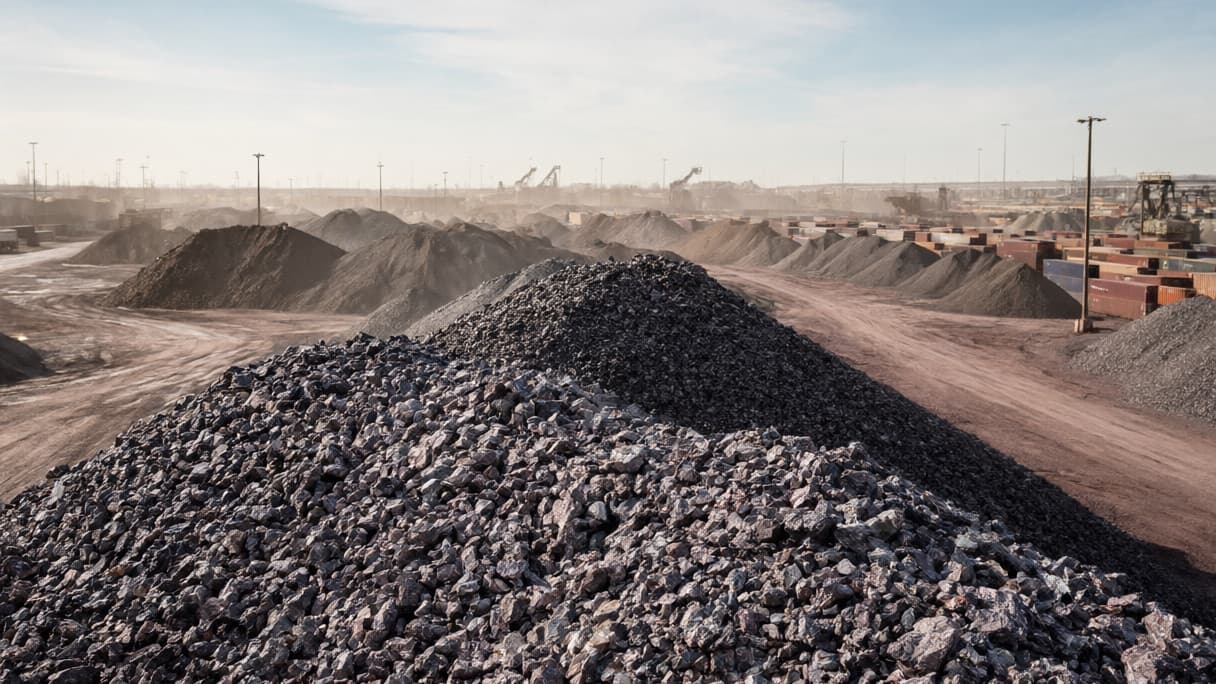
AI-generated image · Bay Street Wire
ADI Foundation and SAGINT are betting on 'Digital Warehouse Receipts' to secure critical mineral chains, but the gap between digital ledgers and physical reality remains a chasm.
Opinion: I have seen this movie before. The script always starts with a promise that blockchain will solve a systemic trust deficit in the physical world, and it always ends with the realization that a ledger is only as honest as the person entering the data.
As first reported by the Financial Post, the ADI Foundation—an institutional blockchain gateway—and SAGINT, a digital asset developer, have entered a global partnership. The goal is to integrate SAGINT’s "Digital Warehouse Receipt" technology into the ADI Chain. The pitch is straightforward: create a verifiable digital record for critical minerals as they migrate from producers to warehouses, buyers, and across international borders.
On paper, the mechanism is seductive. SAGINT aims to replace fragmented paper records with secure digital entries for every lot of material, capturing data on origin and quality. The ADI Foundation will act as the exclusive Channel Participant, tasked with onboarding producers, traders, and warehouses across Asia, the Middle East, and Africa.
Ambassador (Ret.) Troy Fitrell, CEO of SAGINT International, frames this as a solution to a geopolitical struggle. Drawing on his experience as Ambassador to Guinea and leader of the State Department’s Africa bureau, Fitrell argues that mineral-rich nations struggle to profit because trust currently relies on a "stamp on a piece of paper." He claims that by making the proof "travel with the material," producers can better access financing while insurers and governments gain visibility into the assets.
Ajay Bhatia, Principal Council Member at ADI Foundation, echoes this, suggesting that the Digital Warehouse Receipt allows customs officers, insurers, and lenders to verify records for themselves.
Here is the realist's caveat: the "proof" is only as good as the initial entry. In the volatile regions where these critical minerals are sourced, the leap from a physical ore lot to a digital token is where the corruption happens. If a producer mislabels the origin of a mineral lot before it hits the ADI Chain, the blockchain doesn't "verify" the origin—it simply digitizes a lie.
We are being told that the proof now "travels with the material," but the material doesn't speak. It doesn't tell the customs officer if the digital record was forged at the source. Until these companies solve the "garbage in, garbage out" problem of physical data entry, this is less of a revolution and more of a high-tech filing cabinet.