
The Prestige Trap: Why U of T's Global Ranking is a Hollow Victory for Canadian Students

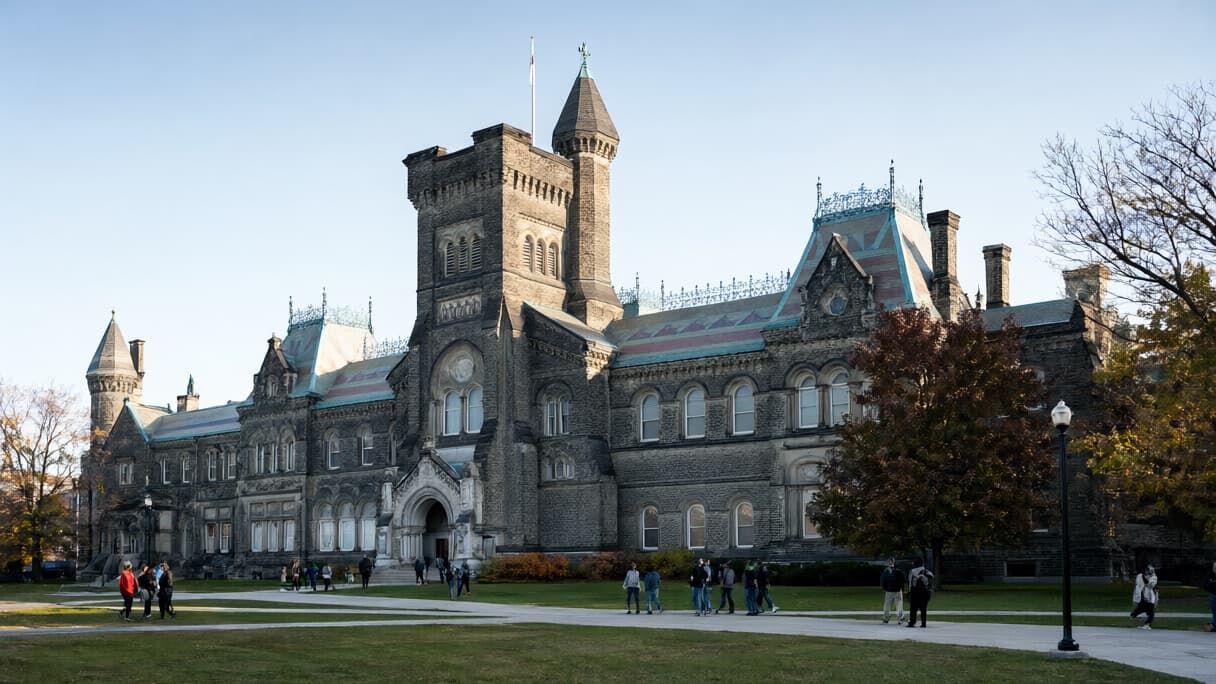
AI-generated image · Bay Street Wire
Opinion: While the University of Toronto celebrates its climb in the global employability rankings, the focus on international prestige ignores the deteriorating reality of accessibility and infrastructure for the average student.
The University of Toronto is currently basking in the glow of another international accolade. As BlogTO first reported, the institution has been crowned Canada's top post-secondary institution in a new global ranking, placing 22nd overall in the world. This recognition stems from the Global Employability University Ranking and Survey (GEURS), which identifies the top schools for graduate jobs in 2027; the survey is produced by Emerging and featured by Times Higher Education.
On the surface, these numbers are a cause for celebration. U of T didn't just lead the national pack; it secured the spot of the 11th-best school in North America. The GEURS ranking, which BlogTO notes is based on the views of employers and shaped by more than 170,000 votes from over 15,600 university employees across 40 countries, suggests that a degree from U of T is a golden ticket in the global job market.
But as an education columnist, I find this obsession with global rankings to be a dangerous vanity metric. When we prioritize where a school sits relative to the Massachusetts Institute of Technology (ranked first) or Stanford University (ranked second) and Oxford (ranked third), we stop asking the most important question: Who is this education actually for, and at what cost is this prestige maintained?
For the average Canadian student, a 22nd-place global ranking does little to alleviate the crushing weight of the current educational landscape. We are witnessing a widening accessibility gap where the pursuit of "world-class" status often comes at the expense of the student experience. The prestige of the institution is frequently decoupled from the lived reality of the people sitting in its lecture halls. While the administration celebrates being the best in Canada—beating out other Ontario institutions like McMaster University (#86 worldwide), the University of Waterloo (#95 worldwide), and the University of Ottawa (#168 worldwide)—the actual infrastructure supporting these students is often crumbling or insufficient for the growing population.
There is a fundamental disconnect when a university is lauded for its "employability" while the students pursuing those degrees struggle to navigate a system that feels increasingly out of reach. The GEURS ranking focuses on the views of employers, not the views of the students. It measures the value of the brand to a hiring manager, not the value of the education to the learner. If the goal of our post-secondary system is simply to produce a credential that satisfies a corporate recruiter, then U of T has indeed succeeded. But if the goal is to provide an accessible, sustainable, and supportive environment for the next generation of Canadian thinkers, these rankings are a distraction.
Consider the other Canadian institutions mentioned in the BlogTO report. Queen's University (#188 worldwide), York University (#237 worldwide), Western University (#250 worldwide), and Toronto Metropolitan University (#294 worldwide) all feature in the list. The competitive nature of these rankings encourages a "race to the top" that prioritizes metrics that look good on a brochure—such as research output or employer surveys—rather than investing in the basic infrastructure and accessibility measures that would benefit every student regardless of their school's global rank.
When we define success by how we compare to MIT or Stanford, we ignore the systemic failures within our own borders. A university can be the "best in Canada" and still be failing its students in terms of mental health support, affordable housing, and classroom availability. Prestige does not pay the rent, and a high global ranking does not fix a leaking roof or a bloated registration system.
We must stop treating these rankings as a proxy for quality of life. The fact that U of T is the 22nd-best school in the world for graduate jobs is a testament to the caliber of its graduates and the reputation of its brand, but it is not a testament to the health of the institution's relationship with its students.
Until we shift our definition of "excellence" away from employer surveys and toward student accessibility and infrastructure, these rankings will remain nothing more than a corporate trophy. The University of Toronto may be winning the global game of prestige, but the average Canadian student is the one losing out in the process.