
The Power Wall: Ireland's Grid Crisis Exposes the Infrastructure Lie

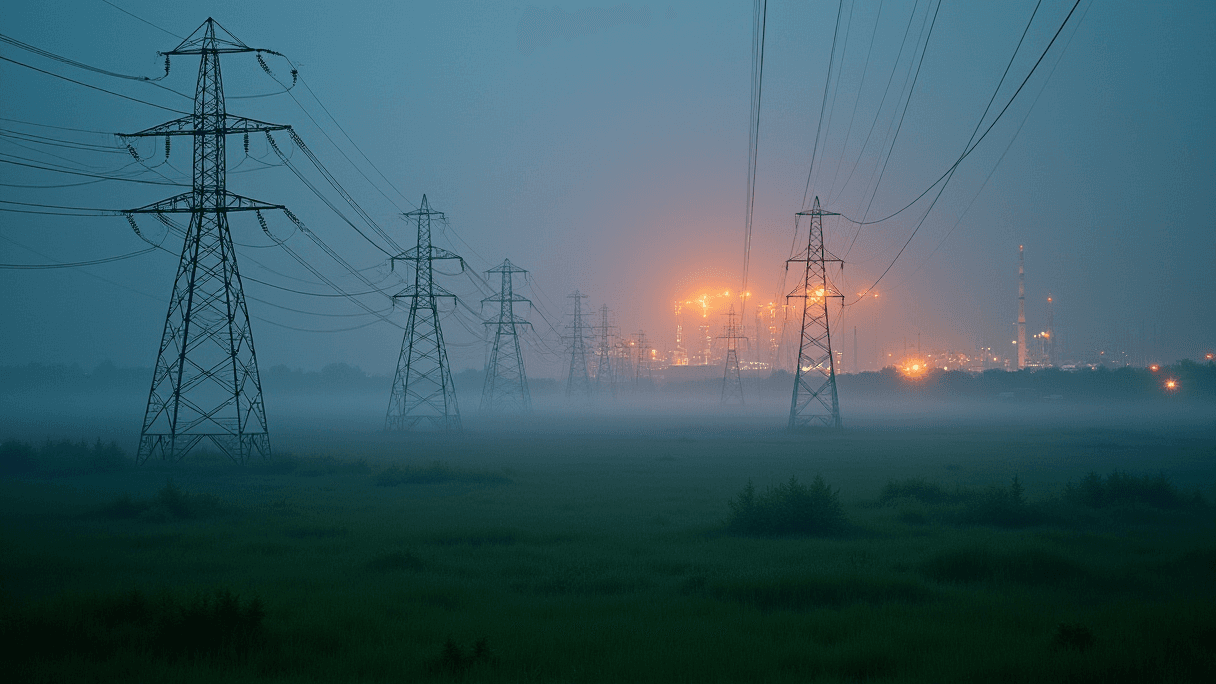
AI-generated image · Bay Street Wire
As server farms consume nearly a quarter of Ireland's electricity, the industry's 'green' aspirations collide with the reality of a strained national grid.
OPINION: I have spent years listening to the pitch decks of Web3 founders who promise a decentralized future that is somehow cleaner, leaner, and more sustainable than the legacy systems they seek to replace. They speak of 'green' blockchains and carbon-neutral ledgers as if the code exists in a vacuum. But code doesn't run on hopes; it runs on hardware. And hardware requires an obscene amount of power.
If you want to see where the fantasy of sustainable high-compute infrastructure meets the brick wall of reality, look at Ireland. According to reporting from The Register, the 'Emerald Isle' has become a cautionary tale of what happens when a small nation becomes a playground for massive server farms. The latest data from Ireland's Central Statistics Office (CSO) reveals a staggering trend: datacenters now account for 23 percent of the country's metered electricity consumption as of 2025.
To put that in perspective, we aren't talking about a marginal increase. The Register notes that in 2015, these facilities used just 5 percent of the nation's power. By 2021, that figure climbed to 14 percent, and it hit 20 percent in 2023. The trajectory is a vertical line. Grzegorz Głaczyński, a statistician within the CSO's Climate and Energy Division, observed that consumption has grown every single year without exception, more than doubling between 2015 and 2019—rising from 1,240 GWh to 2,490 GWh—and then tripling again by 2025 to reach 7,663 GWh.
What is most damning is the disparity between the growth of these 'bit barns' and the rest of the population. The Register reports that during 2025, electricity used by datacenters increased by 10 percent, growing from 6,973 GWh in 2024 to 7,663 GWh. In that same window, all other customers saw their electricity consumption increase by a mere 2 percent.
We are witnessing a systemic imbalance. Datacenters are now consuming more power than urban households, which account for 18 percent of metered use, and more than double the 9 percent share used by rural households. This isn't just a technical inefficiency; it is a societal friction point. The Register reports that Ireland has seen protests against these facilities, which is hardly surprising given that there are more than 80 datacenters serving a population of just over 5 million people.
The industry's response to this crisis has been a mix of desperate regulation and corporate band-aids. The Commission for Regulation of Utilities (CRU) attempted to stem the tide by implementing an effective moratorium on connecting new server farms to the electricity grid, specifically in the Dublin area where activity is concentrated. Yet, the appetite for compute is so ravenous that consumption still rose by 10 percent while that moratorium was largely in place throughout 2025. The moratorium was eventually lifted in December of last year.
Now, the rules of engagement are shifting. Under new, stricter regulations, any server farm operator seeking a grid connection exceeding 10 MW must now provide battery systems or generators capable of providing the same amount of power. These operators are required to feed power back into the national grid when necessary—a mechanism The Register notes was already pioneered by Digital Realty and Microsoft.
This is the 'green' reality: the industry is no longer just asking for power; it is being forced to act as a backup utility for the nations it is draining. This isn't an isolated Irish phenomenon. The Register points out that in the United States, the Trump administration is currently working to defuse public opposition to datacenters, urging tech giants to ensure their expanding estates do not drain local water supplies or cause spikes in energy bills for citizens.
For those of us in the crypto and Web3 space, this is the ghost in the machine. We talk about the efficiency of Proof of Stake or the promise of decentralized compute, but the underlying physical layer is the same. Whether it's an AI-driven server farm or a blockchain node, the result is the same: a massive draw on a finite grid. When the infrastructure begins to black out small nations or force government moratoriums, the 'green' label becomes a marketing gimmick. You cannot build a sustainable digital future on a foundation that is cannibalizing the physical present.