
The Labor Wall: Ford's Education Gamble and the Risk of Provincial Paralysis

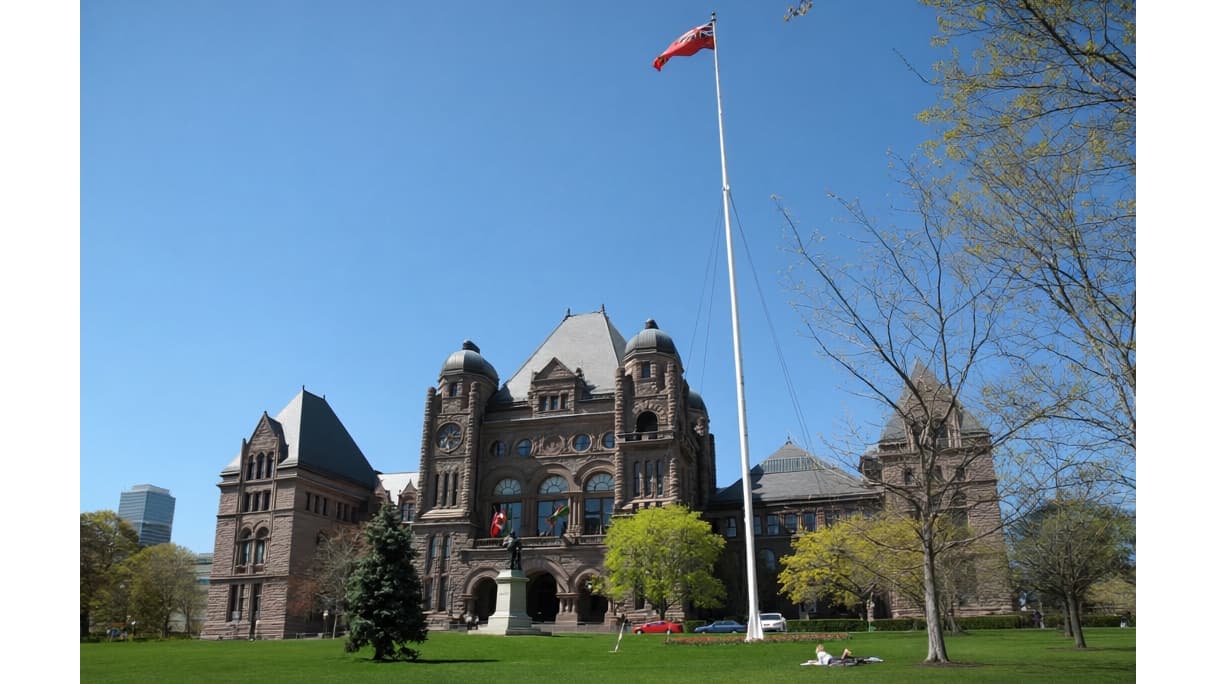
AI-generated image · Bay Street Wire
With five unions representing 250,000 workers securing overwhelming strike mandates, Education Minister Paul Calandra's optimism may be blinding the government to a coordinated labor uprising.
### Analysis: The High Stakes of Central Bargaining
**By Meera Kapoor, Bay Street Wire**
(OPINION) Premier Doug Ford’s government is currently operating under a dangerous delusion of stability. As first reported by CBC Toronto, the province is walking straight into a coordinated labor wall, despite Education Minister Paul Calandra maintaining a posture of calm. By treating overwhelming strike mandates as a mere invitation to the table rather than a warning siren, the government risks a systemic collapse of Ontario's education system.
According to reporting from CBC Toronto, five major teachers' unions—representing more than 250,000 education workers—voted in favor of strike action this week. The results were not merely supportive; they were a landslide. English Catholic teachers posted the strongest mandate at 98 per cent, followed closely by elementary teachers at 97 per cent and French and secondary school teachers at 96 per cent. Support among education workers was also significant, with those represented by CUPE voting 94 per cent in favor and education workers from the Ontario Secondary School Teachers’ Federation recording 92 per cent support.
These numbers represent more than just a procedural step in labor relations; they are a manifestation of what the presidents of all five unions described in a joint Friday statement as "uniform frustration with school conditions." The unions explicitly stated that the "status quo is unsustainable."
### The Disconnect at Queen's Park
The friction between the labor force and the provincial government is most evident in the rhetoric coming from the Ministry of Education. CBC Toronto reports that Minister Paul Calandra told reporters he is "not stressed" by the mandates. In a striking display of optimism, Calandra suggested that high strike mandates are actually encouraging, interpreting them as a sign that teachers are simply eager to reach a fair agreement.
Calandra further speculated that peace would prevail in schools for the next several months, suggesting that strikes would likely not occur until after March break if negotiations fail. While he admitted he is "not Nostradamus," his insistence that there are "no strikes on the horizon" ignores the volatility of a workforce that has been without a contract since August.
This disconnect is not lost on the unions. David Mastin, president of the Elementary Teachers' Federation of Ontario, issued a news release stating that Calandra's characterization of the vote "misses the point entirely." Mastin noted that the overwhelming support for strike action is a direct result of "years of chronic underfunding and deteriorating learning and working conditions."
### The Central Bargaining Trap
The path to a resolution is further complicated by a fundamental disagreement over the mechanism of negotiation. CBC Toronto reports that previous talks stalled because the province and the unions could not agree on which issues should be handled through central bargaining and which should be settled locally with school boards.
This deadlock is critical. If the government continues to dig in on the structure of negotiations, they are not just fighting over wages, but over the very framework of how education is managed in Ontario. While Rafael Gomez, an employment relations professor at the University of Toronto, told CBC Toronto that negotiating wages is often easier because it is a matter of "dividing the pie," he warned that "existential policy questions" regarding teaching requirements can lead to ideological clashes where the government may dig in.
### The Risk of Miscalculation
The government's current strategy relies on the assumption that a strike mandate is a formality rather than a threat. However, James Turk, director of the Centre for Free Expression at Toronto Metropolitan University, warned CBC Toronto that these votes should not be discounted. Turk noted that workers do not casually vote for mandates knowing the difficulty it brings to their lives; instead, it serves as a signal of how serious the teachers are.
As central bargaining is set to begin before the end of the month—with secondary school education workers already hitting the table as of Friday—the province finds itself in a precarious position. The government claims there is "no excuse" not to reach a deal, yet the sheer scale of the mandate suggests that the unions are no longer interested in the status quo.
If the Ford government continues to view these mandates as a sign of eagerness to negotiate rather than a sign of desperation and anger, they may find that the "peace" Calandra predicts is merely the silence before a province-wide shutdown. The labor wall is already built; the only question is whether the government will pivot in time to avoid colliding with it.