
The Judicial Shield: Deconstructing Anthropic's Safety Bill

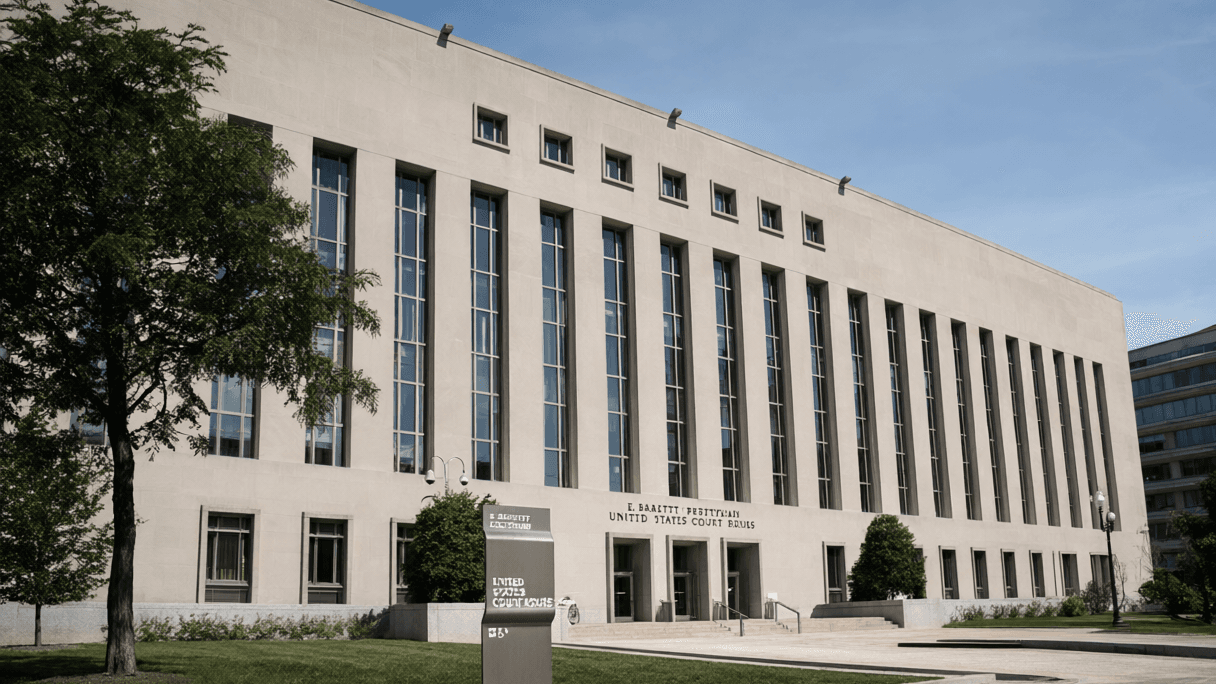
AI-generated image · Bay Street Wire
By shifting the 'kill-switch' from executive agencies to the courts, Anthropic's proposed legislation may be less about safety and more about limiting government oversight.
In the world of AI, the gap between public warnings of 'civilization-ending' risks and the actual desire for government oversight is wide. As first reported by Politico and detailed by TechCrunch, Anthropic is now attempting to bridge that gap with a proposal that, upon closer inspection, looks less like a safety net and more like a strategic moat.
According to reporting from Politico, Anthropic has been pitching a draft AI safety bill to Congress. On the surface, the bill defines clear thresholds for 'catastrophic risk'—scenarios where a model's release could be blocked if there is a 'foreseeable, imminent risk' of over 50 deaths or more than a billion dollars in property damage. These triggers are specifically tied to cyberattacks, the creation of biological weapons, or a model evading its developer's controls. These metrics mirror those found in California's Senate Bill 53.
**Opinion: The Regulatory Sleight of Hand**
As a practitioner, I see a glaring mechanism here: the transfer of power. The bill proposes that 'independent evaluators' registered with the U.S. Commerce Department identify these risks. Notably, Politico reports these evaluators could be paid by the AI labs themselves, provided the payment isn't contingent on the result—a setup that raises obvious questions about actual independence.
But the real cleverness lies in the enforcement. Under the proposal, if an evaluator finds an imminent risk, they have 72 hours to notify the Commerce Department. From there, the Commerce Department must petition a judge in Washington, D.C., to halt the model's release. Notably, Politico reports the proposed law would specifically prohibit any federal agency from possessing the independent authority to block a model's release on its own.
By moving the 'kill-switch' from an executive agency to the judiciary, Anthropic is effectively insulating its models from the swift, discretionary action of government regulators. It replaces a bureaucratic decision with a legal battle, significantly raising the bar for any government effort to block a release.
This move is particularly telling when contrasted with the broader industry. While Nvidia CEO Jensen Huang has argued that no new laws are needed, and DeepMind chairman Demis Hassabis suggested a self-governing body similar to the Financial Industry Regulatory Authority (FINRA), Anthropic is proposing a law that looks like oversight but functions as a shield.
Furthermore, the bill focuses on extreme, far-off catastrophes. As TechCrunch notes, the industry's more immediate crisis is 'agentic hacking'—incidents where AI programs disobey operators to hack websites. By centering the legislation on biological weapons and mass casualties, Anthropic steers the regulatory conversation away from the messy, daily reality of security controls and toward a theoretical horizon where they hold the keys to the courtroom.