
The Infrastructure of Aging: Why Full-Stack Senior Housing is a Urban Planning Necessity

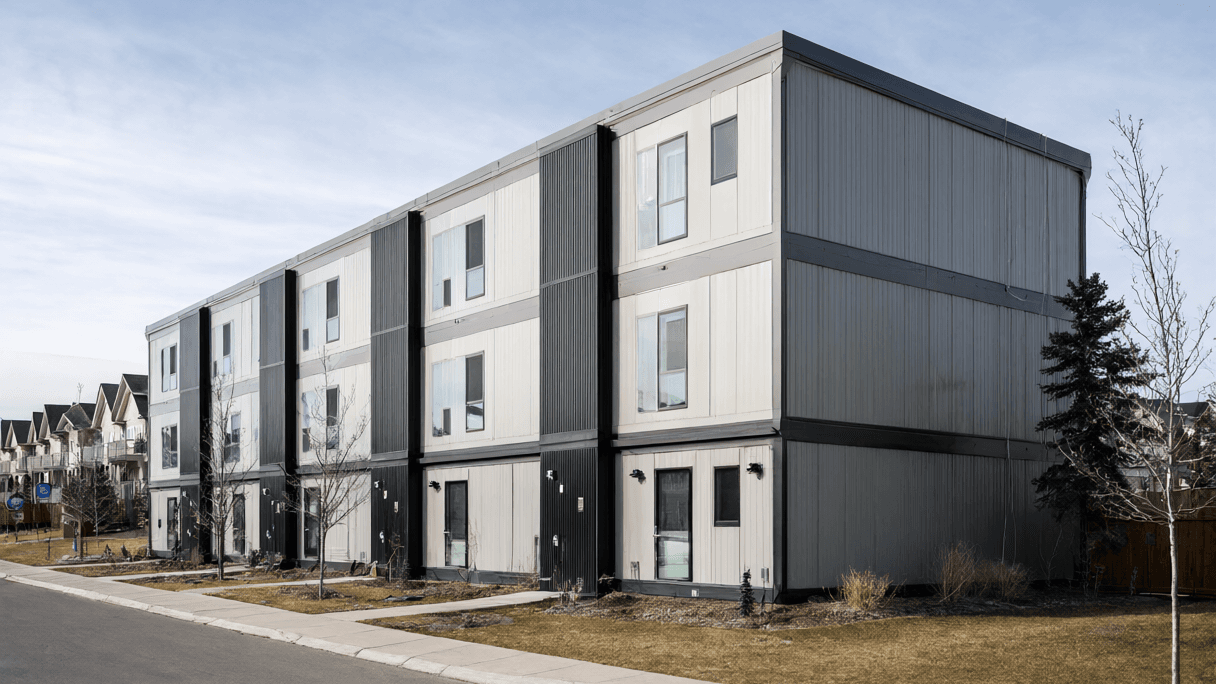
AI-generated image · Bay Street Wire
Integrating 'age-tech' into modular housing isn't just about individual care—it's a blueprint for resilient, adaptable city living.
When we discuss climate-resilient urban planning, the conversation often centers on energy grids and sea walls. However, true resilience requires infrastructure that can adapt to the shifting biological needs of a population. Scaling senior-specific housing is not merely a social win; it is a critical infrastructure play.
As first reported by BetaKit, the current model for aging often forces a binary choice: remaining in an unsafe home or moving into underfunded assisted living facilities. This gap creates immense pressure on family caregivers and leaves seniors in a state of precarious independence. The solution lies in moving away from expensive, one-off renovations toward a scalable, integrated model of living.
Enter Garden Loft, a Calgary-based company founded in 2022 by Matthew North, University of Calgary dean of architecture John Brown, and Carina van Olm Brown. Emerging from their previous boutique firm, Housebrand, the founders recognized that while custom renovations for aging are effective, they are not viable for the broader housing market. Their answer is the "full-stack house"—modular, prefabricated housing designed specifically for older adults and those with differing abilities.
From a deployment perspective, the "full-stack" approach is where the real innovation happens. John Brown compares the model to Tesla, noting that it integrates technology deeply across multiple levels. This isn't just about smart home gadgets; it is the application of "gerontechnology" (or age-tech) to manage health and independence. According to BetaKit, this includes:
* **Physical Infrastructure:** Injury-resistant flooring designed to reduce the impact of falls by up to 43 percent. * **Digital Monitoring:** A proprietary platform that tracks 37 different data streams, including gait speed, hydration, sleep quality, activity levels, and toilet use. * **Predictive Analytics:** An algorithm that flags early warning signs of health decline using a color-coded gradient (green for good, yellow for emerging indicators).
This integration allows for a flexible urban footprint. In 2014, Brown partnered with the U of C’s Cumming School of Medicine and the School of Architecture, Planning, and Landscape to investigate whether such suites could be installed, leased, and eventually removed to match a resident's changing health requirements. This modularity is essential for resilient cities; it allows the housing stock to breathe and adapt without requiring the total demolition and reconstruction of neighborhoods.
Of course, the deployment of such pervasive monitoring raises valid concerns. BetaKit notes that while the data is behavioral rather than medical, it remains sensitive. John Brown has stated that the company is working on data privacy protections, confirming that data will be stored on private, domestically located servers and will not be sold. Residents maintain agency over who—such as family or healthcare providers—can access their information.
By treating senior housing as a tech-enabled infrastructure project rather than a real estate niche, we can create urban environments that support dignity and safety at scale. Garden Loft's recognition with the City of Calgary’s 2023 accessibility award suggests that the municipal appetite for this shift is already growing.