
The Illusion of the Juggernaut: How Milwaukee Exposed the Dodgers' Dynasty

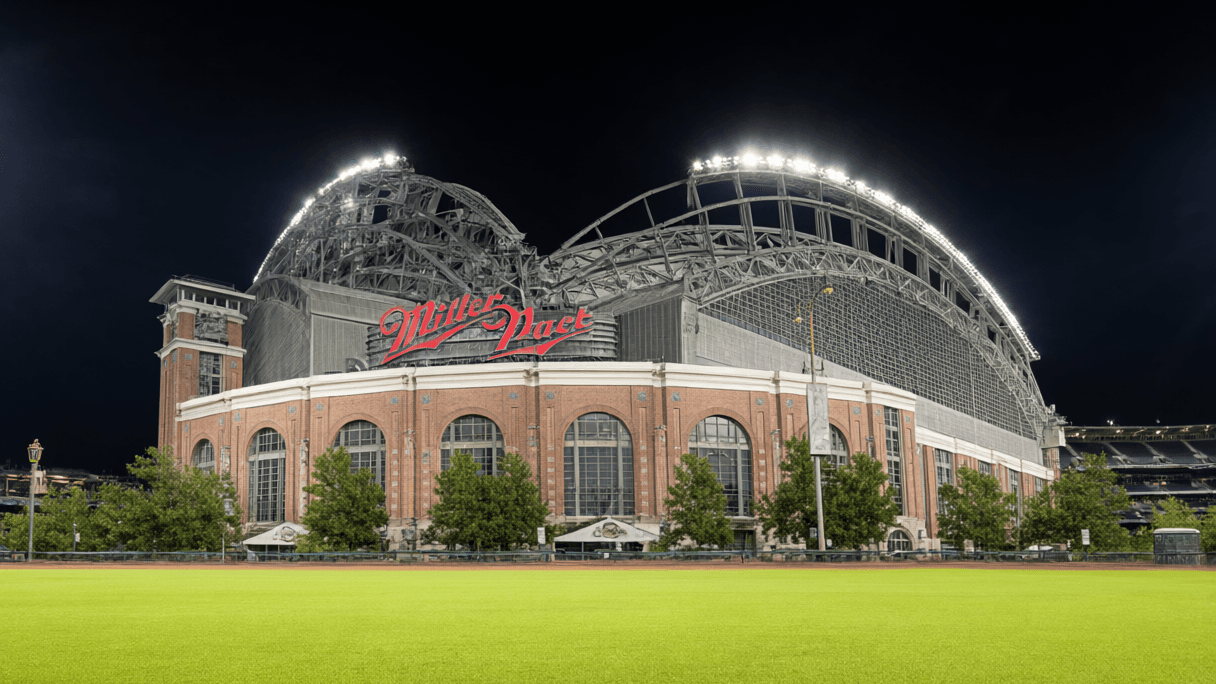
AI-generated image · Bay Street Wire
Los Angeles had the payroll and the Hall of Fame pedigree, but the Brewers proved that grit and depth are the true currencies of October.
For two years, the Los Angeles Dodgers operated as baseball's preeminent force, building a juggernaut that seemed destined for a historic three-peat. But as the dust settles on a stunning National League Championship Series sweep, it is clear that the dynasty didn't just stumble—it was dismantled by a Milwaukee Brewers squad that prioritized collective grit over individual stardom.
**OPINION:** The Dodgers entered this series as the widely favored team, relying on a core of legendary players and a payroll designed for dominance. However, the Brewers provided a masterclass in how to neutralize a superstar-heavy roster. While Los Angeles leaned on the brilliance of Shohei Ohtani, Milwaukee relied on a "group of gamers," as Brewers manager Pat Murphy described them. This was a clash of philosophies where the Brewers' hunger and cohesion simply overwhelmed the Dodgers' star power.
Reporting from MLB and Sportsnet highlights a stark contrast in offensive production. The Dodgers, despite their high-powered regular-season reputation, were virtually nonexistent in the NLCS. Aside from Ohtani, no other Dodger homered throughout the series. The team managed only five other extra-base hits—all doubles—producing what Sportsnet characterized as "backup catcher-type numbers" during the most critical games of the year.
Even the flashes of brilliance from Ohtani felt isolated. In the clincher, Ohtani demolished a cutter from Dustin May to give Los Angeles an early 4-0 lead, marking his first home run since Aug. 18. Dodgers manager Dave Roberts noted that Ohtani, who has been battling knee and biceps injuries, showed rare emotion after the blast, reflecting a sense of "pent-up anger" and frustration. But the lead was an illusion. The Brewers responded with a relentless counterpunch, scoring two runs in the fourth and two more in the fifth to tie the game.
Milwaukee's path to the pennant was paved by depth and timely hitting. Jake Bauers, named NLCS MVP, drove in three runs in the clincher, including two via a pivotal double in the fourth. Garrett Mitchell provided the decisive blow in the sixth inning, crushing a fastball from Tanner Scott to take the lead. David Hamilton later added an insurance home run in the ninth off Edwin Díaz to seal the 6-4 victory.
Defensively and on the mound, the Brewers were equally dominant. Left-hander Aaron Ashby secured the final nine outs of the series, while the Brewers' overall pitching and defense were described by Roberts as "flawless." The Brewers' resilience was historic; they became the first team in MLB history to be swept by an opponent in one postseason and return the favor the following year.
As the Brewers prepare for their first World Series appearance as a National League team (their only previous trip was in 1982 as an American League club), the Dodgers are left to ponder the state of their core. With pending free agents like Miguel Rojas and Kiké Hernandez, and the team failing to reach a Game 5 despite having Tarik Skubal, Yoshinobu Yamamoto, and Blake Snell in their rotation, the cracks in the dynasty are now wide open.
In the end, the Brewers didn't just win a series; they provided a blueprint. They proved that a hungry, cohesive unit can dismantle a collection of Hall of Famers if they can outplay them in every facet of the game.