
The Hollow Ballot: Why Ontario's Trustee Elections Are a Democratic Charade

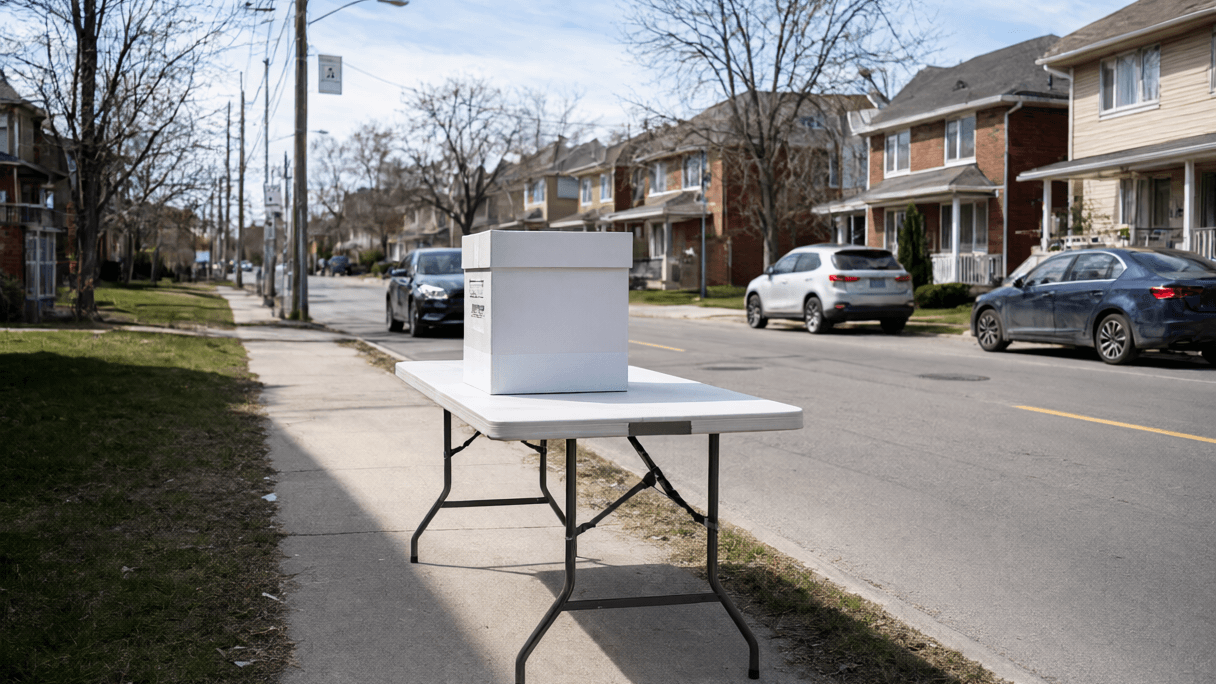
AI-generated image · Bay Street Wire
Opinion: By stripping school trustees of financial power and collective bargaining roles, the Ford government has turned a vital democratic process into a symbolic exercise.
As Ontarians prepare to head to the polls on October 26, they are being asked to participate in a democratic ritual that has been systematically gutted from the inside. As CBC Toronto first reported, the upcoming school trustee elections are being presented as a standard exercise in local governance, but a closer look at the legislative changes imposed by the Ford government reveals a stark reality: voters are electing representatives who have been stripped of their actual power.
In a series of sweeping changes introduced this year, Education Minister Paul Calandra has fundamentally redefined the role of the school trustee. While Calandra argues that these shifts are designed to focus trustees on student achievement and reduce "distractions," the result is a governance model that renders the elected official largely ornamental.
According to reporting from CBC Toronto, the province has effectively removed the most consequential levers of power from the hands of trustees. Financial decision-making—the very core of board governance—has been stripped away and handed to newly created board CEOs. Similarly, the role of trustees in collective bargaining has been transferred to a body representing education directors.
What remains? The province has left trustees with their traditional advocacy work for parents and students, and in the case of Catholic boards, control over denominational issues. While advocacy is noble, it is not the same as authority. When you remove the budget and the bargaining table, you are no longer managing a system; you are merely commenting on it.
Perhaps most alarming is the sheer audacity of the current electoral cycle. CBC Toronto reports that the province has placed eight school boards—including some of the largest in the province—under government supervision. In these districts, trustees have been effectively suspended. Yet, in a move that borders on the absurd, many of these positions remain up for election. Voters are being asked to cast ballots for representatives who may enter office already sidelined by the provincial government.
This erosion of power is not just legislative; it is structural and financial. A new provincial limit has set the maximum number of trustees per board at 12. For the Toronto District School Board, this represents a massive contraction, slashing the number of representatives from 25 down to 12. Furthermore, the province restricted trustee annual pay to a $10,000 cap and placed limits on their discretionary spending.
These changes are clearly having a chilling effect on civic participation. Data provided by trustee associations to CBC Toronto shows a precipitous decline in candidates. The Ontario Public School Boards’ Association notes that only 673 people are running for English public board roles, a sharp drop from the 862 candidates in 2022. The Ontario Catholic School Trustees Association reports a similar trend, with approximately 380 candidates compared to 441 four years ago.
Michael Bellmore, president of the Ontario Catholic School Trustees' Association and a trustee acclaimed in the Sudbury Catholic District School Board, explicitly stated that provincial changes "definitely would have contributed" to this decline, noting that the uncertainty of the role likely deterred potential candidates. Jodi Lloyd, a Simcoe board trustee and former board member of the Ontario Public School Boards’ Association, added that the significant reduction in honorariums has played a role in people deciding not to run, given the large amount of work involved.
Minister Calandra has been candid about his disdain for the existing system, describing the way schools are governed as "outdated." In August 2025, he even mused about the possibility of eliminating school trustees entirely. While he eventually opted to curtail their responsibilities rather than erase the position, the intent is clear: the government views local democratic oversight as an obstacle to be managed or removed.
There are those, like incumbent Toronto District School Board trustee Alexis Dawson, who argue that the role remains vital because advocacy for families and properly funded education is still necessary. While Dawson's commitment is commendable, it highlights the tragedy of the current system. We are asking citizens to run for office and voters to choose representatives based on their ability to advocate, while simultaneously ensuring those representatives have no actual power to implement the changes the families are asking for.
When the province replaces elected officials with appointed CEOs and removes the power of the purse, the election ceases to be a mechanism for accountability. It becomes a performance. To tell voters that their vote still matters while the government actively suspends boards and strips trustees of their primary functions is a contradiction that undermines the integrity of Ontario's educational governance.
If the goal is truly student achievement, it should be paired with local accountability. Instead, the Ford government has created a system where the people in charge are not the people the public elected. By the time the October 26 polls close, the victory will not belong to the winners of the election, but to a provincial government that has successfully rendered the democratic process a hollow exercise.