
The High Cost of a Word: A Century-Old Murder and the Failure of Deterrence

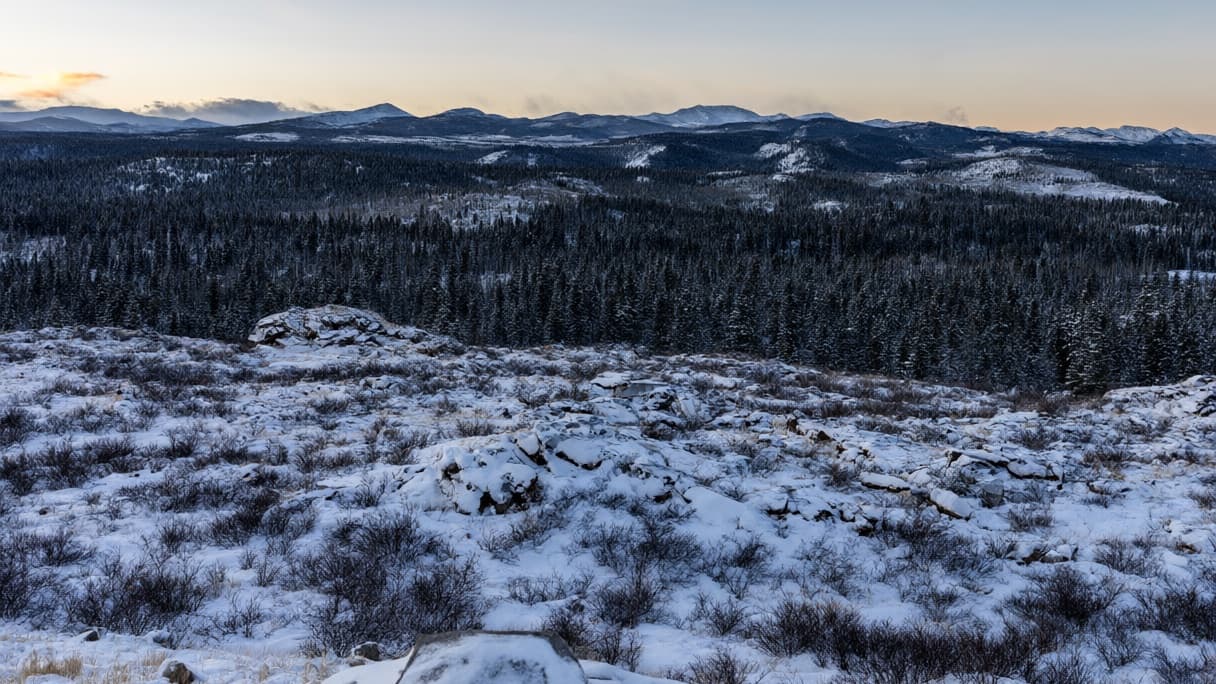
AI-generated image · Bay Street Wire
Opinion: The 1876 killing of William Atcheson over a pronunciation dispute is a grim reminder of how the state often fails to prevent senseless violence.
History is often viewed through a lens of progress, but as CBC News first reported, the annals of the American frontier reveal a darker, more chaotic reality where the state's failure to deter violence turned trivial disputes into death sentences. A century and a half ago, the justice system didn't just fail to protect its citizens; it was virtually non-existent in the face of raw, unchecked temper.
A violent clash erupted in March 1876 at the Hooker and Gray saw mill near Larkspur, Colorado. The catalyst was not a land dispute or a blood feud, but a disagreement over how to pronounce the word 'Newfoundland' in reference to a dog. William Atcheson, a New Yorker with a passion for the English language, clashed with John Peter Davis, a Texan teamster and rumored former gunslinger, over the correct articulation of the word.
According to CBC News, the two men were known as "chronic disputants" who frequently argued. On that Friday night, the tension boiled over. Atcheson reportedly struck Davis, knocking him to the ground. In response, Davis drew a revolver and shot Atcheson in the stomach. Atcheson died early Saturday morning, while Davis vanished into the woods, aided by a snowstorm that erased his tracks.
From a policing accountability perspective, this incident is a case study in the failure of deterrence. A local sheriff led a posse in pursuit of Davis, but the effort was futile. The killer escaped the reach of the law for decades, leaving a murder to go unpunished in real-time. The state's inability to maintain order in these isolated lumber camps meant that a man's life could be extinguished over a dictionary definition—or the lack thereof.
Even the eventual "justice" served was hollow. CBC News notes that in 1912, a letter arrived at the sheriff's office in Castle Rock, Colorado, claiming to be from a physician in Peoria, Oregon. The letter contained a deathbed confession from a 70-year-old Davis. Yet, even this closure was fraught with uncertainty; attempts to verify Davis's existence in Peoria failed. Whether the confession was a genuine act of contrition or a ploy by a doctor seeking reward money remains unknown.
It is a sobering thought that Atcheson and Davis died—or aged in hiding—over a linguistic point that neither could have definitively proven. CBC News points out that the 1864 Webster's dictionary disagreed with both men, and neither man had any actual ties to Newfoundland.
When we look back at these events, we shouldn't see them as mere curiosities of the "Old West." We should see them as reminders that when the state fails to provide a stable framework of law and deterrence, the result is a society where the most trivial disagreement can become a lethal encounter. The blood spilled at the Hooker and Gray mill was entirely avoidable, a direct consequence of a lawless environment where violence was the only resolution.