
The High Cost of a Pivot: Canada's Auto Industry at a Crossroads

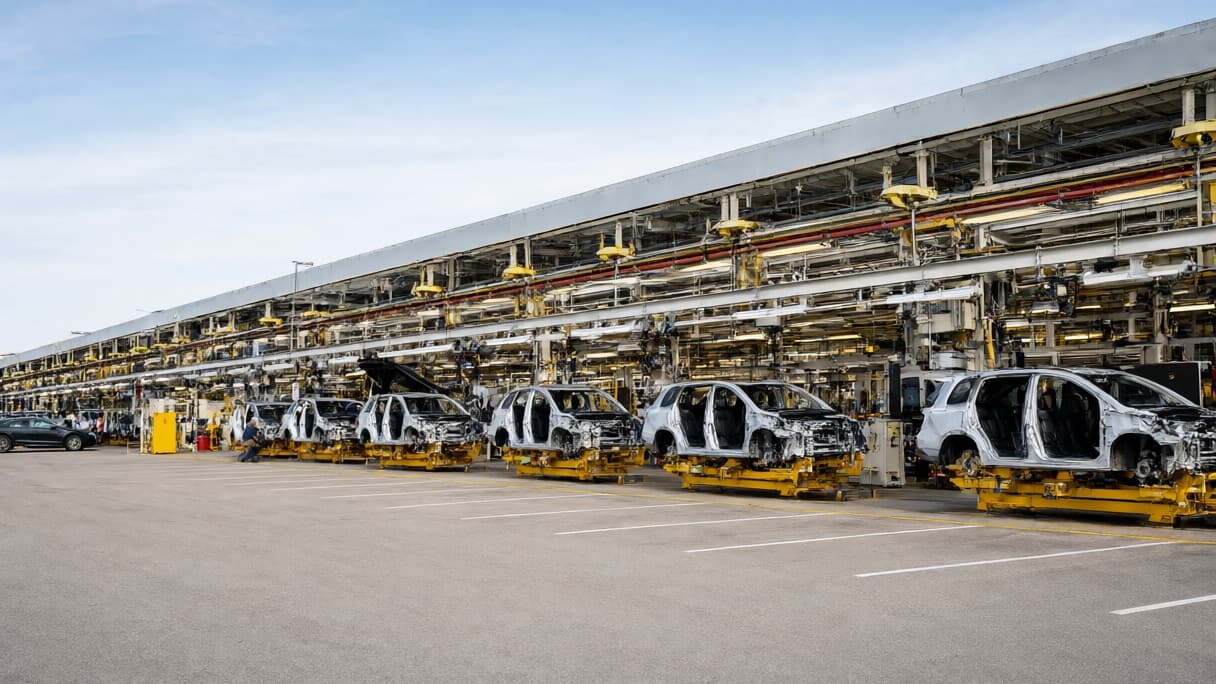
AI-generated image · Bay Street Wire
As Prime Minister Mark Carney weighs Chinese automotive partnerships against U.S. trade tensions, Canadian drivers and workers face an uncertain road.
**Opinion:** If we trade American tariffs for Chinese imports, the average Canadian driver is going to be the one footing the bill for a massive gamble on our automotive supply chain.
Canada is currently caught in a geopolitical tug-of-war that threatens to upend the domestic automotive sector. As first reported by CityNews Toronto, Prime Minister Mark Carney has indicated that Canada may turn to Chinese automakers if trade negotiations with U.S. President Donald Trump fail to maintain an integrated North American auto industry.
Speaking in Cambodia on Monday, Nov. 15, 2026, Carney stated that while negotiations with the United States remain his priority, the outcome of those talks will determine if Canada pursues alternatives with Japanese, European, or Chinese automakers. Carney described the shift not as "leverage" in negotiations, but as "action, reaction," noting that Canada will "move forward either way."
This potential pivot follows a January agreement where Canada reduced its 100% tariff on Chinese electric vehicles to 6.1%, initially permitting up to 49,000 vehicles annually. In return, China agreed to reduce tariffs on Canadian agricultural goods, specifically canola.
However, Ontario Premier Doug Ford has criticized the January agreement, warning that the influx of Chinese electric vehicles could jeopardize Canadian jobs and threaten the country's access to the U.S. market.
The stakes are high given the integration of the "Detroit Three"—Ford, General Motors, and Stellantis—across Canada, Mexico, and the U.S. This stability is fracturing; as CityNews Toronto notes, Canada recently threatened legal action against Stellantis after the company shifted planned Jeep Compass production from Brampton, Ontario, to Illinois and agreed to sell its idled Canadian facility.
Carney has emphasized that any Chinese investment must avoid "kit cars" and instead require substantial domestic manufacturing and the use of Canadian critical minerals. While Carney noted Saturday in Manila that progress is being made with U.S. officials, significant differences remain.