
The Heavy Silence of the Sling: Reflecting on the Marineland Exodus

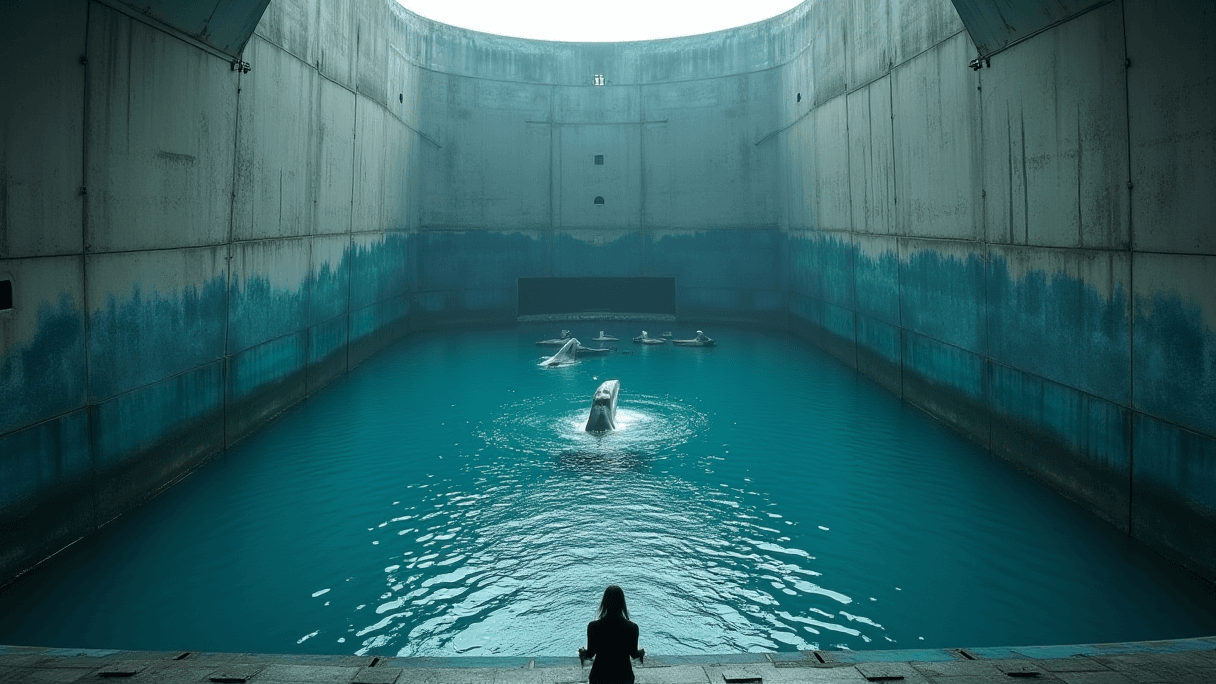
AI-generated image · Bay Street Wire
Opinion: While the relocation of Canada's last captive whales is a logistical victory, the emotional toll of moving these creatures from one tank to another reveals the enduring tragedy of captivity.
The images emerging from Niagara Falls this week are a study in mechanical precision. According to reporting from CityNews Toronto and CBC Toronto, we saw the carefully choreographed dance of slings, transport trucks, and police-escorted convoys. We saw the efficiency of a U.S. consortium of aquariums and Marineland staff moving six beluga whales across international borders in a process described by Marineland adviser Andrew Burns as making the "incredible look simple."
But as a columnist focused on the human—and sentient—interest behind the headlines, I find myself less interested in the "simplicity" of the logistics and more haunted by the emotional weight of the transition. For the six whales moved on Monday, July 20, 2026, this was not a liberation into the wild, but a relocation from one confined existence to another.
Consider the specific movements of these animals. CityNews Toronto reports that Sierra, one of four females, was the first to be lifted from her pool shortly after 4:30 p.m. Monday. By 8 p.m., two males, Bertie Botts and Frankie, were hoisted into tanks. These are creatures of the vast, open ocean, yet their world was reduced to the diameter of a transport tank and the roar of a cargo jet flying out of Toronto Pearson International Airport.
There is a profound, quiet tragedy in the fact that these animals are being moved not because of a sudden moral awakening, but because of financial collapse. Marineland, which has been closed to the public since 2024, has stated it is running out of money and can no longer care for the whales. This is a stark reminder that the lives of these sentient beings have long been tethered to the solvency of a tourist attraction. When the money ran out, the urgency to move them began.
We must also acknowledge the precariousness of their existence over the last year. CityNews Toronto reports that Marineland initially struck a deal to sell all 30 belugas to the Chimelong Ocean Kingdom in China. That move was blocked by Fisheries Minister Joanne Thompson, who cited a 2019 federal law banning whale and dolphin captivity, breeding, and performances, stating the sale was not in the best interest of the whales. In a chilling turn of events, Marineland then threatened to euthanize all the whales unless the federal government provided emergency funds.
While the current deal with U.S. and Spanish aquariums is a victory in the sense that it avoids euthanasia and the China transfer, we must ask: what is the emotional cost of this "rescue"?
Four females—Sierra, Acadia, Osiris, and Lillooet—arrived at the Shedd Aquarium in Chicago in the early hours of Tuesday morning. Bertie Botts and Frankie ended up at SeaWorld in San Antonio. Johnny Ford, a spokesperson for the U.S. consortium and employee at Shedd, notes that the whales are doing well. But "doing well" in the context of a captive animal is a relative term. It means they survived the stress of the sling, the vibration of the truck, and the disorientation of the flight.
As we look toward the rest of the population—the 24 belugas and four dolphins remaining at Marineland—there is a desperate hope that they will all be gone by the end of August, as the park intends. Yet, the destination remains a series of marine parks: SeaWorld in San Diego, Georgia Aquarium in Atlanta, and Oceanografic Valencia in Spain.
Andrew Burns spoke of the "conduct of the team" mitigating the potential stress of the move. While professional handling is necessary, it cannot erase the fundamental stress of being a whale in a truck. The emotional weight of this transition is not found in the success of the convoy, but in the reality that these animals are being traded like assets between facilities.
We celebrate the move because the alternative—euthanasia or a transfer to China—was worse. But in our relief, we must not forget that the goal of any animal rights victory should be the restoration of autonomy, not the optimization of captivity. The belugas of Niagara Falls are moving toward new homes, and while those homes may be better managed, they are still walls and filters.
The tragedy of the Marineland belugas is not just that they were kept in captivity, but that their only path to "safety" is a different tank in a different country. As the remaining 28 animals await their turn in the sling, we are reminded that the true victory would not be a successful transport, but a world where such transports are no longer necessary.