
The Global Audition: Carney's UN Strategy Amid Trump's Volatility
AI-generated image · Bay Street Wire
By positioning Canada as a pillar of stability at the United Nations General Assembly, Prime Minister Mark Carney is signaling a pivot away from a fractured U.S. relationship toward a broader international stage.
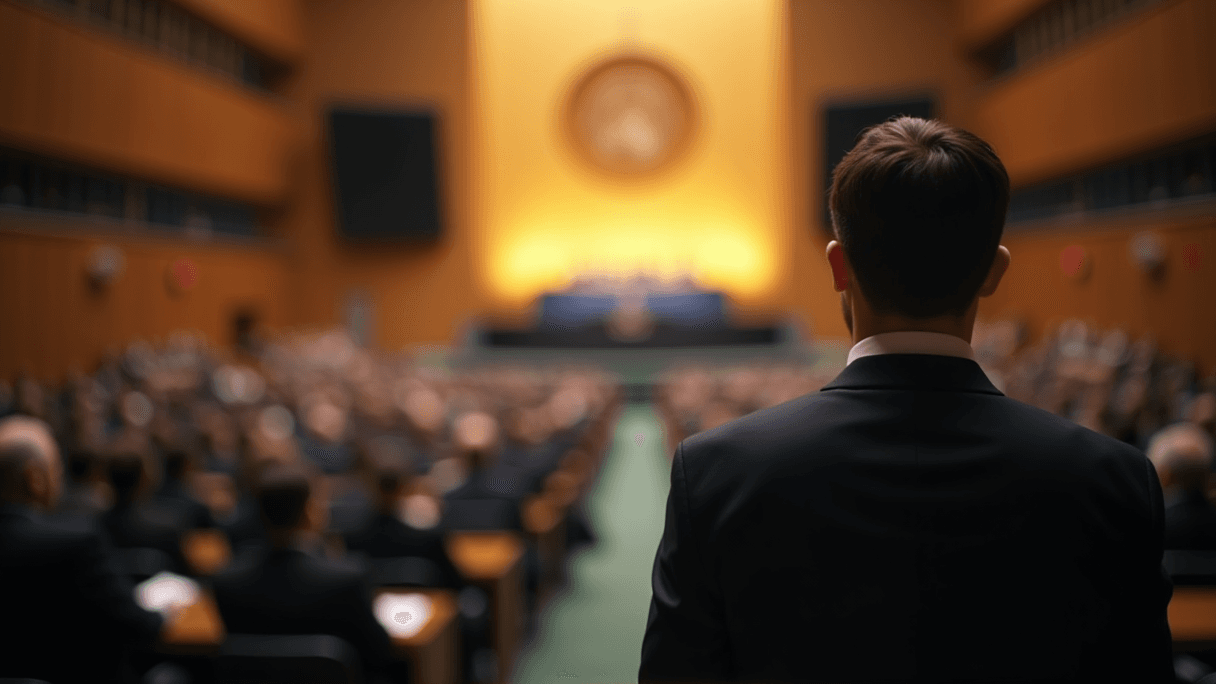
Prime Minister Mark Carney's upcoming trip to New York for the 81st Session of the United Nations General Assembly is being framed as a diplomatic mission, but as CityNews Toronto first reported, the underlying current suggests a calculated effort to redefine Canada's role in a world where the traditional order is being dismantled.
According to reporting from CityNews Toronto, Carney will not deliver a formal speech during the event, which runs from Monday to Wednesday. Instead, he will focus on high-level meetings with business and world leaders. The strategy is clear: while U.S. President Donald Trump works to undermine multilateralism, Carney is positioning Canada as a reliable alternative. In a news release, Carney stated that "the world is looking at Canada differently" and asserted that Canada intends to help shape the international order as it is being remade.
This shift comes at a moment of extreme volatility in Canada-U.S. relations. CityNews Toronto reports that President Trump has escalated a trade war following the collapse of trade talks last month, imposing 50 per cent tariffs on various Canadian goods and moving to ban certain imports. Trump has further intensified this friction by signing an executive order to rename Lake Ontario as "Lake America" and issuing a memorandum to remove Canadian-origin products from U.S. government procurement.
Against this backdrop of American isolationism, Carney is aggressively courting global partners. CityNews Toronto notes that European Commission President Ursula von der Leyen recently suggested Canada could become the first "associate member" of the EU—a prospect Trump has labeled a possible "hostile act," threatening further tariffs on Europe.
Carney's itinerary in New York reflects this pivot toward European and global alliances. He is scheduled to co-host an event on the two-state solution with the United Kingdom and France, one year after the three nations recognized an independent Palestinian state. This follows Ottawa's recent pledge, alongside European nations, to ban imports from Israeli settlements in the occupied West Bank. This stance has drawn sharp criticism from the Centre for Israel and Jewish Affairs, which called the approach a "dangerous double standard" and urged Carney to be consistent and grounded in Canadian interests.
Beyond the Middle East, Carney is focusing on institutional stability and environmental investment. He will join Ursula von der Leyen at an OceanEye International Alliance event and participate in a multilateral collaboration roundtable with European Council President António Costa and Kenyan President William Ruto.
As the UN faces turmoil due to Trump's demands for reformation and the withdrawal of U.S. funding from organizations like UNESCO and the World Health Organization, Carney is positioning himself as a champion of the institution. He has pledged to work with partners to build a more effective UN capable of delivering on human rights, development, and security.
While Canadian officials acknowledge that Carney and Trump could cross paths in New York, CityNews Toronto reports there are no scheduled meetings with the U.S. administration. Instead, the heavy lifting of formal address will fall to Foreign Affairs Minister Anita Anand. For Carney, the General Assembly is less about the bilateral struggle with Washington and more about an audition for a leadership role on the global stage.