
The Gane Gamble: Technical Finesse vs. The Predator's Chaos

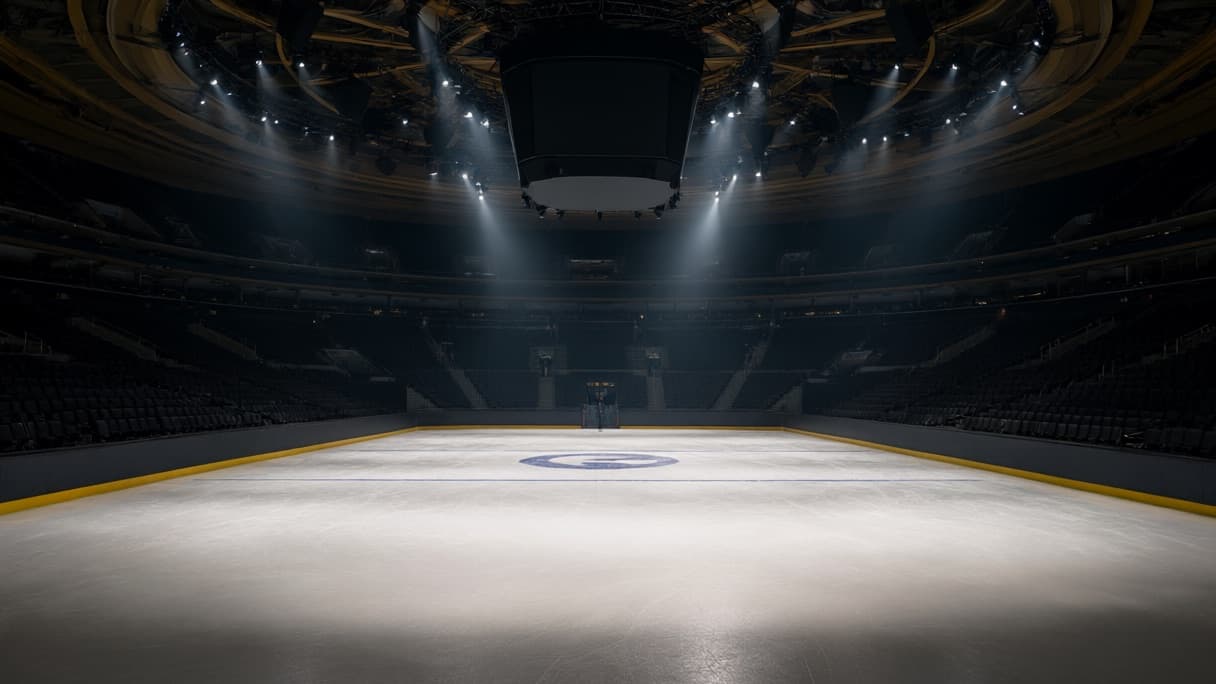
AI-generated image · Bay Street Wire · Based on a photo by Ajay Suresh from New York, NY, USA (CC BY 2.0, Wikimedia Commons)
Opinion: Ciryl Gane's title defense hinges on a dangerous game of keep-away against an unpredictable Josh Hokit.
Let's be clear: this is an opinion piece. I've seen enough in this game to know that 'technical superiority' is a fragile shield when faced with a predator who doesn't play by the rules.
As we head toward UFC 334 at Madison Square Garden, the heavyweight division finds itself at a crossroads. On one side, you have the undisputed champion, Ciryl Gane. On the other, you have the 10-0 professional fighter, Josh Hokit. As Sportsnet first reported, Gane's path to victory is straightforward: keep the fight standing, maintain his preferred range, and utilize the height and reach advantages he holds over Hokit.
In a vacuum, that sounds like a masterclass in the making. Gane is the refined, finesse fighter—the technician who treats the Octagon like a chessboard. But here is where the gamble lies. Gane isn't just fighting a man; he's fighting a style of chaos.
According to Sportsnet, Hokit has already proven he can dismantle fighters who rely on raw power and physicality, citing his successes against Derrick Lewis and Curtis Blaydes. This suggests that Hokit isn't intimidated by the heavy hitters, but more importantly, it sets the stage for a clash of philosophies. Gane wants a controlled environment. Hokit, as Sportsnet notes, needs to make the fight as unpredictable as his own personality.
This is where Gane's survival becomes a question of mental fortitude versus technical skill. Sportsnet points out a critical flaw in the champion's armor: when Gane is taken out of his comfort zone, he can be slow to make adjustments. In the fight game, 'slow to adjust' is often a synonym for 'getting caught.'
If Gane spends the night playing a game of keep-away, he is essentially betting that his reach can neutralize Hokit's unpredictability. But Hokit possesses a dangerous asset—a small sample size. With a perfect 10-0 record, the champion hasn't seen everything Hokit can do. Sportsnet argues that any diversification Hokit brings to his game—specifically the use of feints, mixing his looks, and finding success with grappling—could be the catalyst that breaks Gane's rhythm.
There is a massive difference between striking from distance and being forced into a scramble. If Hokit can successfully implement a grappling game or use feints to bridge the gap, Gane's technical refinement becomes secondary to the immediate need for survival. The champion's preference for distance is a double-edged sword; it works perfectly until it doesn't, and once the fight becomes a brawl or a wrestling match, the 'finesse' disappears.
Sportsnet predicts a Gane victory via KO/TKO in the third round, suggesting the champion's precision will eventually find its mark. However, I argue that the margin for error here is razor-thin. Gane is walking a tightrope. If he can maintain the distance, he makes the fight look easy. But if he is merely playing a game of keep-away, he is inviting a predator to hunt him down.
In this sport, the most dangerous fighter is the one who is willing to make the fight ugly. Hokit's path to victory is built on that very unpredictability. If Gane cannot adapt the moment the fight leaves his comfort zone, his technical brilliance won't save him from a fighter who thrives in the chaos. The question isn't whether Gane is the better striker—it's whether his distance game is a genuine strategy or just a fragile hope that Hokit won't find a way inside.