
The 'Frankencitation' Crisis: New Brunswick's Education Plan and the Erosion of Policy Integrity

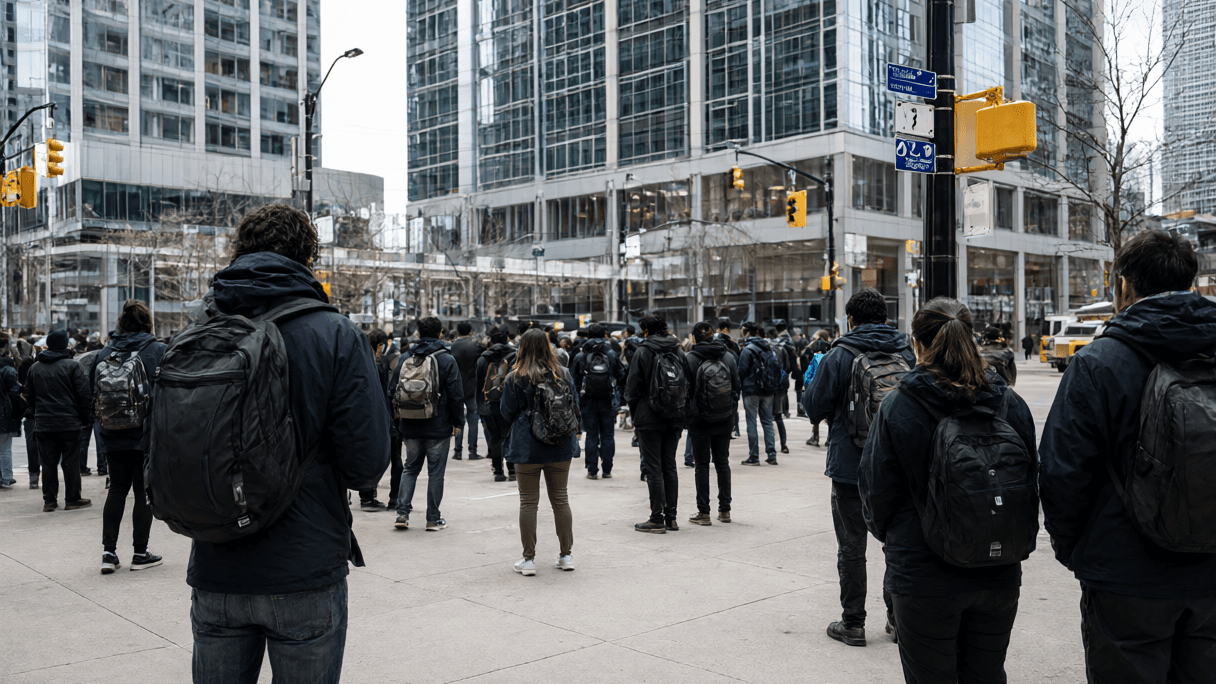
AI-generated image · Bay Street Wire
When a 12-year blueprint for children's learning is marred by AI-generated hallucinations, it reveals a systemic failure in government accountability and academic rigor.
Opinion: The integrity of public policy relies on a foundational promise: that the evidence cited to justify systemic changes is real, verified, and accurate. When that promise is broken, the resulting document is no longer a roadmap for progress, but a liability.
This is the precarious reality currently facing New Brunswick. The provincial government recently unveiled its Anglophone Sector Education Plan, describing it as a "shared vision for the next 12 years of education" intended to guide learning across the province through 2038. However, as CBC News first reported, the document has come under intense scrutiny from academic experts who discovered that the plan attributes work to researchers that simply does not exist.
### The Anatomy of a 'Hallucination'
At the center of the controversy are two specific references that appear to be the result of artificial intelligence "hallucinations"—a phenomenon where AI generates responses that sound plausible but are factually fabricated.
Vincent Geiger, a professor of mathematics education at Australian Catholic University, discovered his work was misattributed in the plan. While Geiger is a recognized expert in numeracy, the specific article credited to him in the government's reference list does not exist. Furthermore, Geiger told CBC News he has never heard of the journal where the article was allegedly published. He described the error as a "mishmash" of his previous work, suggesting the AI tool dredged through his records and synthesized fragments of different articles rather than citing a specific title.
Similarly, William Jeynes, an education professor and researcher at California State University, Long Beach, found his name on the reference list attached to an article he did not write. While the article fell within Jeynes' field of study, it was authored by someone else. Jeynes noted that while the body of the text accurately represented his research content, the failure in attribution and the lack of fact-checking are grave errors for a government agency.
Matt McGuire, who teaches educational technology at the University of New Brunswick, identifies these errors as "Frankencitations"—a term used when AI jumbles real pieces of information to create a fabricated whole. According to McGuire, these hallucinations violate the foundational rules of research and compromise the professional and academic integrity of the entire document, regardless of whether the core arguments remain valuable.
### The Governance Gap
The New Brunswick Department of Education and Early Childhood Development has acknowledged the role of AI in this debacle. In a statement to CBC News, the department clarified that while staff wrote the plan and the studies used to inform the report are valid, an AI-powered assistant—specifically Microsoft 365 Co-Pilot—was used to format the bibliography for the anglophone plan.
This admission reveals a critical failure in the "human review" process. The fact that fabricated citations survived the transition from an AI draft to a published government mandate suggests a breakdown in oversight. Nabil Beitinjaneh, a faculty lecturer and data programs co-ordinator at McGill University, argues that the use of generative AI is not the inherent problem, but rather the process surrounding it. Beitinjaneh questioned the accountability and governance structures in place during the delivery of a document of such high importance.
Beitinjaneh's review of the plan uncovered further evidence of sloppiness, including misspelled author names and "orphaned citations," where works quoted in the text were missing from the final reference list, preventing readers from verifying the sources independently.
### A Canary in the Coal Mine
This incident is more than a clerical error; it is a warning. When the architects of a province's education system outsource the verification of their intellectual foundations to an algorithm, they risk delegitimizing the very standards of academic integrity they expect students to uphold.
Vincent Geiger expressed bewilderment that a government education department would adopt such a non-scholarly approach, noting that even a credible journalist would find the method "pretty shoddy." William Jeynes echoed this concern, noting that he has seen similar AI-generated errors in student papers, but emphasized that the stakes are exponentially higher when the errors appear in a report issued by a government agency.
As New Brunswick attempts to set a direction for the next decade of learning, the presence of "Frankencitations" serves as a stark reminder: AI can assist in formatting, but it cannot replace the rigorous, human-led fact-checking required to maintain public trust in policy. If the blueprints for our children's education are built on hallucinations, the entire structure is at risk.