
The Fault Lines of Unity: Why Mark Carney’s Alberta Appeal is a Hollow Gesture

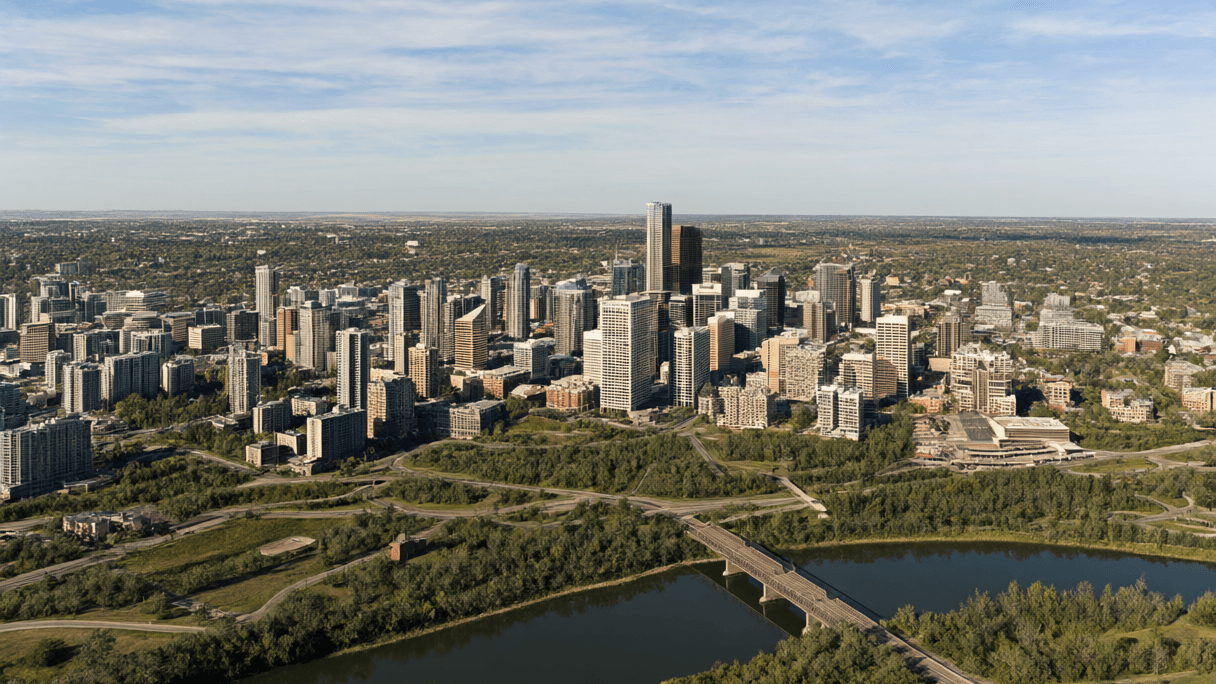
AI-generated image · Bay Street Wire
Opinion: The Prime Minister’s plea for national cohesion ignores the systemic alienation driving the separation movement, offering pipelines and rail as a substitute for genuine reconciliation.
Prime Minister Mark Carney is attempting to play the role of the prodigal son returning home to save the family estate. In a Thanksgiving message filmed within the walls of his alma mater, St. Francis Xavier High School in west Edmonton, Carney looked into the camera and told Albertans that Canada is "worth fighting for."
It was a calculated piece of political theater. By positioning himself in a classroom in Edmonton and reminding the electorate that he grew up in Alberta, Carney is leaning heavily on personal history to bridge a widening geopolitical chasm. But as the province prepares for the Oct. 19 referendum, it is becoming clear that sentimental appeals to shared history are an insufficient antidote to the systemic alienation currently gripping the West.
According to reporting from CBC News and CityNews Toronto, the upcoming vote will center on a 10-question referendum. The pivotal final question asks Albertans to decide whether the province should remain part of Canada or proceed toward a second, binding referendum on separation. This is not a theoretical debate or a fringe movement; it is a formal process that threatens the very integrity of the federation.
Carney’s strategy is to pivot the conversation toward "big things." He points to federal housing initiatives, a proposed high-speed rail route connecting Edmonton and Calgary, and the Pacific Link pipeline project—a venture Carney has declared to be in the national interest. His argument, as reported by CBC News, is simple: "You can't build big things on fault lines."
On the surface, this is a pragmatic pitch. He is offering infrastructure and economic conduits as the glue to hold the country together. But this approach betrays a fundamental misunderstanding of the Alberta separation movement. The alienation driving the push for a referendum is not a lack of pipelines or rail lines; it is a crisis of trust and a feeling of systemic marginalization. To suggest that a new pipeline to the West Coast can erase the "fault lines" of Canadian federalism is not just optimistic—it is hollow.
When the Prime Minister speaks of being "stronger together" in the face of threats to Canada's economy, security, and culture, he is speaking the language of the center. He is asking Albertans to prioritize the collective strength of the nation over their specific provincial grievances. While Conservative Leader Pierre Poilievre and BC NDP Leader David Eby have joined this chorus of unity—with Eby citing the bonds of business, friendship, and family—the collective plea feels like an attempt to manage a crisis rather than solve it.
Even the political analysis suggests this is more about optics than substance. Lori Williams, an associate professor of policy studies at Calgary's Mount Royal University, told CBC News that Carney is currently the most popular politician in the province and that his attempt to inspire people about Canada's future might resonate. But popularity is not the same as policy, and inspiration is not a substitute for addressing the grievances that lead a province to contemplate an exit.
Meanwhile, the silence from the provincial government is deafening. As reported by CBC News, Alberta Premier Danielle Smith has "scrupulously avoided" speaking extensively about the referendum questions. When contacted for comment on Carney's address, Smith's press secretary, Sam Blackett, offered only a sterile redirection to the official referendum website. This silence from the Premier suggests a leadership that is comfortably letting the referendum process move forward, unimpressed by the Prime Minister's sudden nostalgia for his high school days.
Carney's message that "generations of Albertans helped build this country" is a true statement, but it is one delivered in the past tense. The question facing the voters on Oct. 19 is about the future. If the federal government believes that the way to keep Alberta in the fold is to promise "big things" like the Pacific Link pipeline, they are treating the province like a contractor to be paid off rather than a partner to be heard.
Unity cannot be bought with infrastructure. It cannot be summoned by filming a video in a childhood classroom. If Mark Carney truly believes that Canada is worth fighting for, he must realize that the fight isn't against the separation movement—it is against the systemic failures that made such a movement viable. Until the federal government addresses the root causes of Alberta's alienation, these pleas for unity will remain nothing more than a polished performance on a Thanksgiving stage.