
The 'Emboldened' Signal: Trump’s Trade Rhetoric as a Lever for Canadian Concessions

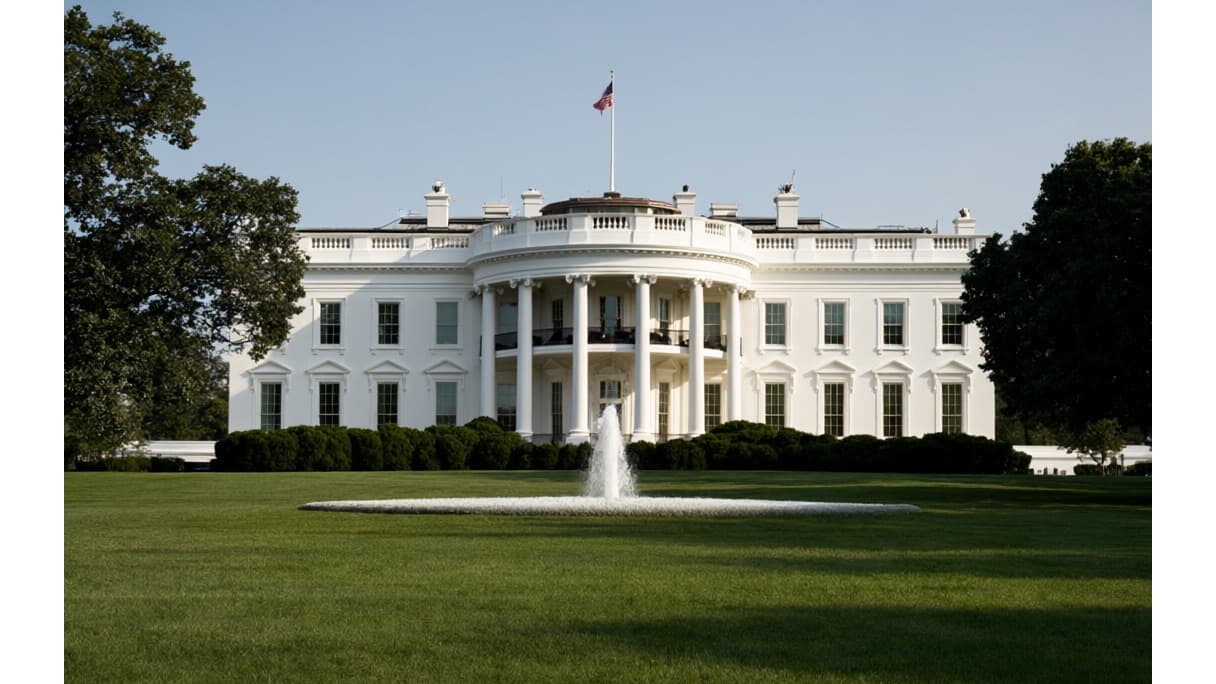
AI-generated image · Bay Street Wire
By framing Canada as 'emboldened' while demanding a zero-dollar trade deficit, President Trump is signaling a strategy to squeeze Ottawa's leverage ahead of critical tariff deadlines.
When President Donald Trump describes a trading partner as "emboldened," it is rarely a neutral observation. It is a signal of perceived defiance that, in the current geopolitical climate, serves as a prelude to increased pressure.
During a White House news conference on Friday, Nov. 20, 2026, President Trump addressed the state of U.S.-Canada relations following a brief meeting with Prime Minister Mark Carney at the Asia-Pacific economic summit in Shenzhen, China. While Trump described Prime Minister Carney as "very nice," the compliment was paired with a stark assessment: Canada is feeling "emboldened," and the country has been "ripping off" the United States for years.
**The Mechanism of the Squeeze**
Trump’s rhetoric is not merely a critique of trade balances; it is a tactical framework designed to force deeper concessions from Ottawa. The most telling indicator is Trump's insistence that he will only be ready to talk once the U.S. trade deficit with Canada is "down to zero."
According to reporting from CBC News, Trump estimated this deficit at "about $80 billion," a figure that deviates from his previous claims of $200 billion and the 2025 actual goods trade deficit of $48 billion US. By setting an arbitrary and mathematically improbable goal—a zero-dollar deficit—Trump creates a negotiation environment where any concession from Canada is framed as a step toward a "fair" deal, while the baseline for "success" remains perpetually out of reach.
This strategy is being deployed against a backdrop of severe economic pressure. As reported by CBC News, the Canadian government is currently pursuing an interim agreement to secure relief from 50 per cent tariffs on a range of exports imposed by the Trump administration in August. These tariffs have already crippled Canada's forest, auto, aluminum, and steel industries.
**The Looming Deadlines**
Ottawa is fighting a two-front battle: seeking relief from existing tariffs and attempting to stave off a new threat. Trump has threatened to increase tariffs on auto parts and vehicles to 50 per cent starting Jan. 1. While CBC News notes that the U.S. has not filed a formal notice regarding this threat—which originated in an August social media post—the deadline is now only six weeks away.
Secretary of State Marco Rubio, who appeared alongside Trump and Vice President JD Vance at the news conference, reinforced this hardline stance. Rubio spoke of an "imbalance and unfairness" in commercial relations, stating that the goal is a final agreement that is "fair to the United States of America" and beneficial to American workers.
**Leverage and the 'Keystone' Carrot**
Trump did acknowledge one specific point of interest: Prime Minister Carney's desire to build a Keystone pipeline for the U.S. While Trump noted that the U.S. "likes" this prospect, he explicitly stated that Canada must "do a lot more than that" to secure a deal. This suggests that while energy infrastructure is a valuable chip, it is not sufficient to offset the broader trade grievances held by the White House.
Furthermore, Trump is expanding the scope of the squeeze beyond traditional commodities. In the same news conference, Trump floated a proposal to impose a "tremendous tax" on U.S. companies that build AI data centres abroad, stating, "We're not going to allow our companies to build data centres outside of our country." As CBC News reports, this could directly impact major data centre projects in Canada backed by U.S. tech giant Meta.
**Opinion: The Strategic Calculus**
*In my view, Trump is utilizing a classic disruption strategy. By labeling Canada as 'emboldened,' he is framing Prime Minister Carney's refusal to 'sit around and wait'—as Carney described it following their Wednesday meeting—as a provocation rather than a diplomatic stance. The goal is to shift the narrative from 'tariff relief' to 'national surrender.' By linking the resumption of serious talks to a zero-dollar deficit, Trump is not seeking a mathematical reality; he is seeking total leverage to rewrite the terms of the CUSMA agreement on his own terms.*
**The Internal U.S. Context**
This aggressive posture comes at a pivotal moment for the Trump administration. CBC News reports that this was the president's first full-fledged news conference since a sweeping midterm election defeat two weeks ago, which resulted in the Republican Party losing control of both the House of Representatives and the U.S. Senate.
Chris Galdieri, a political science professor at Saint Anselm College, told CBC News Network that the existing tariffs may not have achieved Trump's initial goals, noting that Trump likely believed they would cause no pain to U.S. consumers while forcing Canada to be "brought to heel." Galdieri suggested that a durable agreement would allow Trump to "declare victory and move on."
However, the current trajectory suggests that the White House is not yet ready to declare victory. Instead, by combining the threat of new auto tariffs, the potential taxation of AI investments, and the demand for a zero-sum trade balance, the U.S. is signaling that the price of stability for Canada has just gone up.