
The Deployment Gap: Why Canada's Cleantech Vision Must Meet Mechanical Reality

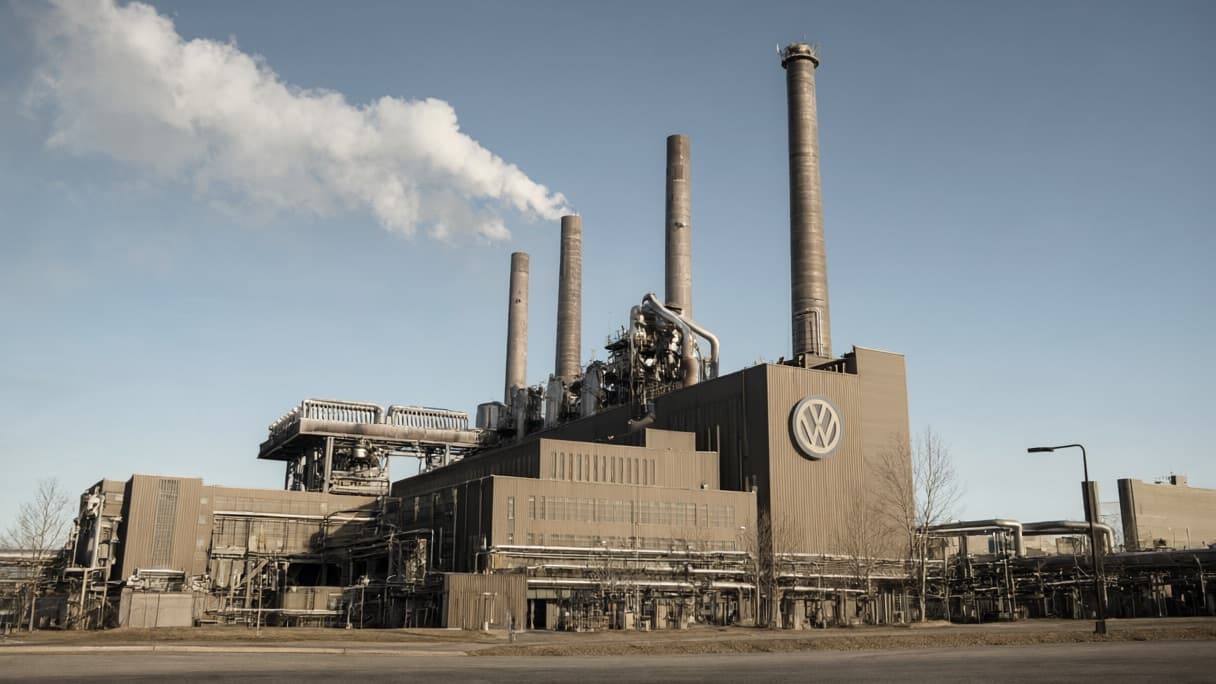
AI-generated image · Bay Street Wire
With a pipeline of ready-to-market tech but dwindling venture capital, the challenge for Canadian climate ventures has shifted from invention to the grueling logistics of commercial scale.
For years, the narrative surrounding Canadian cleantech has been one of potential. We have the ideas, the patents, and the intellectual property. But as any operator in the field knows, a great idea is not a deployed solution. The real battle isn't happening in the lab; it's happening in the unglamorous transition from pilot project to commercial reality.
As BetaKit first reported, a federal survey indicates that nearly two-thirds of Canadian tech companies have products at the commercialization stage. On paper, the pipeline is full. However, the mechanics of moving these technologies into the market are proving to be a significant bottleneck. This is the central tension facing the sector: we have the technological solutions to address climate change without sacrificing economic growth, yet the path to scaling them is fraught with systemic friction.
***
**Opinion: The 'Idea' Phase is Over**
In my view, Canada needs to stop celebrating the 'innovation' and start obsessing over the delivery. The 'eureka' moment is the easy part; the hard part is the 'first-of-a-kind' project. We are currently seeing a dangerous gap between technical readiness and commercial deployment, and if we don't solve the delivery bottleneck, these competitive solutions will simply remain prototypes.
***
This struggle is most acute for hardtech. Unlike software, which can scale with minimal physical overhead, climate ventures dealing in fuels, materials, or industrial equipment face massive capital requirements. Tyler Hamilton, Senior Director of Climate at MaRS, noted to BetaKit that investors willing to fund the construction of a first-of-a-kind manufacturing plant—which can cost tens or hundreds of millions of dollars—are increasingly rare.
The financial climate has chilled significantly. BetaKit reports that venture capital investment in Canadian cleantech dropped to $660 million in 2025, a sharp decline from the more than $1 billion raised in 2022. This volatility was further exacerbated by the 2024 closure of Sustainable Development Technology Canada (SDTC). Following probes into governance and conflicts of interest, the National Research Council’s Industrial Research Assistance Program partially absorbed SDTC's mandate.
As Hamilton noted to BetaKit, many major cleantech funds are currently out of dry powder and are fundraising in a difficult environment. Consequently, the burden of proof for companies—both in terms of technical development and commercial traction—is higher than ever. Market uncertainty and perceived risk are making it harder for firms to attract the customers and investors necessary to bridge the gap from pilot to scale.
Addressing these bottlenecks is the focus of the sixth-annual MaRS Climate Impact conference on Nov. 17 and 18 in Toronto. The event will gather over 1,000 participants, including policymakers, investors, and entrepreneurs, to discuss the pragmatic realities of scaling. The agenda includes tracks on "building for resilience" and "policy, politics, and capital," where leaders will discuss how to navigate middle-power markets and secure the commitments needed for commercial-scale deployments.
Early confirmed guests include XPRIZE Foundation CEO Anousheh Ansari, Xanadu founder and CEO Christian Weedbrook, and CURA co-founder and CTO Phil De Luna. The goal is to move beyond the vision and create the collisions necessary to solve the procurement, regulatory, and capital barriers that currently stall Canadian innovation.