
The Cowardice of Silence: U of T's Rejection of Its Own Discrimination Report

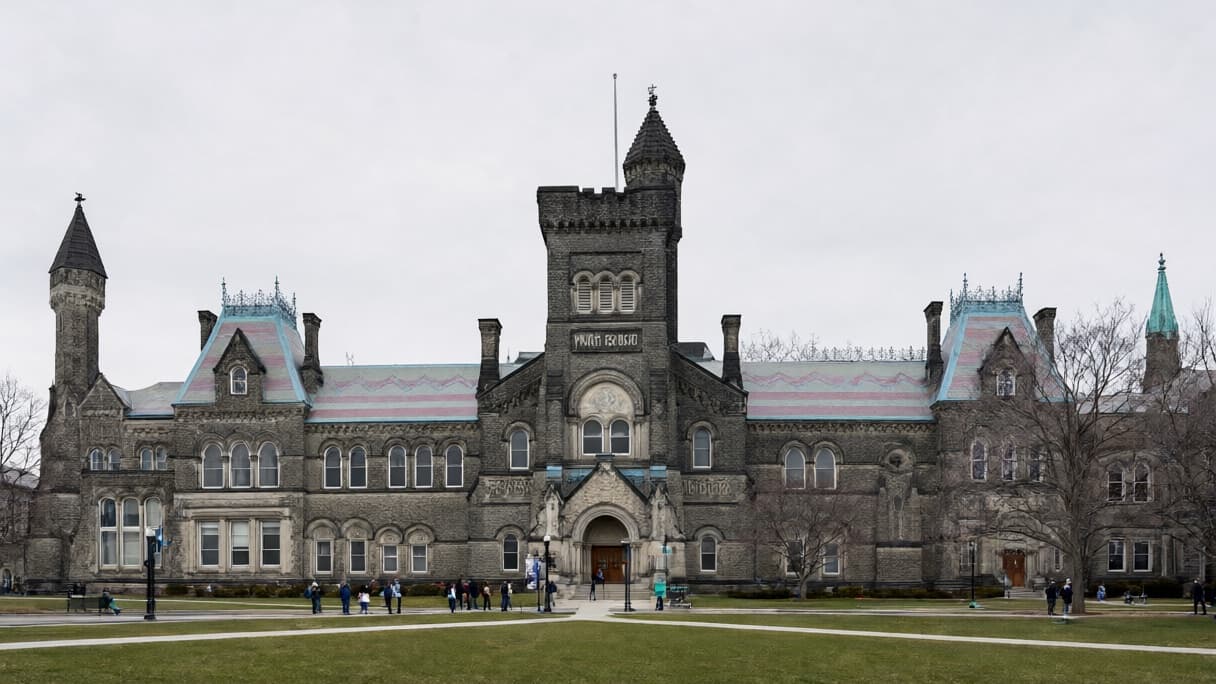
AI-generated image · Bay Street Wire
Gord Mackenzie argues that the University of Toronto's refusal to accept the findings of its own working group is a betrayal of the students it claims to protect.
OPINION: There is a particular kind of institutional cruelty in asking a marginalized community to document their pain, only to tell them that the resulting record is too inconvenient to accept.
As reported by CBC Toronto, the University of Toronto recently released a nearly 300-page report produced by its own Muslim, Arab, and Palestinian discrimination working group. The findings are damning. According to the report, there is a "general pattern of over-policing and under-protecting" directed at Palestinians, Arabs, and Muslims on campus. It details a culture where students and faculty face bigotry, stereotyping, and a "generalized ignorance" of their lived experiences.
And yet, in a move that can only be described as cowardly, the university has stated it cannot accept the report or its 57 recommendations.
The university's justification, per CBC Toronto, is that the report "departs significantly from past equity reports," specifically citing the inclusion of "lengthy commentary about events abroad."
This is a bureaucratic sleight of hand. The working group's report explicitly argues that global events have direct local implications in classrooms and hallways. The report indicates that the consultations kicked off in 2025 during a period of large-scale violence across Iran, Yemen, Lebanon, Syria, the West Bank, and the Gaza Strip. It highlights how university members viewed their campus experiences through the lens of reports from international lawyers, genocide scholars, and human rights organizations describing Israel's actions in Gaza as genocide and/or apartheid.
By dismissing the report because it acknowledges the world outside the campus gates, the university is effectively telling its Muslim, Arab, and Palestinian community that their identities—and the traumas associated with them—are only acceptable if they can be sanitized into a corporate-friendly format.
The report didn't just offer vague complaints; it provided specific evidence of institutional failure. It cited double standards in the policing of postering and protests, as well as the university's litigation to remove a pro-Palestinian encampment two years ago. It revealed a "Palestine exception" to the school's supposed commitment to critical research. Perhaps most chilling is the report's finding that innovative research or outreach was sometimes viewed as antisemitism, triggering calls for disciplinary action. The report further noted that clinical faculty members described being labeled as "unprofessional" because they signed an open letter in support of medical workers in Gaza.
Despite these revelations, the university's response is a masterclass in hollow rhetoric. While it acknowledges that anti-Muslim, anti-Arab, and anti-Palestinian discrimination exists and promises to address it, it refuses to adopt the very roadmap designed to fix the problem.
The 57 recommendations—ranging from reviewing safety and risk metrics to ensuring content-neutral policing of protests—represent the collective voice of 85 individuals in small groups and 525 survey respondents. To reject these recommendations is to reject the lived reality of those who provided the data.
U of T claims a commitment to transparency by releasing the report, but transparency without accountability is just performance. You cannot claim to fight discrimination while simultaneously erasing the evidence of how that discrimination manifests. By rejecting the working group's findings, the university isn't just disagreeing with a methodology; it is telling its students that their truth is an administrative inconvenience.