
The Cost of 'Containing' the Uncontrollable: Who Is Accountable for the CFB Wainwright Slaughter?

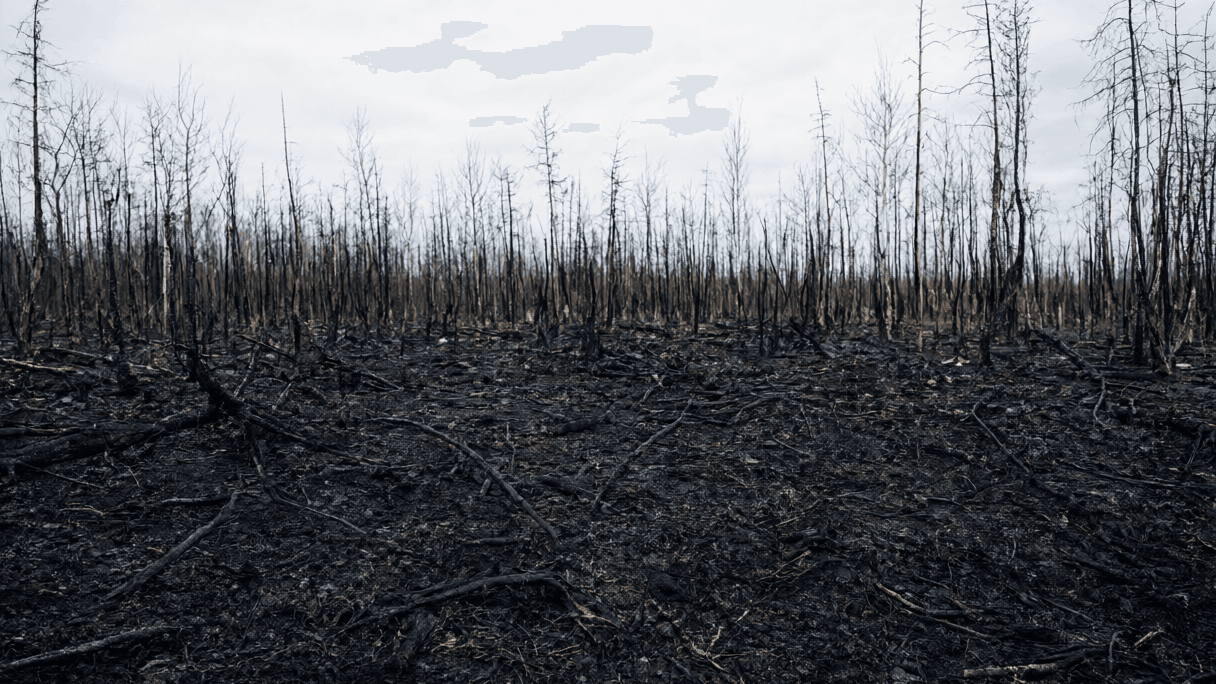
AI-generated image · Bay Street Wire
Opinion: Major-General Rutland’s admission that range control knew about the fire for hours transforms a 'fast-moving' tragedy into a question of criminal negligence.
The official narrative coming out of CFB Wainwright is one of a 'violent fast-moving fire' and an unavoidable tragedy. But as a crime and justice columnist, I don't deal in narratives; I deal in the chain of command and the failure of safety protocols. When four soldiers are dead and dozens more are hospitalized, the question isn't just *how* the fire spread, but *why* the people in charge allowed it to reach the soldiers in the first place.
Let us be clear: this was not a sudden, freak accident. According to reporting from CityNews Toronto, Major-General L.W. Rutland, Commander of the 1st Canadian Division, admitted that range control was aware of the fire for several hours. In a chilling display of institutional complacency, Rutland stated that it was decided the fire 'could carry on for a certain amount of time' because it was believed to be contained.
That decision is the smoking gun.
We are told by CityNews Toronto that the fire eventually leaped across established fire guards, covering over a kilometer in as little as 30 seconds to a minute. It slammed into the administrative area of the section attack range with such speed that a commander on the ground reported seeing no fire one moment, and then having it 'right on top of them' the next.
When you are conducting live training exercises involving live grenades and other live munitions—as C Company of the 3rd Battalion Princess Patricia’s Canadian Light Infantry (PPCLI) was doing—the margin for error is zero. To decide that a wildfire can 'carry on' while soldiers are in the middle of a live-fire range is not a tactical calculation; it is a dereliction of duty.
Who made that call? Who determined that the fire was 'contained' enough to risk the lives of the 3rd Battalion? The military is currently investigating topography and foliage, but the most critical variable wasn't the wind or the grass—it was the human judgment at the top of the chain of command.
The human cost of this failure is staggering. We are talking about the loss of Private Shaun Farrell of Prince Albert, Saskatchewan; Private Aidan Goulding of North Vancouver, B.C.; Private Hayden Lykkemark of Langley, B.C.; and Sergeant Morgan Wong of Edmonton, Alberta. These were not just numbers on a casualty list. They were people with ambitions—Goulding dreamed of Special Ops and CSIS; Wong was a financial analyst and a first responder with St. John Ambulance.
Beyond the dead, the scale of the carnage is evident in the medical response. CityNews Toronto reports that 39 service members were injured, with 19 in critical condition. The emergency was so severe that Acute Care Alberta had to activate a 'code orange' across several hospitals, deploying 30 units, including 22 ground ambulances and eight aircraft, to transport the wounded to facilities in Wainwright, Edmonton, Red Deer, and Calgary.
Prime Minister Mark Carney has called this 'one of the worst tragedies for the forces on Canadian soil in peacetime.' He is correct. But tragedies are often the result of preventable failures. If range control knew about the fire for hours, the failure didn't happen in the grass; it happened in the briefing room.
If the decision to continue training was made despite the presence of an active fire, we are no longer talking about an 'unavoidable accident.' We are talking about criminal negligence. The soldiers of the 3rd Battalion PPCLI did their jobs; they followed orders and conducted their exercises. They trusted their leadership to ensure the training environment was safe. That trust was betrayed by a decision to let a fire 'carry on.'
As the investigation proceeds, the focus must remain on the decision-makers. We need to know exactly who authorized the continuation of the exercise and what intelligence they had regarding the fire's proximity to the section attack range. Anything less than full transparency and accountability is an insult to the memory of the four fallen soldiers and the dozens who are still fighting for their lives in Alberta hospitals.
In the military, the chain of command is everything. It is time for that chain to be held accountable.