
The Coffee Shop Warning: Why Toronto's Newcomers Cannot Rely on Police Reports Alone

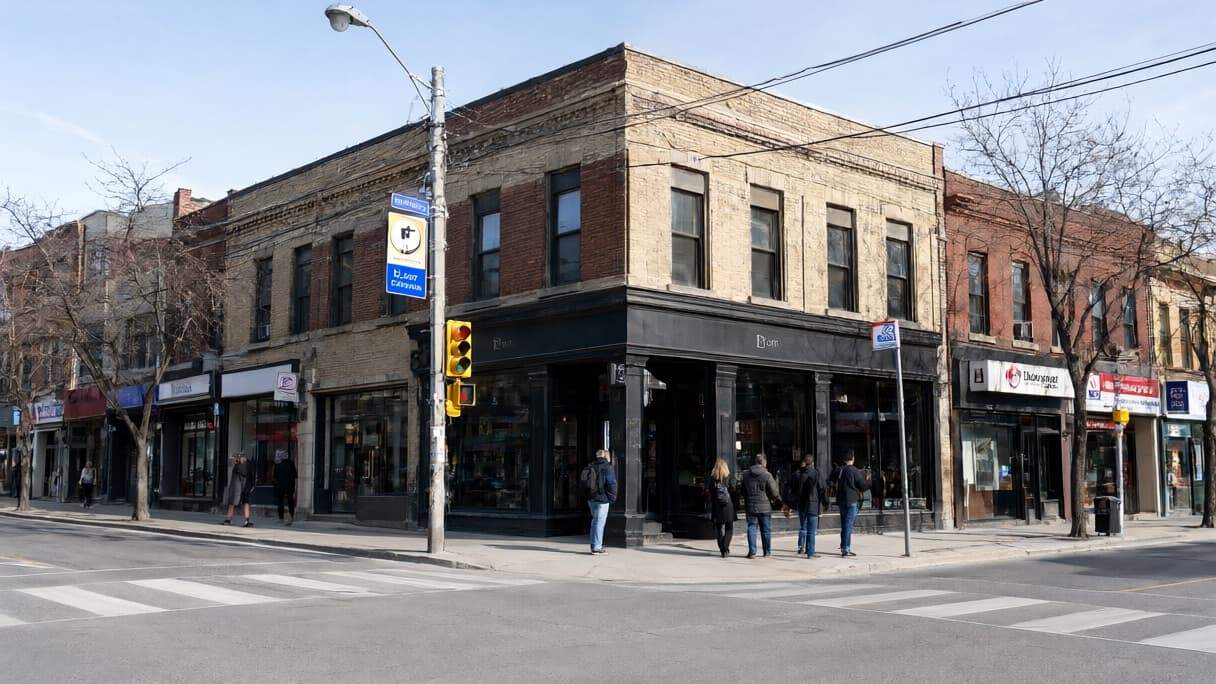
AI-generated image · Bay Street Wire
Opinion: The arrest of Hesameddin Bazargan for anti-Chinese threats highlights a systemic failure to protect newcomers before violence erupts in our streets.
The recent arrest of 37-year-old Hesameddin Bazargan serves as a chilling reminder that for many newcomers in Toronto, the simple act of visiting a coffee shop can transform into a fight for survival. As first reported by CityNews Toronto, Bazargan was arrested after an incident in the city's west end, specifically in the Bloor Street West and Keele Street area, where he allegedly targeted two individuals with anti-Chinese racial slurs.
As a columnist covering the newcomer experience, I view this incident not as an isolated police report, but as a symptom of a broader, systemic vulnerability. The details provided by CityNews Toronto are harrowing: the suspect allegedly followed the victims out of the establishment, raised a wooden stick above his head, and threatened to kill them while continuing his racial tirade. While the Toronto Police Service successfully located and arrested Bazargan—who now faces two counts of offence motivated by hatred relating to assault with a weapon and two counts of offence motivated by hatred relating to uttering death threats, as well as a charge for failing to comply with a release order—the arrest itself is a reactive measure. It happens after the trauma has already been inflicted.
We must ask ourselves: what systemic gaps allowed a situation to escalate to the point where a man felt empowered to hunt two people down the street with a weapon? When we examine the safety of newcomers, we cannot simply count arrests. We must examine the environment that fosters such hatred. The fact that this occurred in a public space, and escalated from verbal slurs to a death threat involving a weapon, suggests that the perceived safety of our community hubs is fracturing.
For those arriving in Canada, the promise of multiculturalism is often the primary draw. However, when a newcomer is targeted specifically for their ethnicity—as was the case with the anti-Chinese slurs reported by CityNews Toronto—it shatters that promise. The psychological toll of knowing that one's identity can trigger a violent encounter is a burden that no new Canadian should carry.
While the legal system will now process the charges against Bazargan, the community is left with the wreckage of the encounter. The police report tells us the 'who' and the 'what,' but it fails to address the 'why' and the 'how' of preventing the next attack. If we rely solely on the arrests of individuals like Bazargan to feel secure, we are merely treating the symptoms of a deeper societal illness.
True community protection requires more than just a police badge and a set of charges. It requires a proactive infrastructure that identifies hate-motivated trends before they manifest as assaults with wooden sticks in the west end. We need to move beyond the relief of an arrest and toward a systemic overhaul of how we safeguard our most vulnerable residents. Until then, the incident at Bloor and Keele remains a warning: for Toronto's newcomers, the threat of hate is not a theoretical concern—it is a reality that can meet them at the door of a coffee shop.