
The Classroom Cost of Political Chicken

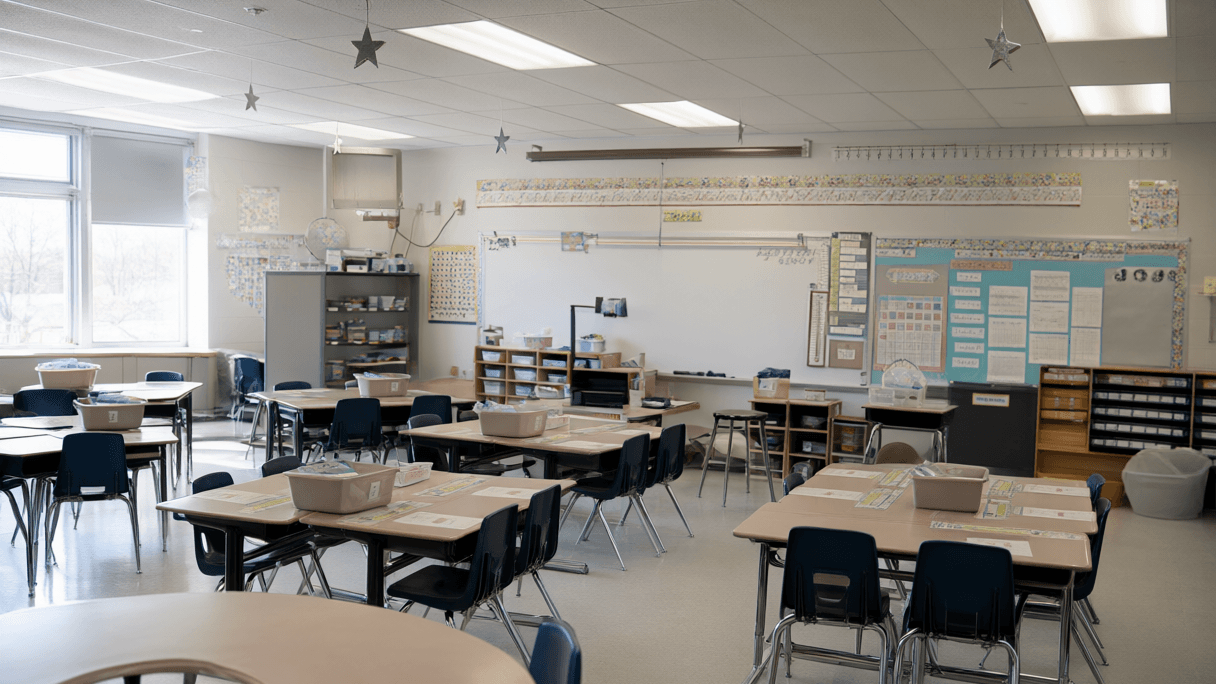
AI-generated image · Bay Street Wire
Opinion: As three education unions move toward strike votes, Ontario's students are being used as pawns in a deadlock between the Ford government and exhausted workers.
Let us be clear: this is an opinion piece.
In the halls of power at Queen's Park and the boardrooms of labor unions, a game of political chicken is underway. The stakes are high, the rhetoric is sharpening, and the players are dug in. But as the adults argue over the fine print of contracts, there is a silent group of casualties caught in the crossfire: the children of Ontario.
According to reporting from CBC Toronto and Global News Toronto, we are now staring down a November where three separate education unions will hold strike votes. The Ontario School Board Council of Unions (OSBCU), a branch of the Canadian Union of Public Employees representing roughly 57,000 workers, has scheduled its vote for Nov. 4 through 18. They join the Elementary Teachers’ Federation of Ontario (ETFO) and the Ontario English Catholic Teachers’ Association (OECTA) in this precarious position.
This is a tragedy of avoidable proportions. CBC Toronto reports that current education contracts expired at the end of August, yet negotiations for new deals have stalled before they even truly began. The deadlock isn't even over wages or benefits yet; it is a procedural fight over whether issues should be bargained centrally or left to local unions and school boards.
While the Ontario Labour Relations Board (OLRB) is tasked with resolving this dispute, the human cost is mounting. David Mastion, president of the ETFO, told Global News Toronto that unions are prepared for an "escalating fight," arguing that the trajectory of the Ford government since 2018 has been to "dismantle, to cut, to suffocate" public education.
On the other side, the government is playing the role of the patient observer. A spokesperson for Education Minister Paul Calandra told Global News Toronto that "premature strike threats do not serve the interests of students" and claimed the government is ready to negotiate once the OLRB process concludes.
It is a convenient narrative for both sides. The unions use the threat of a strike to send a message that they are "very, very serious," as Mastion put it. The government uses the delay of the OLRB to frame themselves as the reasonable party waiting for a formal process to end.
But while the adults wait for a ruling from a board, students are the ones left in limbo. To suggest that strike threats "do not serve the interests of students" is a hollow sentiment when the government's own inability to reach the bargaining table has allowed these threats to become the only leverage available to workers.
We are witnessing a systemic failure. When 57,000 workers in the OSBCU, along with thousands more in the ETFO and OECTA, feel that a strike mandate is the only way to change a government's course, the system is already broken.
Our children cannot afford to be the collateral damage in a dispute over bargaining tables and central versus local mandates. It is time for the Ford government and the education unions to stop treating the classroom as a bargaining chip and start treating the education of Ontario's youth as the emergency it is.