
The Breaking Point: Violence Against Educators is a Systemic Failure

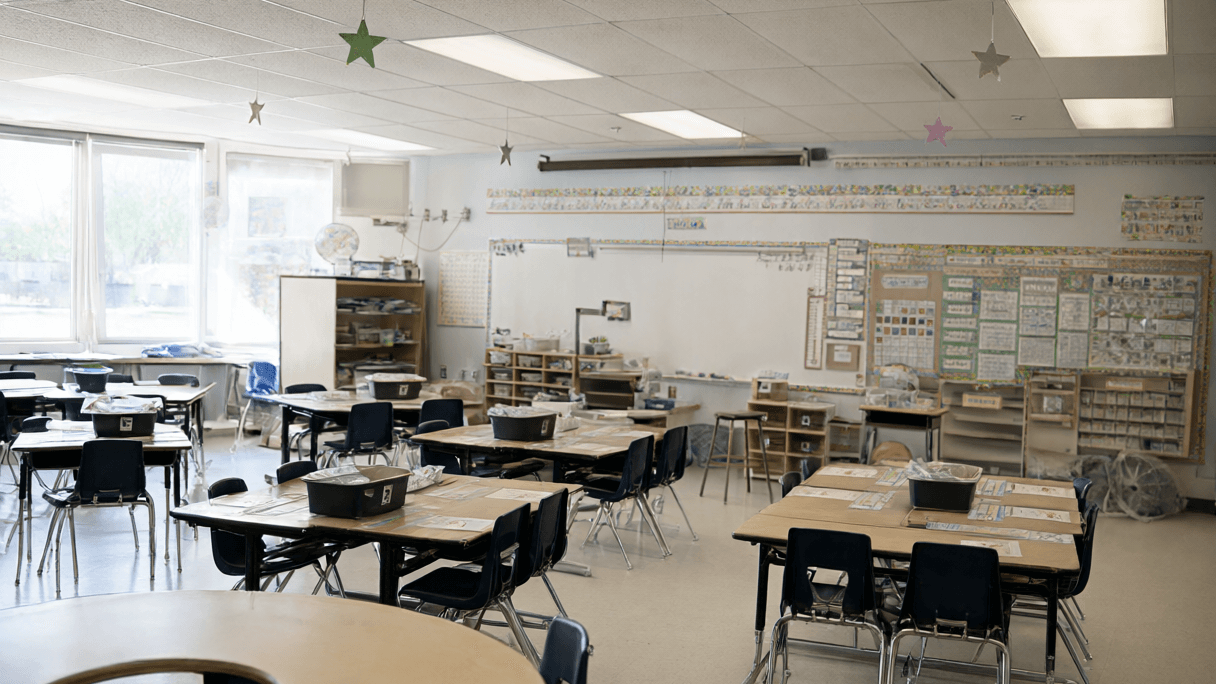
AI-generated image · Bay Street Wire
Opinion: The staggering rise in student aggression in Winnipeg schools is a warning sign that without immediate, targeted support, the education system faces a collapse of its essential workforce.
The latest data emerging from the Winnipeg School Division is more than just a statistical anomaly; it is a distress signal. As CBC News first reported, student-related aggression incidents in the division surged by approximately 118 per cent, climbing from 884 cases in the 2022-23 year to 1,925 in 2025-26.
This is not a localized spike or a series of isolated events. As Darby Mallory, a doctoral student at the University of Ottawa who works on the university's Violence and Harassment Against Educators project, told CBC News, this is a complex, nationwide issue driven in part by a general decrease in school funding, resulting in resource cuts, staff layoffs, and larger class sizes. When we treat these incidents as individual behavioral issues rather than systemic failures, we ignore the root cause: a workforce stretched beyond its breaking point.
Nowhere is this failure more evident than among educational assistants (EAs). The Manitoba Government and General Employees' Union (MGEU) notes that EAs were the staff group most likely to be harmed, accounting for nearly all the cases in the shared data. Kyle Ross, president of the MGEU, described the figures as "jaw-dropping," noting that staff must wake up wondering if they will be bitten, head-butted, or spit on.
When the very people tasked with providing consistent care for students with complex needs are themselves the primary targets of violence, the system is no longer functioning. Ross argues that rapport and trust are essential for managing these challenges, yet that trust cannot be built if staffing levels are insufficient to provide stable, consistent support.
While Winnipeg School Division superintendent Matt Henderson told CBC News that the division added 300 EAs over three years and reduced class sizes—expressing confidence that they have the "right amount of people"—the data suggests otherwise. A 118 per cent increase in violence is not the result of a well-supported system; it is the result of a system in crisis. While Henderson posits that "behaviour is communication," the communication being received by staff is one of desperation and danger.
Education Minister Tracy Schmidt has acknowledged that investing in staff is essential for safety and noted that the NDP government provided funding in 2026 to hire 830 new EAs. However, as Mallory points out to CBC News, the resulting instability affects everyone. Students cannot learn in environments where they feel unsafe or are "walking on eggshells," and instructional time is lost to the chaos of unmanaged aggression.
If the province does not move beyond incremental hiring to implement the MGEU's calls for targeted support, rigorous training, and strengthened enforcement of violence-prevention requirements, we will see a mass exodus of educators. We cannot expect staff to endure hits, kicks, and scratches as a standard part of their job description. Without a radical shift in how we support the people in the classroom, the education system will not just struggle—it will break.