
The Blueprint of Efficiency: How the Brewers and Rays Engineered a World Series Clash

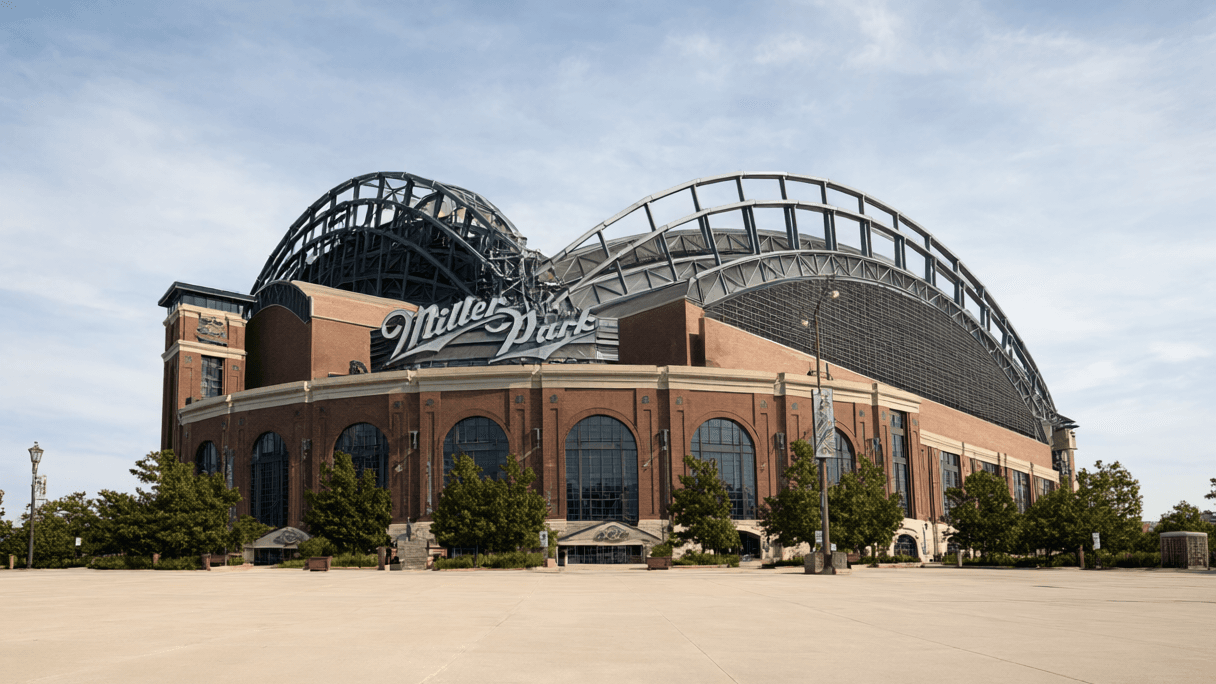
AI-generated image · Bay Street Wire
Sasha Petrov argues that the success of baseball's small-revenue giants isn't a fluke, but the result of aggressive, divergent strategies in value-mining.
Let's be clear: calling the success of the Milwaukee Brewers and the Tampa Bay Rays 'luck' is a lazy analysis. As a columnist who spends my days dissecting front office maneuvers, I see these rosters not as accidents, but as the calculated output of two very different, very aggressive blueprints for mining value. As MLB first reported, while both are small-revenue clubs that consistently outperform their payrolls, they have reached the World Series by attacking scouting inefficiencies from opposite ends of the spectrum.
According to reporting from MLB, the Brewers have built a powerhouse on a foundation of homegrown talent. They trail only Cleveland in terms of players (10) and production (31.4 WAR) coming from within their own system. Milwaukee's strategy is a masterclass in diversifying draft and international acquisitions. They have aggressively targeted junior colleges to secure talents like Jacob Misiorowski, Logan Henderson, and Aaron Ashby. They've also shown a willingness to overpay for high-upside talent, as evidenced by the $1.35 million spent on Cooper Pratt—four times the slot value—and the $1.8 million spent on Jackson Chourio in 2021.
But the Brewers aren't just drafting well; they are dominating the international market. MLB reports that Milwaukee leads all playoff teams with 8.4 WAR from international amateurs, fueled by signings like Chourio, Luis Lara ($1.1 million in 2022), and the bargain acquisition of Abner Uribe for $85,000 in 2018.
Then you have the Tampa Bay Rays, who have essentially inverted the Brewers' model. In a stunning display of roster churn, the Rays enter the World Series with the lowest total of homegrown players (four) and the second-lowest production (8.9 WAR) in the postseason. Instead of relying on the draft, Tampa Bay has turned the trade market into its primary engine of growth.
As MLB notes, the Rays led all playoff teams in both the number of players acquired through trade (16) and the resulting WAR (31.2). Their front office has a predatory instinct for value, stealing their best hitter, Junior Caminero, from Cleveland and acquiring their best pitcher, Drew Rasmussen, from Milwaukee. Their trade aggression extends to a wide array of contributors, including Yandy Diaz, Tyler Wells, and Jonny DeLuca. They even utilize the Rule 5 Draft to find bullpen stability, as seen with Kevin Kelly, who joined from the Rockies and led the league with 33 holds this year.
Both teams have largely abandoned the traditional free-agent market, treating it as a place for marginal additions rather than core building. Milwaukee's only free agent is backup catcher Gary Sánchez ($1.75 million), while Tampa Bay's most significant free-agent investment was Nick Martinez, who signed for a guaranteed $13 million in February.
Even when these teams use the same tool—the trade—their philosophies differ. The Brewers use trades to supplement a homegrown core, bringing in players like Jake Bauers and William Contreras. The Rays use trades to replace the core entirely.
This isn't just 'shrewdness.' It is a systemic rejection of the status quo. Whether it is Milwaukee's dominance in the junior college and international markets or Tampa Bay's relentless pursuit of trade-market inefficiencies, these rosters were engineered. They are the result of front offices that realized you don't need the biggest budget if you have the most aggressive blueprint.