
The Biossil Billion: A Local Win or an AI Hype Play?

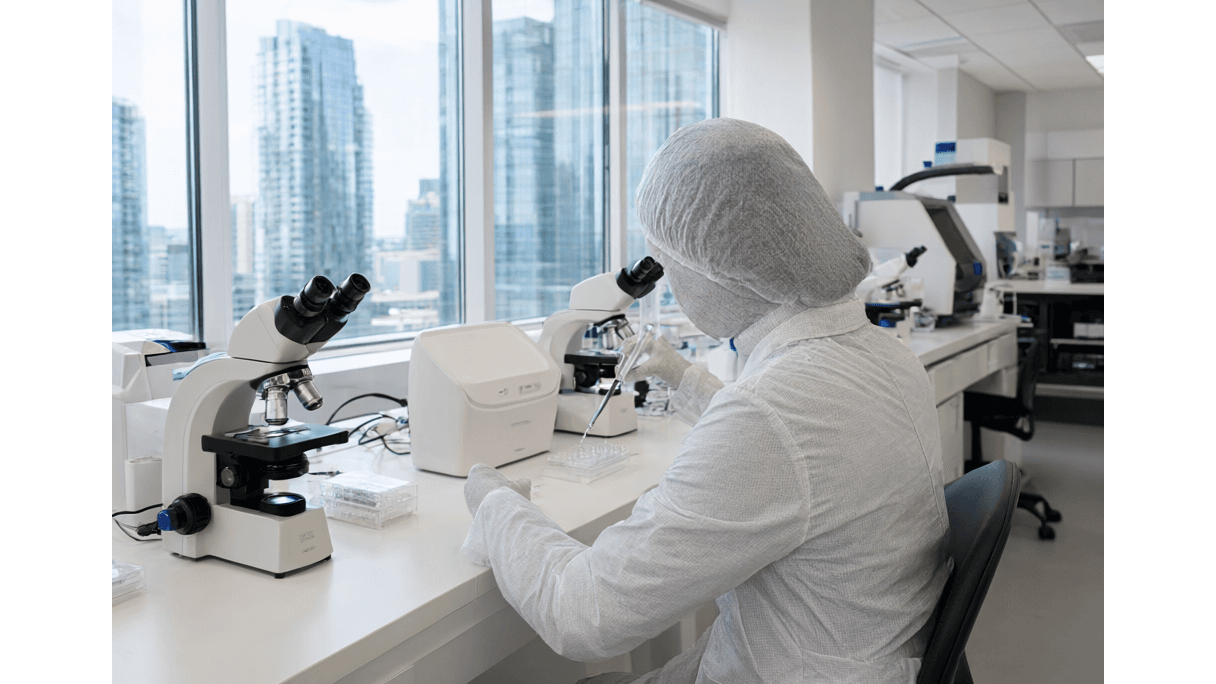
AI-generated image · Bay Street Wire
Opinion: Biossil's jump to unicorn status is a victory for Toronto, but OpenAI's lead investment raises questions about whether we're seeing a strategic biotech pivot or just another capital injection.
Let’s be clear: seeing a Toronto-based startup hit a $1 billion USD valuation is always a reason to celebrate. As first reported by The Globe and Mail and detailed by BetaKit, Biossil has officially joined the unicorn ranks after securing $153 million USD ($216 million CAD) in a financing round led by the OpenAI Startup Fund. For the local ecosystem, this is a massive signal of confidence in Canadian biotech and AI integration.
But as someone who tracks the intersection of hype and utility in our startup scene, I find myself looking past the valuation. The real story isn't the billion-dollar tag; it's the involvement of OpenAI. Is this a calculated strategic pivot into the physical sciences, or is it simply another high-profile capital injection designed to ride the current AI wave?
Biossil's model is genuinely compelling. According to BetaKit, the company specializes in buying failed drug projects and utilizing an AI platform to identify molecules that showed promise but didn't clear their original clinical trials. By licensing or purchasing these assets, Biossil avoids the 'start from scratch' slog of traditional pharmaceutical development. CEO and co-founder Anthony Mouchantaf told BetaKit that the company intends to use this all-equity funding to expand its clinical development capacity and acquire more drug candidates.
Mouchantaf’s vision, shared via LinkedIn, is that AI insights must be translated into the physical world to help patients, which requires infrastructure that integrates AI and medicine from discovery to the clinic. He notes that Biossil is building this infrastructure across Canada and the United States.
However, we have to ask why OpenAI is leading this charge. We are seeing a pattern where AI giants are aggressively pursuing healthcare. BetaKit points out that Anthropic has established its own biolab in California, and Canada's own Cohere acquired the biopharmaceutical data processing startup Reliant AI in May to speed up its healthcare entry.
If OpenAI is treating Biossil as a blueprint for how AI can disrupt drug development—targeting conditions like glioblastoma, breast cancer, Alzheimer’s disease, idiopathic pulmonary fibrosis, and sickle cell disease—then this is a profound shift in how AI companies operate. They aren't just building models; they are funding the physical infrastructure required to prove those models work in a lab.
Conversely, if this is just a portfolio play, the $1 billion valuation might be more about the 'AI' label than the 'Biotech' reality. While the list of investors is impressive—including Founders Fund, Quiet Capital, Modern Capital, Golden Ventures, Panache Ventures, the Abu Dhabi Investment Council, and Duke University’s endowment fund—the lead role of OpenAI puts a target on Biossil's back to deliver results that justify the hype.
Biossil exited stealth in April with $70 million USD, and Mouchantaf has indicated on LinkedIn that the company will have more to share in the coming months. Until then, I'll remain a cautious booster. I want Biossil to succeed for the sake of the patients and the Toronto tech scene, but I'm keeping a close eye on whether this is a sustainable evolution of biotech or just the latest chapter in the AI gold rush.