
The Beta-Test Boulevard: Why Cities Must Stop Asking Robotaxi Giants for Permission

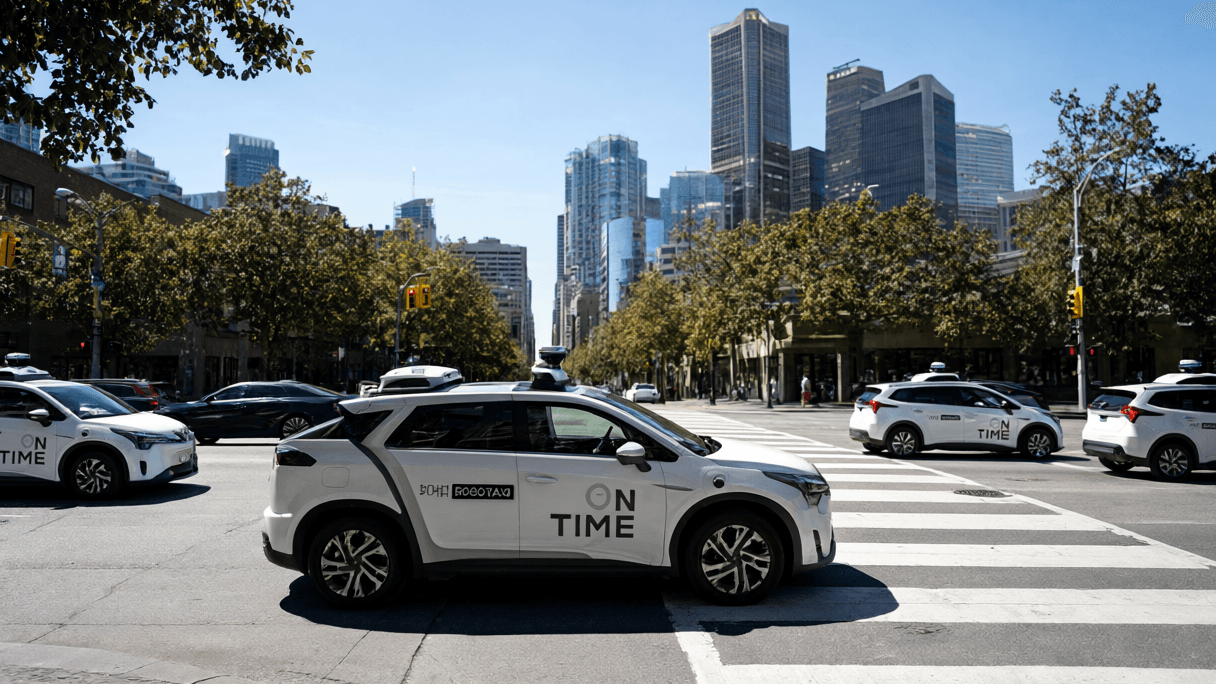
AI-generated image · Bay Street Wire
Opinion: From stalled vehicles to emergency chaos, autonomous car companies are treating public streets as unregulated labs. It is time for local governments to enforce the law.
For years, the narrative surrounding autonomous vehicles (AVs) has been one of inevitable progress and 'future-forward' innovation. But for the people actually living and working on the streets where these machines operate, the reality is less about a futuristic utopia and more about a chaotic, unregulated beta test.
As a tech columnist, I have watched the giants of the industry treat our public infrastructure as their private laboratory. It is time to stop treating these companies as benevolent pioneers and start treating them as transportation operators who must answer to the law. The current state of affairs is unsustainable, and the solution will not come from a paralyzed federal government.
As first reported by The Verge, federal regulators are currently scrambling to establish safety standards, while legislation intended to create rules for autonomous vehicles has remained stalled in Congress for years. This Washington paralysis has created a dangerous vacuum. In the absence of federal leadership, we are seeing a desperate, fragmented attempt by local lawmakers to create their own playbooks to ensure robot cars follow basic rules of the road.
This is not a new phenomenon. The Verge notes that as early as June 2011, Nevada became the first state to legalize self-driving cars on public roads—years before the introduction of Tesla’s Autopilot or the spin-out of Waymo from Google's project. That early openness was not an accident; it was the result of aggressive lobbying. Google viewed Nevada as a prime testing ground and urged lawmakers to pass legislation that allowed for such prototypes. In a stunning display of corporate influence, that legislation even included a provision that exempted drivers from text-messaging bans while the automated system was engaged.
For over a decade, cities welcomed these vehicles with open arms, eager to be seen as pro-innovation. But the honeymoon is over. Local officials are now discovering the 'unintended consequences' of their new robot residents, and the result is a necessary, if messy, pushback.
We are seeing a growing realization that 'innovation' cannot come at the expense of public safety and urban functionality. In Minneapolis, officials are considering an ordinance that would require human monitors inside autonomous vehicles, a move that would effectively ban driverless operations. In San Diego, the City Council passed a resolution seeking to block Waymo from the airport and demanding that local agencies have direct control over AVs during emergencies.
Perhaps most alarming are the concerns raised by first responders. The Verge reports that Austin firefighters have expressed significant concern regarding the Tesla Cybercab, specifically its lack of pedals or a steering wheel. These responders warn that the absence of manual controls could complicate efforts to clear a stalled vehicle from the road. Their demand is simple and reasonable: AV developers must establish direct human operator communications for emergency situations and dedicated, rapid-response towing protocols.
This is not a partisan issue; it is a public safety issue. While it was once believed that Republicans were more welcoming of AVs and Democrats more skeptical—a divide evident in the fact that New York City, Chicago, and Washington, DC have not legalized driverless cars—the tide is shifting. The Verge reports that red states including Iowa, South Dakota, Oklahoma, and Kentucky are now considering tightening the leash on these vehicles. Even in California, lawmakers are weighing bills that would grant cities the direct authority to enact local permit bans, restrict operating hours, or limit the size of AV fleets within municipal limits.
Furthermore, California is considering emergency protocols that would force AV companies to provide local police and fire departments with emergency remote shut-off mechanisms or physical override access.
Industry leaders, of course, despise this 'patchwork' of rules and regulations. They want a single, streamlined set of rules that favor their deployment schedules. But the 'complexity' they complain about is actually the sound of democracy working. It is the sound of cities realizing that they hold broad authority over street operations, even if they lack authority over vehicle manufacturing standards.
Robotaxi companies have spent years operating in a regulatory gray area, betting that their speed of deployment would outpace the government's ability to regulate them. They have treated the public as unpaid test subjects in a high-stakes experiment.
It is time for cities to stop asking for permission to keep their streets safe. If a vehicle cannot be moved by a firefighter in an emergency, or if it disrupts airport operations, it should not be on the road. The 'innovation' of a driverless car is meaningless if it creates a deadlock in a crisis or ignores the needs of the community it serves.
We must stop prioritizing the growth trajectories of tech giants over the safety of our citizens. The patchwork of local laws is not a bug; it is a feature of local governance. Until the federal government wakes up, cities must continue to flex their authority to bring order to the chaos. The era of the unregulated beta test must end.