
The Architect's Regret: Former Quebec Premier Questions Legacy of First MAID Law

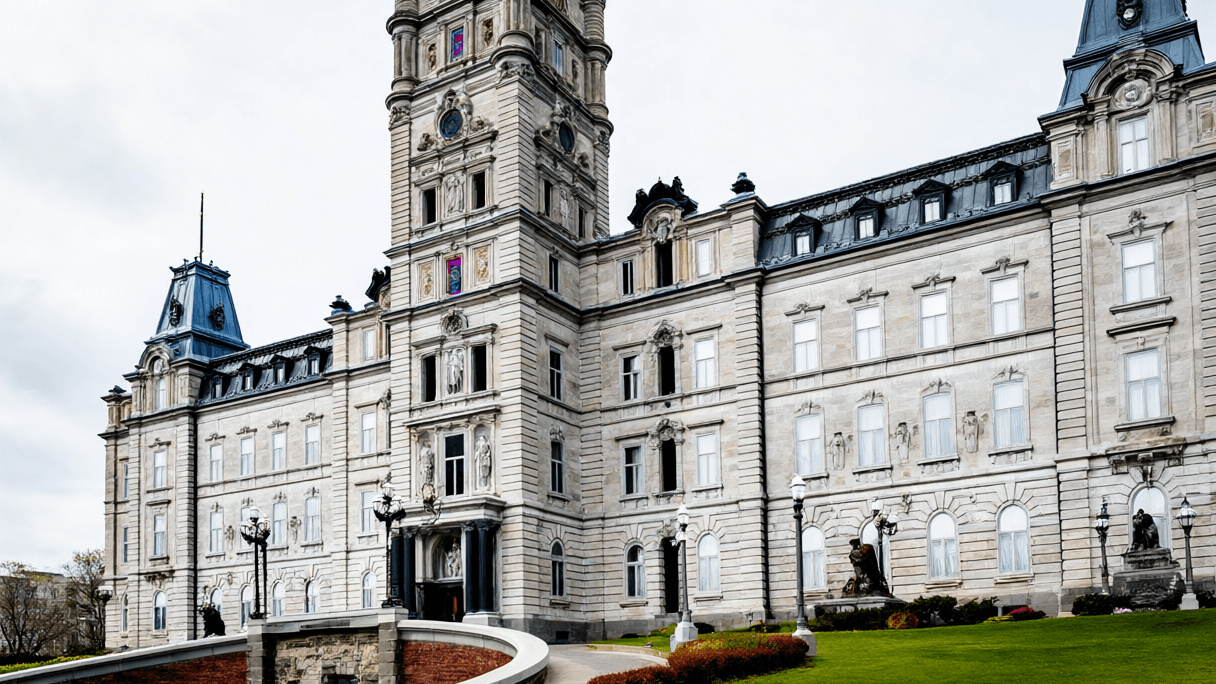
AI-generated image · Bay Street Wire
Philippe Couillard, who oversaw the passage of Canada's first assisted dying legislation, expresses conflict as the practice expands beyond its original intent.
For those who draft the laws that govern life and death, the distance between a legislative victory and a moral crisis can be surprisingly short. Philippe Couillard, the former premier of Quebec and a former neurosurgeon, is currently grappling with that gap.
As first reported by CBC News, Couillard reflects on the 2014 law passed by Quebec's National Assembly, which established the conditions under which terminally ill patients could request medical assistance in dying (MAID). While the bill was introduced by the Parti Québécois, it received multiparty support during Couillard's tenure as leader of the Liberals. At the time, Couillard viewed the process as "one of the best moments of democracy" during his premiership, specifically noting his decision to allow a free vote within his Liberal caucus.
However, the reality of the law's evolution has left Couillard feeling conflicted. Speaking to CBC's *The House* host Catherine Cullen, Couillard admitted he sometimes questions his 2014 decision. He emphasized that the original intent was strictly reserved for those facing "terminal or pre-terminal conditions" with a defined path toward the end of life—a boundary he believes has since been crossed.
"I'm not sure that I would have again voted for that law with the extension that we have seen in the recent years," Couillard told CBC News.
This psychological toll stems from a warning Couillard received during the bill's inception. Opponents of the law cautioned him that while his motivations were good, opening the door to assisted dying would lead to an inevitable and uncontrolled expansion. According to CBC News, Couillard now acknowledges that this is exactly what occurred.
The expansion has been marked by significant legal and political shifts. After the Supreme Court ruled in 2015 that prohibiting assisted dying was contrary to the Charter of Rights and Freedoms, Prime Minister Justin Trudeau consulted Couillard before the federal government adopted MAID legislation in 2016. That law was later struck down by the Superior Court of Quebec in 2019 for limiting eligibility to those whose deaths were "reasonably foreseeable," leading the federal government to pass a new law in 2021. By 2024, Quebec expanded the practice further, allowing advance requests for MAID for individuals with conditions like Alzheimer's before they lose the capacity to consent.
Despite these reservations, Couillard finds solace in the memory of specific patients from his medical career who suffered deep distress and pain, leading him to believe the original decision was the right one. He expressed a lingering hope that the transition was not handled as a "trivial matter" and that the government did not move too quickly.
The current landscape remains a point of contention. Justice Minister Sean Fraser recently announced that the federal government will not proceed with expanding MAID to individuals suffering solely from mental illness, though Fraser noted that new legislation would allow for advance consent if provinces permit it. This decision has drawn mixed reactions, including support from Liberal MP James Maloney and criticism from Alberta Sen. Kristopher Wells, who argues the move contradicts the wishes of Canadians, as reported by CBC News.