
The AI Land Grab: Mapping Canada's Infrastructure Trade-off

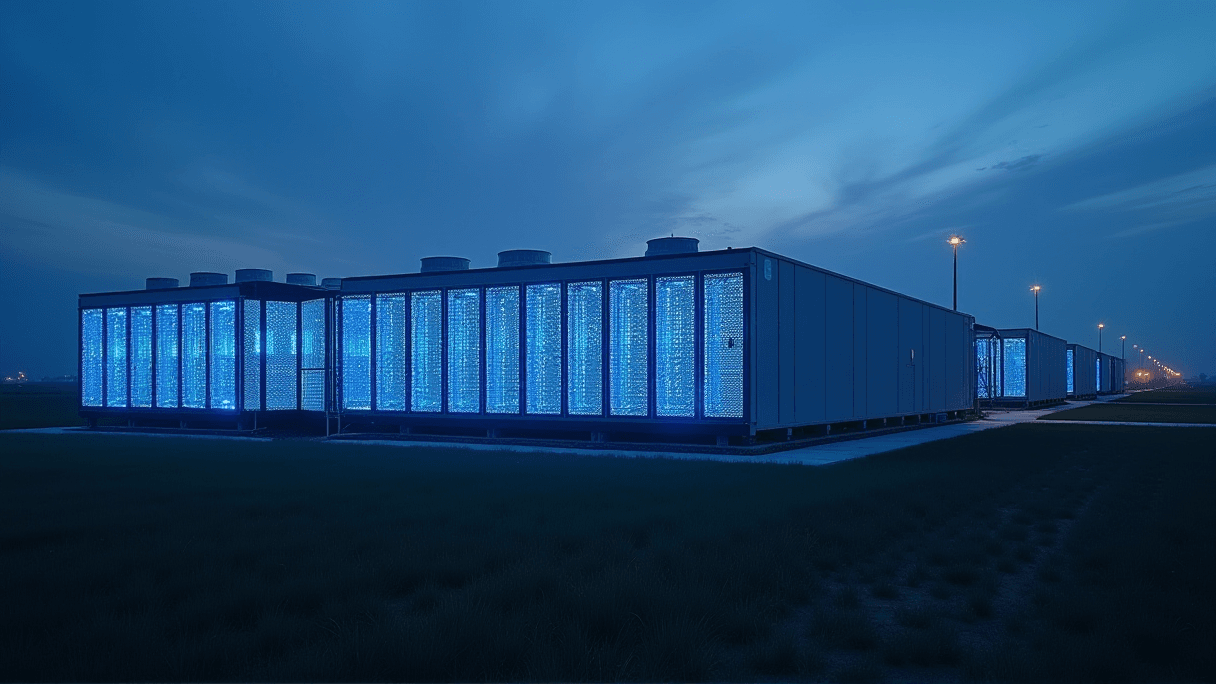
AI-generated image · Bay Street Wire
New data reveals a massive surge in planned data center capacity, with Alberta emerging as the epicenter of a resource-intensive expansion.
The physical footprint of artificial intelligence is expanding across Canada, transforming abstract technology into a concrete struggle over local resources. While the federal government positions Canada as a global leader in sustainable AI infrastructure, the receipts on the ground show a stark divide between national ambition and municipal anxiety.
As CityNews Toronto first reported, the scale of the planned expansion is immense. A government document prepared for Artificial Intelligence Minister Evan Solomon indicates that while Canada currently possesses approximately 337 megawatts of AI data center capacity, projects totaling over 20 gigawatts (20,000 megawatts) are currently under planning or development. Although government spokespeople claim the actual built capacity will be lower than those projections, independent research suggests the pipeline is even larger.
Research from York University, co-authored by urban economist and assistant professor Lyndsey Rolheiser, identifies 194 active facilities as of June 2026 with a combined capacity of 1.6 GW. More striking is the pipeline: 213 projects totaling 22.2 GW of capacity are in the planning stages.
**The Alberta Epicenter**
The data reveals a massive geographic concentration of this infrastructure. Rolheiser notes that while Alberta currently holds only 3.3% of Canada's active capacity, it accounts for 92% of the planned capacity. Rolheiser attributes this trend to Alberta's deregulated market and the availability of natural gas, which allows developers to self-generate power on-site.
This shift toward "hyperscale" centers—which are larger than previous iterations and often situated in rural areas—has triggered localized resistance. In Olds, Alberta, residents have rallied against a proposed 10-building campus that would rely on 1.4 gigawatts of on-site gas-fired generation.
**Infrastructure at a Breaking Point**
Across the country, the "AI land grab" is manifesting as a conflict over basic utilities. David Coletto, CEO of Abacus Data, told CityNews Toronto that local concerns are centered on the consumption of electricity, water, and the impact of noise pollution, calling data centres the "physical avatar" of AI. These anxieties are fueling protests from coast to coast, including demonstrations in Vancouver on June 27, 2026, and pushback against a proposed harborfront data center campus in Hamilton, Ontario.
Anne Pasek, an associate professor at Trent University, notes that proposals for massive new data centres have become a lightning rod for broader fears regarding job loss and the unauthorized use of data. Residents also worry about the long-term stability of these investments, fearing an AI market bubble could burst and leave communities stranded.
**The Federal Counter-Narrative**
In contrast to these local frictions, the federal government's national AI strategy claims Canada is "uniquely positioned" for responsible growth. The government asserts it will double the electricity grid using nuclear, hydro, renewables, and clean power, leveraging Canada's cold climate to reduce cooling costs and water usage. However, the gap between the federal vision of a "clean" grid and the gas-fired reality of projects like the one in Olds highlights the tension inherent in Canada's AI expansion.