
The $5 Masterclass: Why Firmware Trumps Raw Specs

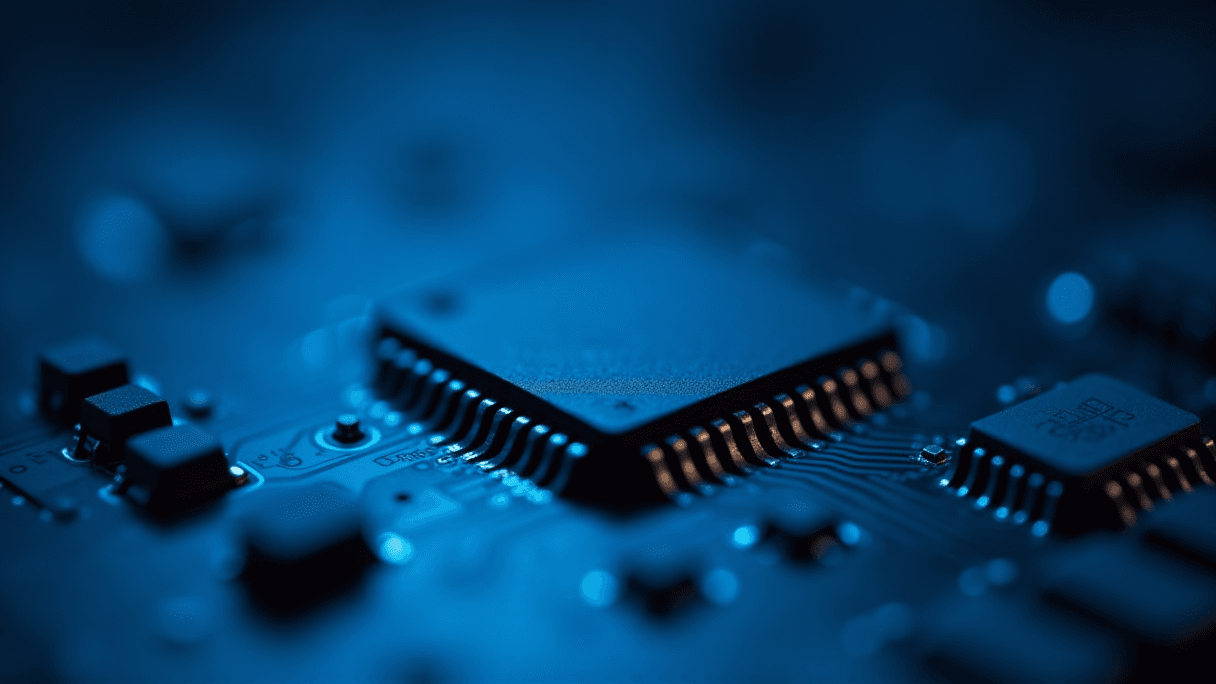
AI-generated image · Bay Street Wire
A clever ad-blocking project using the ESP32-C3 proves that optimized code can outperform expensive hardware overkill.
In an era where hardware specs are often inflated to the point of absurdity, we are frequently told that more RAM and faster processors are the only path to performance. But every so often, a project comes along that reminds us the real magic happens in the firmware.
As Tom's Hardware first reported, Zak Killian highlighted a project by Egyptian full-stack developer ZedAxis (known as @M-Abozaid on GitHub) that serves as a perfect case study in efficiency. ZedAxis has managed to fit a functional ad-blocking DNS filter—capable of blocking 537,000 domains—into an ESP32-C3 "SuperMini" board. The cost? Somewhere between $2 and $5.
To put this in perspective, many users turn to a Raspberry Pi for similar tasks, but as Tom's Hardware notes, those can cost a couple hundred dollars in the current market. ZedAxis's solution doesn't just undercut the price; it strips the hardware requirements down to the absolute bone. The ESP32-C3 used here lacks the 8MB of PSRAM found in higher-end models, possessing only 400KB of RAM and 4MB of flash memory.
**Opinion: The Efficiency Gap**
This is where the project becomes a masterclass in engineering. While most modern software is written with the assumption of infinite resources, ZedAxis utilized a clever hashing trick to bypass the physical limitations of the chip. Because a plaintext blocklist was too large for the flash memory, he implemented 40-bit FNV-1a hashes. He opted for 40-bit specifically because 32-bit hashes would cause too many collisions, while 64-bit would waste precious space.
The mechanism is elegant: the build process downloads public blocklists, removes duplicates and comments, hashes the domains, and sorts them into a database written to the flash memory. When a DNS query hits the device, it hashes the hostname and performs a binary search against the sorted table. If there is a match, the request is blocked; otherwise, it is forwarded to an upstream resolver.
The result is a device that answers blocked lookups in roughly 10 milliseconds while using only about 50KB of RAM.
ZedAxis even found a way to maximize the available storage by sacrificing over-the-air (OTA) update capabilities. Normally, the ESP32 reserves flash memory for two copies of the firmware to prevent bricking during wireless updates. By abandoning OTA, ZedAxis reclaimed that second partition for the blocklist, jumping the capacity from 250,000 domains to 537,000.
It is important to note that this isn't intended to replace a full-scale Pi-hole or AdGuard Home setup, as it lacks detailed historical logs and per-client statistics. Instead, it functions as a "tiny insurance policy." ZedAxis uses it as a backup DNS for his home network, powered by a USB port on his Huawei OptiXstar home fiber gateway. When his primary Pi-hole reboots, the SuperMini ensures the network remains filtered without falling back to a default resolver.
This project proves that we are often over-specing our gadgets. When the firmware is written with intention and mathematical precision, a $5 microcontroller can do the heavy lifting that we usually associate with much more expensive hardware.